Delete Your Spin Wheel: Gamification Loyalty Program Guide
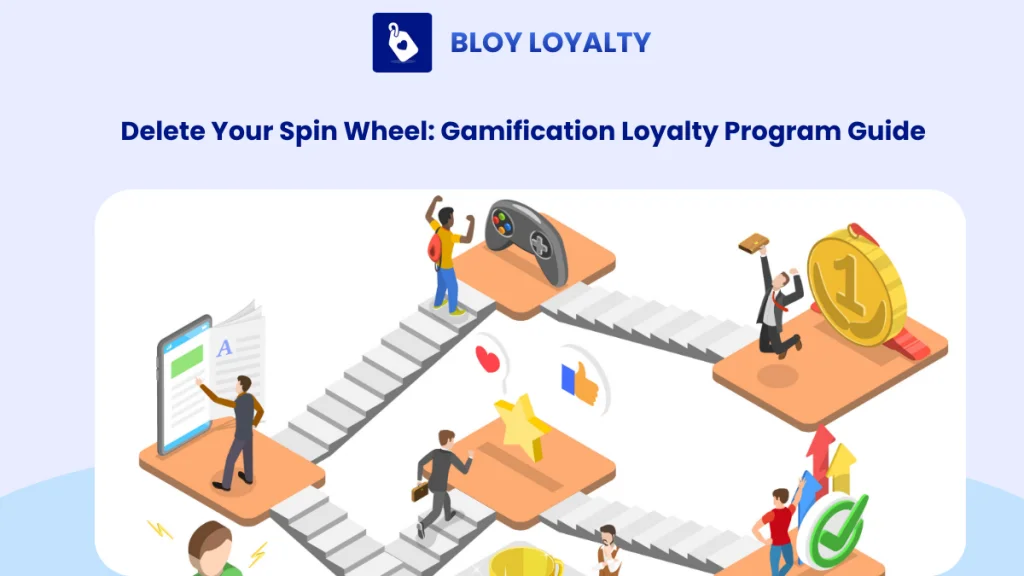
Most articles about the gamification loyalty program idea send you straight to Starbucks, Duolingo, or Nike. All three have a native app and a development team. If you run a Shopify store where the points program is live but almost nobody redeems anything, you do not need more inspiration. You need to know which mechanic you can turn on this week and how to tell whether it did anything. This guide splits gamification into two honest groups: the mechanics you can switch on inside your Shopify admin, and the ones that need a developer.
TL;DR
- A gamification loyalty program adds game mechanics to a rewards program so customers earn value for actions beyond spending, not just for the size of their order.
- Six mechanics need no developer: quest style earning, VIP tiers, a cart progress bar, referrals, milestone rewards, and a choice based redemption menu.
- Spin the wheel, streaks, leaderboards, and community challenges look fun in case studies but need extra apps, custom code, or a separate platform. Most of them are campaigns, not permanent mechanics.
- Pick mechanics from two numbers you already know: your purchase frequency and your average order value (AOV). A streak makes no sense for a store people buy from twice a year.
- Measure participation rate, redemption rate, repeat purchase rate, and AOV lift. Comparing members against non members proves nothing on its own.
What Is a Gamification Loyalty Program?
A gamification loyalty program adds game mechanics such as quests, tiers, and visible progress to a rewards program so that customers earn value for actions beyond spending. The rewards themselves do not change much. What changes is the reason a customer comes back between two purchases.
There is one confusion worth clearing up first, because it is the most common one. A points program is not automatically gamified. Points are a unit of account. A mechanic is the thing that creates motivation. You can run points for two years and never add a single game mechanic, which is exactly what happens in most stores.
| A typical points program | The same program with gamification |
|---|---|
| Earn points when you spend | Earn points for reviews, referrals, profile completion, and spending |
| Balance sits in the account page | Progress shows in the cart and on product pages |
| One reward option | A menu of rewards the customer chooses from |
| No reason to return until the next purchase | Clear next goal at all times |
If you are still deciding on a structure rather than a mechanic, start with the types of Shopify loyalty programs and come back here once you know which base model you are running.
Why Does Gamification Work? Three Principles, Not Just Dopamine
Gamification works because it borrows three specific behavioural principles, and knowing their names helps you apply them on purpose instead of by accident. Most articles stop at the word dopamine, which is true but not useful.
1. Variable reward. A reward the customer cannot predict drives more repeat interaction than a fixed one of the same value. This is why prize wheels feel compelling. It is also why they are easy to overuse: unpredictable rewards train people to wait for a better offer.
2. Goal gradient. People speed up as they get closer to a visible goal. The practical consequence is about placement, not generosity. A customer who is 12 dollars from free shipping needs to see that number in the cart, not buried in an account page they never open.
3. Endowed progress. Giving someone a head start on a goal raises the chance they finish it. Award signup points immediately and show the customer they are already one fifth of the way to their first reward. The goal did not get easier. The starting point moved.
These principles matter because the payoff is commercial, not decorative. In the EY Loyalty Market Study 2025, 41% of consumers said loyalty programs were the primary reason they stayed loyal to a brand, ahead of product and service quality at 33%. A program is a retention asset. Gamification is what stops that asset from going dormant.
6 Gamification Mechanics You Can Launch on Shopify Today
Every mechanic below meets one test: a merchant can configure it inside the Shopify admin with a loyalty app, without a developer and without a second platform. Each one follows the same frame so you can compare them quickly.
1. Quest Style Earning: Reward Actions, Not Just Spending
The mechanic gives customers a short list of things to do, each worth points. It applies variable reward and endowed progress at the same time, because a new member can complete two or three actions before ever placing an order.
Men’s skin care brand Jaxon Lane runs its program this way. Members earn points for creating an account, making purchases, referring friends, leaving reviews, and following the brand on social, then redeem for discounts, free products, and branded merch. Cofounder Jen Yu told Shopify Masters that the brand started “hyper focusing” on loyalty and retention because acquisition costs had risen so sharply.
How to build it: use the standard earn actions in your loyalty app, then add custom ones. In BLOY you get more than ten earn actions out of the box (purchase, review, referral, birthday, signup, social follow) plus Custom Way to Earn, where you set the name, the points, and the condition, such as clicking a button, visiting a specific store URL, or an action you approve manually.
Why this is the first mechanic to build: it converts your program from “collect points when you spend money” into “there is something to do here”, which is the only way a loyalty program earns attention between purchases.
2. VIP Tiers as a Progress Ladder, Not a Discount Table
The mechanic sorts members into levels, and each level unlocks better perks. It is the cleanest expression of goal gradient in ecommerce.
Men’s grooming brand Manscaped moves customers through levels called Guest List, A List, and VIP based on purchases and participation, unlocking member pricing, early product access, birthday gifts, and extended warranties as they climb.
How to build it: BLOY supports up to four VIP tiers with your own names and perks, and tier status syncs between your online store and Shopify POS.
The detail that decides whether this works: show the distance to the next tier. A tier system that does not display progress is not a mechanic, it is a discount table with nicer names. For threshold maths and more structures, see our guide to tiered loyalty program examples.
3. A Progress Bar in the Cart: Goal Gradient in the Right Place
The mechanic shows how far the customer is from free shipping or their next reward, right at the moment they are deciding, with suggestions for closing the gap.
How to build it: BLOY’s Order Booster displays the remaining gap and recommends add ons to reach it.
Why it earns its place: this is the only mechanic on the list that lifts AOV inside the same session. The others change how often people come back. If you need more levers on the same number, read how to increase Shopify AOV without constant discounting.
4. Referral as a Social Loop
The mechanic rewards both sides of an introduction, which turns your existing customers into a distribution channel rather than a one time transaction.
How to build it: BLOY’s referral program rewards the referrer and the referred friend, and it runs alongside the points program rather than as a separate system.
One execution detail most stores get wrong: trigger the referral ask after the order is delivered, not immediately after checkout. A customer cannot recommend a product they have not touched yet. Social actions in general are covered in more depth in our social media loyalty program guide.
5. Milestones and Personal Dates: Quests With a Natural Deadline
The mechanic celebrates a moment rather than a purchase. Birthdays, membership anniversaries, a third or fifth order. Each one gives you a reason to send a message that is not a promotion, which is rare and valuable.
How to build it: enable the birthday earn action, then attach perks to order count milestones through your tier rules.
Why it works: a deadline creates urgency without a countdown timer. See more structures in our event based loyalty program guide.
6. A Redemption Menu That Feels Like a Reward Shop
The mechanic gives customers a choice of rewards instead of a single default. Choice raises perceived value even when the cost to you stays flat.
Manscaped’s founder and CEO Paul Tran put it plainly on Shopify Masters: “Having choice is a big portion of the program.”
How to build it: BLOY lets customers redeem for discounts, free shipping, free gifts, gift cards, or store credit, and shows the program on the product page, cart drawer, cart page, Shopify checkout on Plus, and the customer account.
The point that matters more than the menu itself: rewards have to appear where the buying decision happens. An invisible program makes every mechanic pointless, no matter how well designed.
| Mechanic | Principle it uses | Metric it moves |
|---|---|---|
| Quest style earning | Variable reward, endowed progress | Participation, repeat purchase rate |
| VIP tiers | Goal gradient | AOV, retention |
| Cart progress bar | Goal gradient | AOV, same session |
| Referral | Social proof | Acquisition, CAC |
| Milestones | Goal gradient | Repeat purchase rate |
| Redemption menu | Perceived value, choice | Redemption rate |
Sources: Shopify, Loyalty program examples for ecommerce brands, Jaxon Lane rewards, Manscaped members only, BLOY documentation.
Which Gamification Mechanics Need More Than a Loyalty App?
This is the part most articles on gamification loyalty programs leave out. They list mechanics without saying what it takes to build them, so merchants install an app expecting a prize wheel and find a points engine. Here is the honest version.
| Mechanic | What it actually needs | What to weigh before you build it |
|---|---|---|
| Spin the wheel, scratch card | A popup or dedicated gamification app | Mostly an email capture tool for first time visitors. Limited retention impact, and it trains shoppers to expect a discount |
| Streaks | Custom logic, usually a developer | Only viable for high frequency categories. For a store people buy from two or three times a year, a streak is unwinnable and therefore demotivating |
| Leaderboards | A developer or a community platform | Exposes spending behaviour, which raises privacy questions. Only the top few percent are motivated. Everyone else learns they are losing |
| Treasure hunts, hidden codes | Light development plus ongoing operations | This is a campaign, not a standing mechanic. Engagement ends when the campaign ends |
| Scored quizzes and polls | A quiz app plus integration work | The data collected is only valuable if someone actually personalises with it, which rarely happens |
| Community challenges with their own currency | A separate community platform | Hair care brand Ouai runs Ouai Obsessed on the TYB platform, not on a Shopify loyalty app. Members complete gamified challenges to earn coins. The running cost and operational effort are far higher than most vendor articles imply |
None of these are bad mechanics. They are just a different size of project than the six above, and it is worth knowing that before you plan a quarter around one.
The principle to take away: a simple mechanic that customers see often beats a complex mechanic they have to discover.
Sources: Ouai Obsessed, TYB, Shopify, Loyalty program examples.
How Do You Pick the Right Mechanics for Your Store?
You do not need a strategy framework for this. You need two numbers you already have in Shopify: how often customers buy, and your average order value.
| Your store profile | Typical categories | Build first | Skip |
|---|---|---|---|
| High frequency, low AOV | Supplements, coffee, refills | Quest earning, third order milestone, cart progress bar | Deep tier ladders, since customers climb them too fast |
| Low frequency, high AOV | Furniture, jewellery, electronics | VIP tiers, referrals, redemption menu | Streaks and daily quests, since there is no occasion to run them |
| Medium frequency and AOV | Apparel, pet, home goods | Tiers plus social and review quests | Leaderboards |
| Online plus physical retail | Any category with POS | Tier status synced to POS, cart progress bar | Anything that only works online |
One sequencing rule matters more than the table: launch one mechanic, measure it for 30 days, then add the second. Launch five at once and you will have no idea which one worked, which means you cannot double down on anything.
How Do You Measure a Gamification Loyalty Program?
Measure four numbers in this order. Each one tells you something different, and the order matters because a problem in the first makes the rest unreadable.
1. Participation rate = members who completed the mechanic / total members. If this sits below 10%, your problem is visibility, not mechanic design. Move the widget before you change the rules.
2. Redemption rate = points redeemed / points issued. A low rate means the reward is too far away or not worth the effort. Unredeemed points are a liability on your books, not a sign of success.
3. Repeat purchase rate for participants compared with non participants, within the same time cohort. Our repeat purchase rate guide covers the calculation in detail.
4. AOV lift on sessions where the progress bar was shown, against sessions where it was not.
Now the caveat that almost every loyalty case study ignores. The fact that members spend more than non members does not prove your program created that gap. Loyal customers are the ones who join programs in the first place, which is self selection bias. To measure real impact, compare the same cohort before and after, or hold back a group who are not prompted about the mechanic for 30 days.
Here is how to run that as a proper experiment:
- Hypothesis: showing the reward gap in the cart increases AOV.
- Action: enable the progress bar for 50% of traffic.
- Metric: AOV for exposed sessions versus held back sessions.
- Expected signal: a difference above 5% over 14 days.
- Decision: above 5%, roll out to all traffic. Below it, test the reward threshold before abandoning the mechanic.
[Internal benchmark placeholder: insert a BLOY data point here, for example average participation rate among stores using Custom Way to Earn.]
For the wider metric set, see loyalty program metrics that actually matter.
How to Set Up Gamification in Your Shopify Loyalty Program
Five steps, in this order.
- Pick one mechanic using the store profile table above. One, not five.
- Install a loyalty app. BLOY has a free plan, and its AI assisted onboarding configures rules and styling based on your store, so setup takes minutes rather than weeks.
- Turn on the matching earn action or tier and rename it in your brand’s language. “Guest List” beats “Tier 1”.
- Put the mechanic where customers look. Product page, cart, checkout, customer account. This single step usually decides your participation rate.
- Record your four baseline numbers before you switch it on, so you have something to compare against in 30 days.
If you want to see the underlying features first, look at the points program and VIP program pages, or the documentation.
5 Mistakes That Kill a Gamified Loyalty Program
- Too many rules. If a customer has to learn how to play, they will not play. Three earn actions beat twelve.
- Rewarding actions with no commercial value. A social follow is easy to measure and almost never moves revenue. Reviews and referrals do.
- Stacking discounts on discounts. Gamification should raise perceived value, not your discount rate. Our guide on protecting margin while building loyalty covers the maths.
- Hiding progress. Goal gradient does nothing if the customer cannot see where they are.
- Launching and forgetting. Book a 30 day review in the calendar on launch day, or the program quietly dies at whatever participation rate it started with.
For seasonal and promotional structures built on top of these mechanics, see our loyalty campaign blueprints.
Gamification Loyalty Program FAQs
What is an example of gamification in a loyalty program? Jaxon Lane awards points for creating an account, leaving a review, referring a friend, and following on social, not only for purchases. Turning non purchase actions into scored tasks is gamification in its simplest and most durable form.
Is gamification the same as a points program? No. Points are the currency. Gamification is the set of mechanics that gives customers a reason to earn and spend that currency, such as tiers, quests, and visible progress. A points program with no mechanics on top of it usually goes dormant.
Do I need an app to gamify my Shopify loyalty program? For the six mechanics in this guide, a loyalty app is enough and no developer is required. Spin wheels, streaks, and leaderboards need additional apps, custom code, or a separate community platform.
How much does gamification add to loyalty program cost? The mechanic itself is usually included in your loyalty app plan, so the real cost is the reward you give away. Budget it as a percentage of revenue from participating customers and keep experiential rewards such as early access in the mix, since they carry high perceived value at low cost.
Does gamification work for stores with low purchase frequency? Yes, but only some mechanics do. Tiers, referrals, and milestone rewards work well when customers buy a few times a year. Streaks and daily quests do not, because customers cannot realistically keep them alive.
How long before a gamified loyalty program shows results? Participation rate is readable within two weeks. Repeat purchase rate needs at least one full purchase cycle for your category, which is commonly 60 to 90 days for ecommerce.
Conclusion
A gamification loyalty program does not need a prize wheel, a leaderboard, or an app development budget. It needs one or two mechanics that customers actually see, rewards they can choose from, and four numbers you check after 30 days. Simple mechanics shown often beat complex mechanics hidden behind a login, every time.
Pick one mechanic from the list above and build it this week. You can set up quest style earning, VIP tiers, referrals, and a cart progress bar on BLOY Loyalty’s free plan without a developer, or book a demo if you want help mapping mechanics to your category and purchase frequency.

Yến Lê Hải
Content author at BLOY, focusing on product-led content, SEO, and educational resources to help merchants improve conversion and customer engagement.
One thought on “Delete Your Spin Wheel: Gamification Loyalty Program Guide”