15 Tiered Loyalty Program Examples That Drive Repeat Sales (2026)
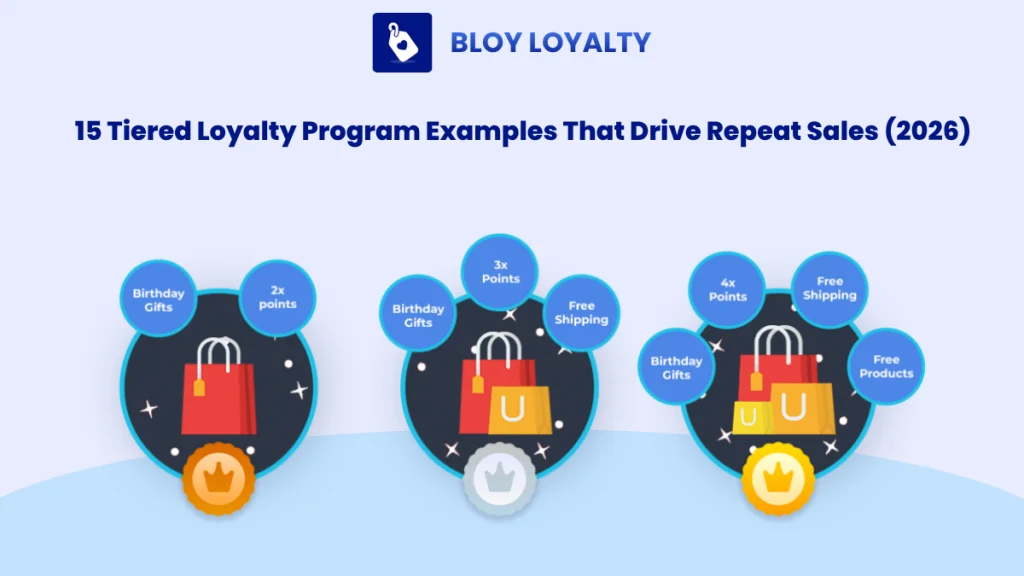
Search for tiered loyalty program examples and you will see the same names every time. Sephora, Starbucks, Delta, Marriott. They are great programs, but a Shopify store with a small team cannot copy an airline. This guide is different. The tiered loyalty program examples below start with the famous programs briefly, then go deep on direct-to-consumer (D2C) brands that are closer to your size, and it gives you the math and the steps to build your own tiered loyalty program without giving away your margin.
TL;DR
- A tiered loyalty program rewards customers with better perks as they spend more, which pushes up average order value (AOV) and customer lifetime value (LTV).
- The best known examples are Sephora, Starbucks, and Delta, but D2C brands like Blume and Rhone show what actually works for a Shopify store.
- Set tier thresholds from your real 12 month spend data, not round numbers. A common rule is mid tier at 3 to 4 times AOV and top tier at 8 to 10 times AOV.
- Experiential rewards such as early access and community perks retain customers without eroding margin the way percentage discounts do.
- You can build a tiered program on Shopify in under 30 minutes with BLOY Loyalty, no developer needed.
What Is a Tiered Loyalty Program?
A tiered loyalty program is a rewards structure that sorts customers into levels, and each higher level unlocks better benefits. Customers move up by spending more, buying more often, or earning more points over a set period.
The reason tiers work is psychological. A tier gives customers a status to reach and a status to protect. That sense of progress pushes shoppers to spend a little more to reach the next level, and then to keep spending so they do not drop back down. The result is higher AOV and stronger retention, which is why the tiered loyalty program examples in this guide all lean on status rather than one time discounts.
Tiers beat a flat rewards program in three ways. They reward your best customers more than casual ones, they create a clear goal that drives repeat purchases, and they let you offer premium perks only to the people who earn them, which protects your costs.
Source: Open Loyalty, Effective tiered loyalty programs.
15 Tiered Loyalty Program Examples (By Type and Industry)
The tiered loyalty program examples below follow the same simple frame so you can compare them fast: the tier structure, how you move up, the standout perks, and the lesson you can actually copy on Shopify. They are grouped from the famous enterprise names down to brands that look a lot more like your store.
Enterprise Programs Everyone Knows (Study, Do Not Copy)
These are the programs every article lists. They are worth understanding, but their scale is the reason you should not copy them line for line.
1. Sephora Beauty Insider. Three tiers: Insider (free), VIB ($350 annual spend), and Rouge ($1,000 annual spend). Higher tiers unlock birthday gifts, seasonal savings events, one to one consultations, and exclusive events. The lesson for you is the clean spend ladder, not the huge event budget.
2. Starbucks Rewards. Two main levels, Green and Gold, driven by a points currency called Stars. It is frictionless and mobile first. The lesson is speed of reward, not the app engineering behind it.
3. Delta SkyMiles. Four status tiers (Silver, Gold, Platinum, Diamond) with escalating perks like priority boarding and upgrades. The lesson is that status itself is a reward, but a store cannot fund free upgrades, so you translate status into access instead.
The pattern to take away is the spend ladder and the sense of status. What you should not take is the assumption that you can afford lounges, upgrades, or citywide events. That is where the D2C examples below come in.
Source: Emarsys/SAP, Best tiered loyalty programs.
D2C and Shopify Examples Closer to Your Size
This is the part almost every competing article skips. These are the tiered loyalty program examples that matter most to you, because these brands run on the same tools you do, so their moves are the ones you can realistically repeat.
4. Blume (Blumetopia). The body care brand rewards more than purchases. Customers earn Blume Bucks by following on Instagram, placing orders, and referring friends, and they redeem them for merch and free products. The clever part is the top tier experiential perks: a spot on the brand’s Instagram Close Friends story and an invite to a private Facebook group. These cost almost nothing and build real community. The lesson is that engagement and access can carry a tier without discounts.
5. Rhone (Rhone Rewards). The activewear brand runs a clean, no fuss tiered program with practical perks like free shipping, birthday rewards, and early access to sales. The lesson is that a small set of useful benefits, delivered reliably, beats a complicated program that no one understands. For a full breakdown of one premium apparel program, see our guide to the Lululemon membership program.
6. A beauty brand with a points plus tier hybrid. Many beauty stores layer a free points tier under one or two spend based VIP tiers, where the top tier adds early access to launches and free samples. The lesson is that beauty shoppers respond to newness, so early access is a strong non discount reward.
7 to 9. Supplement, apparel, and food and beverage D2C brands. Across these categories the winning pattern repeats. A free entry tier for everyone, a mid tier that rewards the repeat buyer, and a top tier that adds status and access rather than deeper discounts. Supplements lean on subscription perks, apparel leans on early drops, and food and beverage leans on free products and bonus point days.
Sources: Smile.io, Best DTC brand loyalty programs on Shopify; The Digital Chapter, How Blume keeps a high repeat purchase rate.
Hybrid: Free Tier Plus Paid VIP
10 to 12. Paid membership tiers. Some brands add a paid tier on top of a free points program, usually $50 to $150 a year, where members get point multipliers, exclusive products, and priority service. The retail reference point is CVS CarePass at $48 a year. The lesson for D2C is that a small paid tier can fund premium perks and signal serious commitment, but only once your free program already has traction.
13 to 15. Subscription linked tiers. Brands that sell replenishable products tie tier status to an active subscription, so subscribers automatically sit in a higher tier with better perks. This rewards the exact behavior that drives predictable revenue. The lesson is to align your top tier with the behavior you most want to encourage.
The takeaway across all fifteen is consistent. The mechanics scale down cleanly. What changes with size is the budget for perks, which is why the smartest small brands lean on access and status rather than cash discounts.
The E-Commerce Math Behind Tier Thresholds
Most tiered loyalty program examples tell you to build tiers but never tell you where to set the numbers. This is the biggest gap in the topic, and getting it wrong either gives away margin or makes tiers impossible to reach. Here is a simple way to set thresholds from real data.
Start by pulling your last 12 months of customer spend from Shopify. Look for natural clusters in how much customers spend, and set your tiers near those clusters rather than at round numbers you picked by feel.
A reliable distribution rule keeps tiers meaningful. Your base tier is for everyone, your mid tier should capture roughly the top 25 to 30 percent of customers, and your top tier should be reserved for the top 5 to 10 percent. If more than a tenth of customers reach the top, the status means little and your perk costs balloon.
You can also anchor thresholds to your AOV. A common approach sets the mid tier at 3 to 4 times AOV, which a customer can reach in three or four orders, and the top tier at 8 to 10 times AOV, which requires consistent shopping. Keep the whole program to three to five tiers so it stays simple.
| Tier | Threshold rule | Example if AOV is $100 |
|---|---|---|
| Bronze | Free on signup | $0 |
| Silver | 3 times AOV, about top 25 to 30 percent | $300 annual spend |
| Gold | 8 times AOV, about top 5 to 10 percent | $800 annual spend |
The point is to base your ladder on your own numbers. A store with a $40 AOV and a store with a $200 AOV should never use the same thresholds.
Sources: Rivo, Increase CLV with a tiered loyalty program; Flits, Complete guide to tiered loyalty programs.
Shopify-Native Tier Rewards: Financial vs Experiential
Once your thresholds are set, the next decision is what each tier actually gives. There are two families of rewards, and the balance between them decides whether your program builds loyalty or just trains discount hunting.
Financial rewards have direct cost but are easy for customers to understand. Experiential rewards carry a high perceived value at a low real cost, which is exactly what a small brand needs.
| Financial rewards (direct cost) | Experiential rewards (high value, low cost) |
|---|---|
| Double point days | Early access to product drops via a private collection |
| Free shipping for higher tiers | Voting rights on upcoming products |
| Tier exclusive discount codes | VIP support tags for faster service |
| Store credit instead of percent off | A private community group, as Blume runs |
The strategic move is to lean on experiential rewards for your higher tiers. A percentage discount trains customers to wait for a deal and eats into margin every time. Early access, community, and status make customers feel recognized while costing you very little. Store credit is a useful middle ground because it rewards value while keeping the customer inside your store.
Sources: Smile.io, Best ecommerce loyalty programs by industry; Jeri Commerce, VIP tier ideas for fashion loyalty.
The Automated Retention Loop (Tier Plus Email and SMS Flow)
A tier does not work in isolation. Its real power comes from triggering the rest of your marketing at the right moment. Think of a tier as a doorbell. When a customer moves up or is about to drop down, the tier rings the bell, and your email tool answers by sending exactly the right message.
Two automated flows do most of the work here. Klaviyo (an email and SMS marketing platform) can listen for tier changes and react automatically.
The first is a Tier Earned flow. When a customer reaches Gold, they immediately receive a message like: “Welcome to Gold VIP status. Here is your exclusive perk.” This turns a quiet status change into a moment that feels earned and celebrated.
The second is a Tier Expiration Warning flow. Before a customer loses status, they get a nudge like: “You are $30 away from keeping your VIP perks for another year.” This is one of the most effective retention messages you can send, because it uses the fear of losing status to drive one more order.
The same logic extends to the rest of your stack. Subscription perks can run through Recharge (a subscription app), and tier status can follow the shopper into your physical store through Shopify POS (the point of sale system for in person selling). The tier is the trigger, and the rest of your tools are the response.
Sources: Klaviyo loyalty flows; Kefi Commerce, Loyalty programs and subscription AOV.
Plug-and-Play Tier Blueprints by Industry
Instead of copying an airline, use a starting template built for your category. Adjust the thresholds to your own AOV using the math above, then refine as data comes in. These four blueprints cover the most common Shopify verticals.
Apparel and fashion. Reward early access to drops, since newness drives this category.
| Tier | Threshold guide | Signature perk |
|---|---|---|
| Member | Free | Birthday reward, points on purchases |
| Insider | 3 times AOV | Early access to new drops, free shipping |
| Icon | 8 times AOV | First access to limited releases, private styling |
Beauty and skincare. Reward samples and launches, which beauty shoppers love.
| Tier | Threshold guide | Signature perk |
|---|---|---|
| Fan | Free | Points, birthday gift |
| Insider | 3 times AOV | Free samples with orders, early launch access |
| VIP | 8 times AOV | Full size gifts, one to one consultation |
Supplements and wellness. Reward the subscription habit that drives predictable revenue.
| Tier | Threshold guide | Signature perk |
|---|---|---|
| Starter | Free | Points, welcome guide |
| Committed | Active subscription | Subscriber only pricing, bonus points |
| Elite | 8 times AOV | Free product every few months, priority support |
Food and beverage. Reward frequency and volume with product and bonus points.
| Tier | Threshold guide | Signature perk |
|---|---|---|
| Taster | Free | Points, birthday treat |
| Regular | 3 times AOV | Free shipping, double point days |
| Connoisseur | 8 times AOV | Free product, early access to seasonal releases |
Sources: Smile.io by industry; Vervaunt, Loyalty programs in fashion and beauty.
How to Launch a Tiered Program on Shopify with BLOY (No Dev, Under 30 Minutes)
You do not need an enterprise budget or a developer to run any of the examples above. Here is how the pieces map to real BLOY Loyalty features so you can go live quickly.
- Create your spend based VIP tiers. Use the VIP tier feature in BLOY to set up your Bronze, Silver, and Gold levels using the thresholds you calculated from your Shopify data.
- Add non discount perks first. Turn on early access so higher tiers can shop new products before everyone else, and use store credit as a reward instead of a percentage off. This protects your margin and your premium price position.
- Reward engagement, not just spend. Use review rewards and referral rewards so customers earn status for actions that grow your brand, the same move that powers Blume’s community.
- Connect the retention loop. Link tier changes to your Klaviyo flows so a Tier Earned message and a Tier Expiration Warning fire automatically.
Once these four pieces are in place, your program runs on autopilot and your best customers get recognized without you lifting a finger.
[Image: tiered loyalty program example built inside BLOY Loyalty dashboard]
Ready to build your own tiered loyalty program? Start your free BLOY Loyalty trial and launch your first three tiers today. If you are still comparing tools, read our roundup of the best Shopify loyalty apps first.
FAQ
What is a tiered loyalty program? It is a rewards program that groups customers into levels, where each higher level unlocks better perks as customers spend more, buy more often, or earn more points.
What are examples of tiered loyalty programs? Well known examples include Sephora Beauty Insider, Starbucks Rewards, and Delta SkyMiles. Closer to a Shopify store, D2C examples include Blume’s Blumetopia and Rhone Rewards.
How many tiers should a loyalty program have? Three to five tiers usually work best. That is enough to create a sense of progress without confusing customers or making the top tier feel unreachable.
How do you set tier thresholds? Pull 12 months of spend data from Shopify and set tiers at natural clusters. A common rule is a mid tier at 3 to 4 times your AOV and a top tier at 8 to 10 times AOV, with the top tier reserved for the top 5 to 10 percent of customers.
Are tiered programs better than flat points programs? For repeat purchase categories, usually yes. Tiers reward your best customers more, create a clear goal to move up, and let you offer premium perks only to those who earn them, which protects your costs.
Conclusion
The lesson from these tiered loyalty program examples is not to copy Sephora or Delta. It is to choose thresholds that fit your own data and to reward customers with access and status rather than deep discounts. That is how you lift AOV and LTV while protecting margin. With BLOY Loyalty, a Shopify merchant can build VIP tiers, early access, and store credit in under 30 minutes, no developer required. Start your free trial and launch your first tiered program today.

Yến Lê Hải
Content author at BLOY, focusing on product-led content, SEO, and educational resources to help merchants improve conversion and customer engagement.
2 thoughts on “15 Tiered Loyalty Program Examples That Drive Repeat Sales (2026)”