Grocery Loyalty Program: The Complete Guide for Online and Shopify Stores (2026)
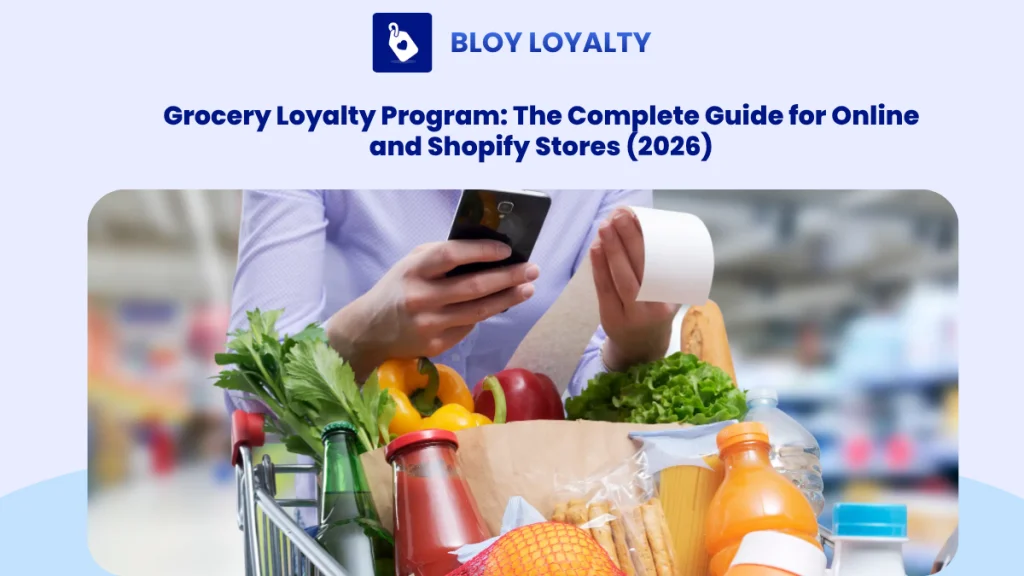
A grocery loyalty program is one of the fastest ways to turn a one-time shopper into a weekly customer. Grocery and food products get used up quickly, so people reorder on a natural schedule. A well-built grocery loyalty program simply gives them a reason to come back to your store instead of a competitor. This guide shows online grocers, Shopify merchants, and direct-to-consumer (DTC) food brands how to design, build, and launch that program the right way.
Why the old grocery loyalty program model does not fit online stores
When most people picture a grocery loyalty program, they think of a plastic card at a supermarket checkout. Big chains run these on heavy point-of-sale (POS) hardware, and they lean hard on price cuts to drive visits. That model works for a physical chain, but it drains margin and it does not translate to an online store.
An online grocery loyalty program plays a different game. You own the checkout, you own the customer data, and you own the follow-up. That means your program can reward far more than spending alone. It can reward reviews, referrals, social shares, and repeat subscription orders, all without a single plastic card. You build high-margin loyalty through points and perks rather than deep discounts, which protects your bottom line.
The takeaway is simple. Do not copy the supermarket playbook. Build a digital-first grocery loyalty program that fits how people actually buy food online.
Why every online grocery and food brand needs a loyalty program
Grocery is a repeat-purchase category by nature. Coffee, snacks, sauces, supplements, and pet food all run out and get reordered. That high purchase frequency is exactly why a grocery loyalty program compounds so fast. Every reorder earns points, every points balance pulls the customer back, and every return visit deepens the habit.
The metrics a grocery loyalty program moves
A loyalty program is not a “nice to have.” It moves the numbers that decide whether an online grocery business survives:
- Repeat Purchase Rate (RPR): the share of customers who buy more than once. Points give a direct reason to place that second and third order.
- Average Order Value (AOV): tiered rewards and points thresholds nudge shoppers to add one more item to unlock a reward.
- Customer Lifetime Value (LTV): the total a customer spends over time. Higher RPR and AOV lift LTV automatically.
- Customer Acquisition Cost (CAC): rising ad costs make paid growth expensive. Loyalty and referrals bring repeat and word-of-mouth sales that lower your blended CAC.
Research published in the Harvard Business Review shows that acquiring a new customer can cost five to twenty-five times more than keeping an existing one, and that raising customer retention by just 5 percent can lift profits by 25 to 95 percent. That is the economic case for a grocery loyalty program in a single line. Shopify makes the same point for online stores: repeat customers are cheaper to sell to and tend to spend more over their lifetime than first-time buyers.
Loyalty plus subscriptions
Many online grocery and food brands sell on a subscription. Pair the two. Give bonus points on every recurring delivery, and your grocery loyalty program becomes a reason to stay subscribed rather than cancel. The subscription drives predictable revenue and the loyalty layer protects it.
Core grocery loyalty program models
There is no single “best” structure. Pick the model, or blend of models, that matches your margins and your customers.
Points for purchases
The classic engine. Customers earn points for every dollar spent and redeem them for discounts, free products, or free shipping. This is the digital version of the grocery rewards shoppers already understand, so adoption is easy. It is the natural backbone of almost any grocery loyalty program.
Tiered VIP membership
Tiers reward your best customers with status and perks. Higher tiers can unlock free shipping, early access to new seasonal products, exclusive recipe content, or members-only items. Tiers work well for grocery because frequent buyers climb fast and feel recognized.
Referral loops
Food is social, so referrals are a powerful growth channel. A simple “give ten dollars, get ten dollars” offer turns happy customers into a low-cost acquisition engine. Because a friend’s recommendation carries trust, referred customers often convert better and cost less than paid traffic.
Must-have features for a Shopify grocery loyalty program
If you run on Shopify, your grocery loyalty program should feel native to your store, not bolted on. These are the features that matter most.
Seamless Shopify checkout and one-click redemption. Points are worthless if they are hard to use. Customers should see and apply rewards right at checkout without leaving your store.
Email and SMS integration. Connect your program to a marketing tool like Klaviyo so you can send automated reminders when a customer is close to a reward or has points about to expire. These nudges bring shoppers back without extra ad spend.
Review and social sharing rewards. Food photos are marketing gold. Reward customers with points for leaving a product review through an app such as Judge.me or for sharing a photo of your product. You turn happy customers into content creators and social proof.
On-brand widget and custom branding. Your rewards panel should match your store, not look like a generic plugin. Clean, on-brand design keeps the experience premium, which matters for food brands that sell on taste and identity.
This is where BLOY fits. BLOY is a Shopify loyalty app built to deliver these features with a clean, on-brand widget and native checkout, so your grocery loyalty program looks and works like part of your store.
How to set up your grocery loyalty program on Shopify, step by step
You do not need a developer to launch. A modern Shopify loyalty app lets a merchant go live in well under an hour. Here is the practical path.
Step 1: Set your earning rules
Start simple. One point per dollar spent is easy to understand. Then add two or three bonus actions: points for signing up, points for a referral, and points for a product review. With an app like BLOY, you configure these earning rules in roughly thirty minutes, no code required.
Step 2: Protect your margins when setting redemption values
This step is where many stores slip. Grocery can be a low-margin category, so a reward that is too generous eats your profit. Set redemption values carefully. A good rule of thumb is to keep the cost of rewards at a small, fixed percentage of revenue so the program stays profitable as it scales. Model the math before you launch, not after.
Step 3: Choose your tiers and perks
Decide whether to launch with tiers now or add them later. If you have a base of repeat buyers, tiers give them something to climb toward. If you are early, start with points and referrals, then layer tiers in once you have data.
Step 4: Connect email and SMS, then launch
Link your program to your email and SMS tool, set up your reward-reminder automations, and announce the launch to your existing list. Your current customers are the fastest path to early redemptions and quick wins.
Step 5: Measure and refine
Behavior change compounds over months, not days. Watch your Repeat Purchase Rate and AOV in the first three to four months, then adjust earning and redemption rules based on what the data shows. A grocery loyalty program is a living system, so treat it like one.
Real grocery rewards that actually work
The best way to design your program is to look at rewards that fit how people buy groceries. Use these as a starting menu, then pick the handful that match your margins and your brand.
Reward the reorder. Give bonus points on a customer’s second and third order to build the habit early. The first reorder is the hardest to earn, so make it worth their while.
Reward the review with a photo. Offer extra points when a customer adds a photo to a product review. For food and drink, a real photo of the product on someone’s table is stronger social proof than any ad you can run.
Reward the subscription. If you sell on a recurring plan, hand out bonus points on every scheduled delivery. This turns your grocery loyalty program into a reason to stay subscribed instead of cancelling.
Reward the referral. Let members send a friend a discount and earn points when that friend buys. Food is shared and talked about, so referrals spread naturally in this category.
Reward the milestone. Celebrate a customer’s birthday or their one-year anniversary with a points bonus or a free add-on. Small, personal touches build the emotional loyalty that discounts alone cannot.
The point is to reward behavior, not just spending. A grocery rewards program that only pays for dollars spent leaves the most valuable actions, reviews, referrals, and repeat subscriptions, on the table.
Frequently asked questions
How much does a grocery loyalty program cost on Shopify? Most Shopify loyalty apps use monthly plans that scale with your order volume, and several offer a free tier for new stores. Factor in both the app cost and the value of the rewards you give out. For a low-margin grocery category, the reward cost usually matters more than the software fee.
How long before a grocery loyalty program shows results? Expect early signs in Repeat Purchase Rate within three to four months, with the bigger lift in lifetime value compounding over six to twelve months.
Do I need a developer to launch? No. A modern Shopify loyalty app handles earning rules, redemption, and the on-store widget with no code, so most merchants can launch in under an hour.
What is the best model for a grocery loyalty program? Start with points for purchases because it is simple and familiar, then add referrals and, once you have repeat buyers, VIP tiers.
Turn first-time shoppers into regulars
A grocery loyalty program works because your products are built for repeat purchase. Give customers points, status, and reasons to reorder, and you raise repeat rate, order value, and lifetime value while lowering your reliance on paid ads. Build it digital-first, keep the redemption math profitable, and launch to your existing customers first.
Ready to build a grocery loyalty program that looks and works like part of your Shopify store? Explore BLOY and set up your earning rules in minutes.

Yến Lê Hải
Content author at BLOY, focusing on product-led content, SEO, and educational resources to help merchants improve conversion and customer engagement.