5 Shopify Loyalty Program Ideas for Startups Building Their First Customer Base
Launching a Shopify store is just the beginning, but many startups struggle to turn their first customers into loyal fans. Without a clear loyalty strategy, repeat sales often remain low and growth stalls. In this guide, you will uncover proven Shopify loyalty program ideas that actually work for new stores. You will also get a curated list of the top apps to kickstart your first loyal customer base. This will help you start building a thriving community from day one.
💡 Key Takeaways:
- Start small but structured: Begin with 1–2 simple reward actions like sign-up or first purchase.
- Prioritize emotional loyalty: Reward engagement, not just spending.
- Pick an all-in-one tool early: Save time and costs by choosing an app that combines points, tiers, and referrals.
- Track retention from day one: Use Shopify analytics or built-in dashboards to monitor growth.
1. Why Startups Should Implement a Loyalty Program Early?
According to Bain & Company, increasing customer retention by just 5% can boost profits by up to 95%. For Shopify startups, this is particularly important because acquiring new customers is expensive and competing with established brands can be challenging. By implementing a loyalty program early, startups can:
- Turn first-time buyers into repeat customers, ensuring steady revenue from the very beginning.
- Build stronger emotional connections with their audience, which helps small brands stand out.
- Reduce marketing costs over time by retaining customers instead of constantly acquiring new ones.
- Encourage referrals and word-of-mouth, which are low-cost but highly effective ways to grow a customer base.
Overall, an early loyalty program not only drives sales but also helps startups establish a loyal community, creating a foundation for long-term growth.
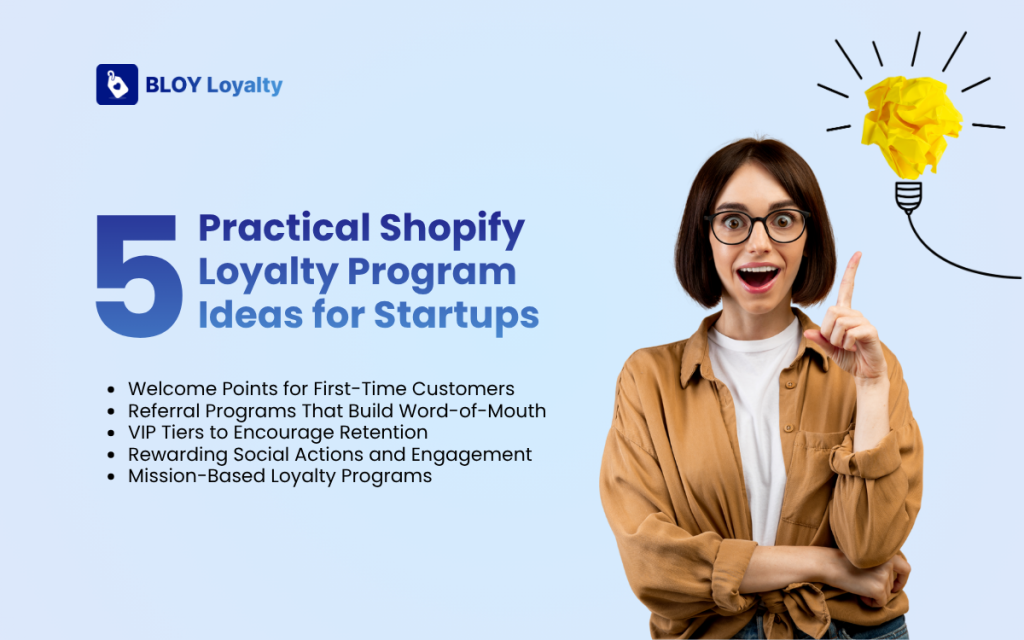
2. 5 Practical Shopify Loyalty Program Ideas for Startups
For new Shopify startups, an effective loyalty program doesn’t need to be overly complex, but it must target the needs of first-time customers. Here are 5 actionable ideas, each with examples and illustrative tables, to help you implement them right away.
Idea 1: Welcome Points for First-Time Customers
For new Shopify startups, acquiring customers can be expensive and competing with established brands is tough. That’s why building loyalty from the very first interaction is crucial.
One of the simplest and most effective strategies is to award points on a customer’s first purchase or sign-up. This approach makes shoppers feel valued while encouraging repeat visits, helping startups maximize limited marketing budgets. According to a Shopify report in 2024, offering a reward for first-time buyers can increase repeat purchase rates by 30%. For example, a startup fashion store could grant 100 points for the first purchase, equivalent to 10% off the next order, giving customers a strong incentive to return quickly.
💡 With BLOY Loyalty, you can set automatic welcome points for sign-ups or first purchases right from the $29 plan without any add-ons required.
Idea 2: Referral Programs That Build Word-of-Mouth
Referrals are one of the most cost-effective growth strategies, especially for startups with limited marketing budgets. Acquiring new customers through paid advertising can be expensive, so startups need ways to grow organically.
By encouraging existing customers to refer friends, startups can generate new sales at minimal cost. When a referral program is in place, both the referrer and the referee receive rewards, creating a loyalty loop that keeps customers engaged.
According to a 2023 Shopify Plus report, referral programs can boost conversion rates by up to 12%, compared to 2–3% for paid advertising channels. This shows how startups can achieve high-impact growth without overspending.
For example, a fashion startup could reward 50 points to both the referring customer and the referred friend. This not only motivates repeated engagement but also helps expand the customer base organically.
Mini comparison table: Referral vs Paid Ads (Shopify Blog, 2024)
| Channel | Avg. Conversion | Cost per Acquisition |
|---|---|---|
| Paid Ads | 2% | $15–30 |
| Referral | 12% | <$5 |
Idea 3: VIP Tiers to Encourage Retention
Tiered loyalty programs, such as Bronze → Silver → Gold → VIP, are a powerful way for startups to encourage repeat purchases and increase average order value. For new Shopify stores competing with larger brands, giving customers a sense of recognition early can help build stronger engagement and long-term loyalty.
As customers accumulate points and move up the tiers, they feel acknowledged for their loyalty, which motivates them to return more frequently. For example, a customer who reaches 300 points could be promoted to the Silver Tier and receive a 5% discount on each purchase. This provides a tangible reward that encourages continued engagement and higher spending.
Suggested tier structure table:
| Tier | Points Required | Reward Example |
|---|---|---|
| Bronze | 0 | Sign-up bonus |
| Silver | 300 | 5% discount |
| Gold | 800 | Free shipping |
| VIP | 1500 | Exclusive gifts |
💡 Unlike most Shopify apps that charge extra for tiered systems, BLOY Loyalty includes VIP tiers in its $29 plan — making it one of the best-value options for startups.
Idea 4: Rewarding Social Actions and Engagement
Today’s customers don’t just buy products, they also engage with brands on social media. For Shopify startups with limited marketing reach, encouraging social engagement can help amplify brand awareness without significant ad spend.
Rewarding actions such as following Instagram, sharing posts, or writing product reviews creates loyalty loops that extend beyond purchases. These interactions strengthen the relationship between customers and the brand, turning casual shoppers into active advocates.
For example, a startup could award points to customers who share a new product post or leave a review. Over time, this not only increases engagement but also drives organic traffic and potential new customers.
Idea 5: Mission-Based Loyalty Programs
If your startup has a clear brand story (eco-friendly, handmade, local), you can reward non-purchase actions. This resonates particularly with Gen Z and Millennials, who prioritize brands with social impact.
Example:
- Customers recycle packaging → earn points
- Customers provide feedback or attend events → earn points
>> Read more: 7 Types Of Shopify Loyalty Programs And How To Pick The Right One
3. Tools & Apps to Implement on Shopify
For startups, choosing the right loyalty app is crucial. Here’s a concise comparison of three popular options:
| Tool | Purpose | Free Plan | Ideal for | Notes |
|---|---|---|---|---|
| BLOY Loyalty | Points, VIP tiers, referrals | ✅ | New startups | Only $29/month, includes VIP tiers, referral program, and all core features — great value for startups. |
| Smile.io | Points & rewards | ✅ | Small startups | VIP tiers require $199/month; can be expensive for new stores. |
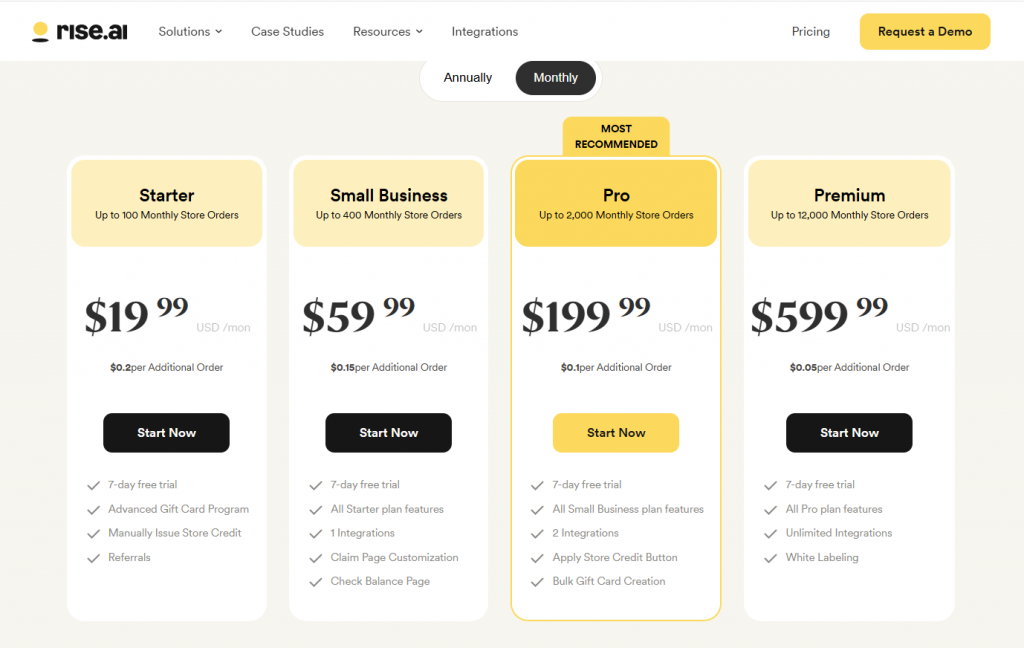
| Rise.ai | Store credit & gift cards | ❌ | Stores with repeat customers | Focused on store credit; Starter plan $19.99/month, tiered features; less flexible for full loyalty program. |
BLOY Loyalty ($29/month)
- Unlimited orders
- Points program + VIP tiers + referral program included
- Loyalty page, post-purchase app blocks, points on cart page/slider
- Advanced branding customization
- Integrations with Klaviyo, Judge.me, etc.
- Priority support, 14-day free trial
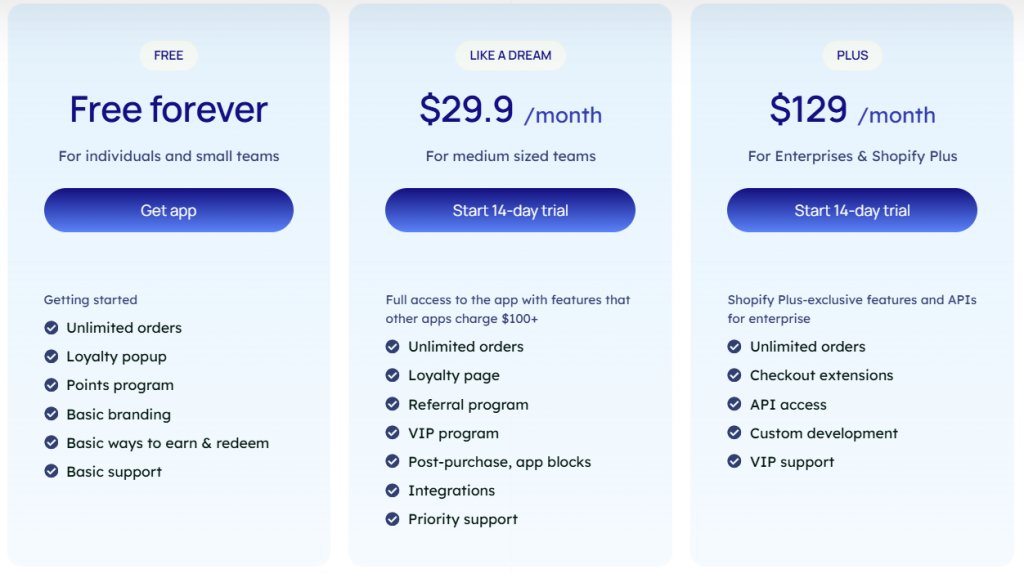
For $29/month, BLOY Loyalty offers points program, VIP tiers, and referral features in one plan, while some other apps require higher-tier subscriptions for similar functionality.
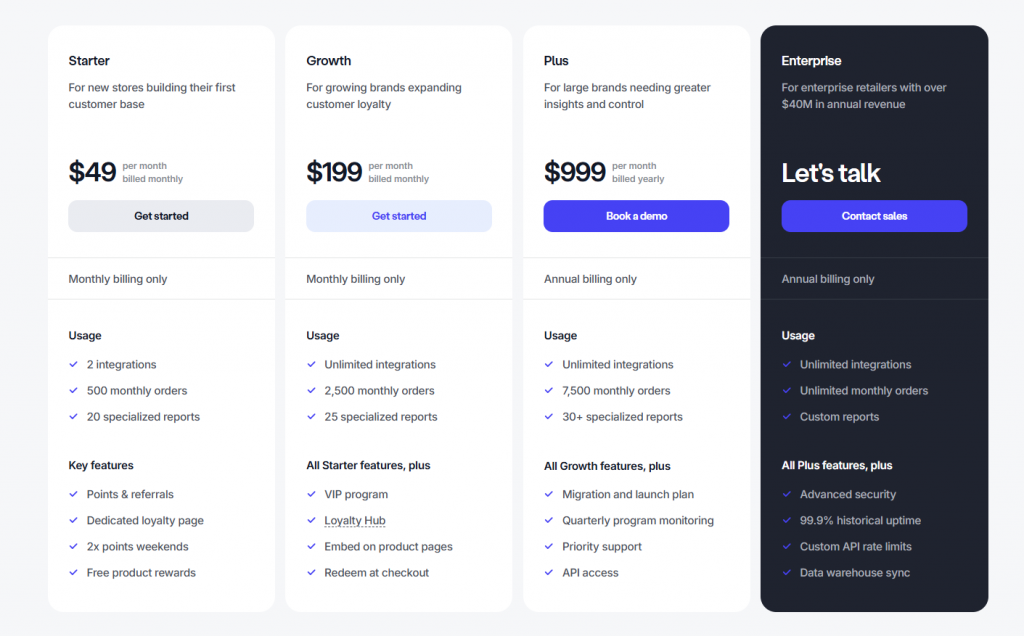
Smile.io
- Free plan: up to 200 monthly orders, basic points, rewards, and referrals
- Starter: $49/month, up to 500 orders, bonus events, free product rewards
- Growth: $199/month, 2,500 orders, includes VIP tiers & advanced analytics
- Plus: $999/month, enterprise features and API access
- Observation: VIP tiers only available on Growth or higher, expensive for small startups.
Rise.ai
- Observation: Great for store credit, but less suited for a full-feature loyalty program (points, VIP tiers, referrals).For $29/month, BLOY Loyalty offers points, VIP tiers, and referral features in one plan, while some other apps require higher-tier subscriptions for similar functionality.
- Starter: $19.99/month, 100 monthly orders, basic gift card & store credit, 7-day free trial
- Small-Business: $59.99/month, 400 orders, additional features
- Pro: $199.99/month, 2,000 orders, bulk gift cards, advanced features
4. How to Measure Success (KPIs & Metrics)
Tracking the right metrics ensures your loyalty program drives meaningful results. Key KPIs for startups include:
| KPI | Description | Ideal Range for Startups |
|---|---|---|
| Repeat Purchase Rate | % of customers buying again | 15–30% |
| Redemption Rate | % of points redeemed | 25–50% |
| CLV (Customer Lifetime Value) | Total revenue per customer | Growing YoY |
| Referral Rate | % of new customers from referrals | >10% |
💡 Consistently monitor these KPIs to adjust rewards, tiers, and referral incentives, ensuring your program grows alongside your customer base.
5. Conclusion
Loyalty programs are a powerful way to build a community while keeping customers coming back. You don’t need a big budget, what matters most is consistency and creativity in rewarding your shoppers. If you’re ready to implement a complete loyalty program for your Shopify store, you can book a demo with BLOY today and see how it works for your startup.

Zoe Pham
Zoe Pham is a content strategist at BLOY, specializing in customer retention and loyalty marketing. She writes about practical ways Shopify brands can boost lifetime value and grow sustainably.