10 Loyalty Program Ideas for Small Business That Are Easy to Run
Loyalty program ideas for small business are often searched by merchants who already understand the importance of retention but feel uncertain about which idea actually fits their size and resources. Research consistently shows that customer retention has a direct impact on profitability, yet many small businesses struggle to translate this insight into a loyalty program they can realistically run.
For small business owners, the challenge is not whether to launch a loyalty program, but how to start without creating extra complexity. Choosing the wrong idea can lead to low engagement, added workload, or a program that quietly gets ignored. This guide focuses on loyalty program ideas for small businesses that are practical to manage, easy to explain to customers, and flexible enough to grow over time.
1. Why choosing the right loyalty program idea is hard for small businesses
A loyalty program idea works for a small business when it aligns with existing operations and customer behavior. In practice, simple loyalty programs are easier for small businesses to manage than complex systems that require advanced data or constant monitoring.
The most effective loyalty ideas focus on one repeat behavior at a time, use minimal data, and allow room for testing. This makes it easier for small businesses to launch quickly, learn from real customer responses, and adjust without disrupting daily operations.
2. What makes a loyalty program idea actually work for small businesses
A loyalty program idea works for a small business when it aligns with existing operations and customer behavior. In practice, simple loyalty programs are easier for small businesses to manage than complex systems that require advanced data or constant monitoring.
Rather than relying on complex rules or advanced data, strong loyalty program ideas for small business use minimal inputs and allow room for testing and adjustment. This approach helps merchants learn from real customer behavior, refine their program gradually, and build a loyalty system that stays active instead of becoming another forgotten initiative.
3. 10 loyalty program ideas for small business you can actually run
Not every loyalty program needs tiers, complex rules, or automation from day one. The loyalty program ideas for small business below are designed around real constraints such as limited time, small teams, and simple customer data.
Each idea focuses on a single goal and can be tested without heavy setup. You do not need to run all ten. The goal is to identify one or two loyalty program ideas that fit your current stage and customer behavior, then build from there.
3.1. Idea 1: Points for repeat purchases only
When this works best for small businesses
This loyalty program idea works best for small businesses that already have customers returning occasionally but want to increase purchase frequency. It is especially useful when customers understand your brand but do not yet have a strong reason to come back consistently.
Why this loyalty program idea fits small businesses
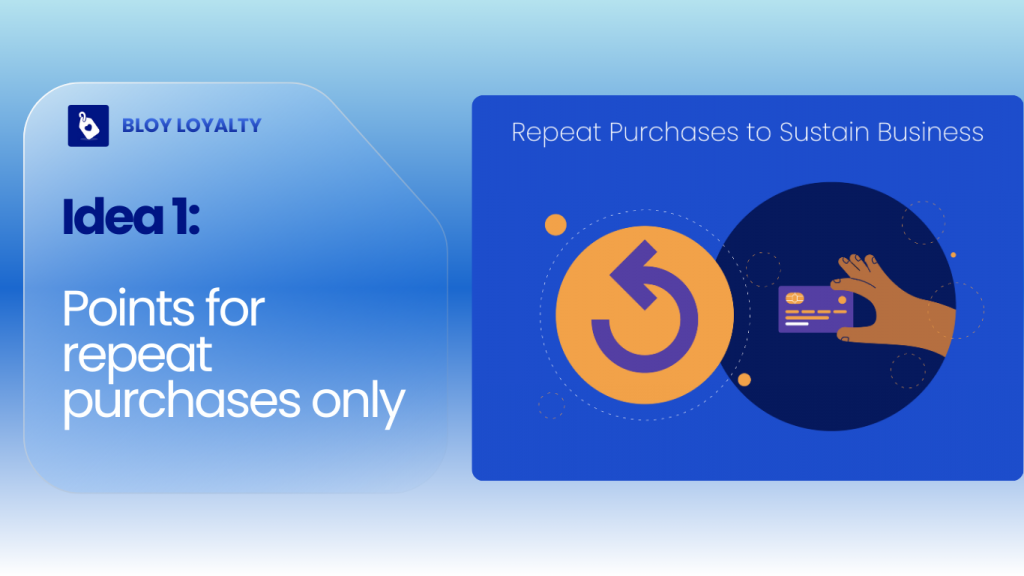
Instead of rewarding every action, this idea focuses only on repeat purchases. Customers earn points starting from their second purchase, which reinforces habit-building rather than one-time incentives. Studies show that repeat purchases are driven by habit, not one-time rewards, making this approach especially effective for small businesses.
By limiting points to repeat behavior, merchants reduce complexity, protect margins, and gain clearer insight into whether their loyalty program is influencing customer habits.
Common mistake to avoid
Many small businesses make this loyalty program too complicated by adding extra point rules or stacking bonuses early on. When customers cannot easily understand how points are earned, engagement drops. Start with a single rule and expand only after you see consistent repeat behavior.
3.2. Idea 2: VIP access based on total spend, not points
When this works best for small businesses
This idea works well for small businesses that already have a small group of high-spending customers but do not want to manage a full tier or points programs. It fits stores where repeat customers value recognition more than discounts.
Why this loyalty program idea fits small businesses
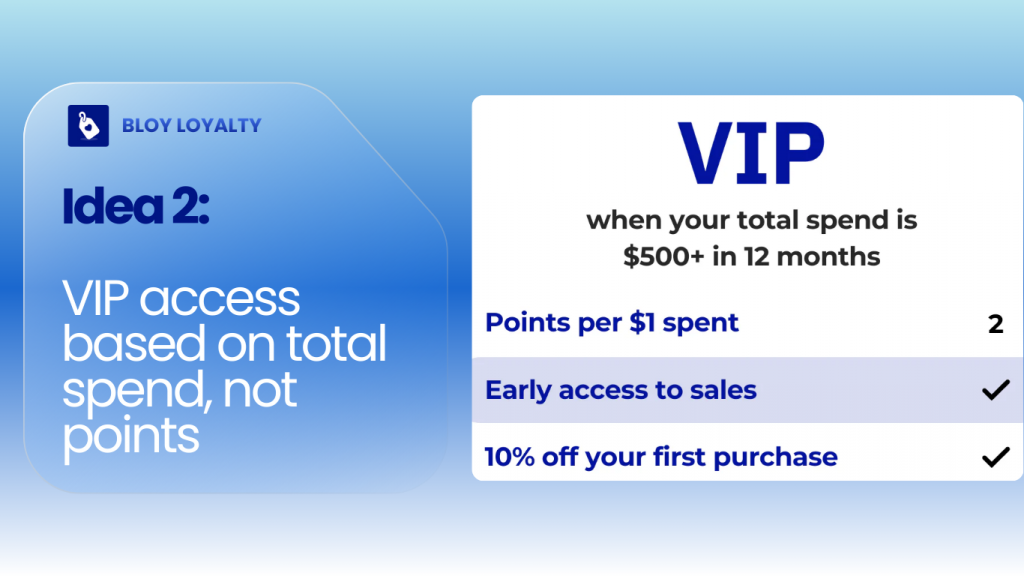
Instead of tracking points, customers unlock VIP access once they reach a clear spending threshold. This keeps the loyalty logic simple and easy to communicate. Small businesses can reward loyalty with early access, exclusive products, or priority support without ongoing calculations.
Because this idea relies on total spend rather than frequent actions, it reduces operational effort while still making loyal customers feel recognized and valued.
Common mistake to avoid
A common mistake is setting the spending threshold too high or making VIP benefits unclear. If customers do not understand what they unlock or feel the goal is unreachable, the program loses motivation quickly. Keep the threshold realistic and benefits obvious.
3.3. Idea 3: Second-purchase rewards instead of first-purchase incentives
When this works best for small businesses
This loyalty program idea works best for small businesses struggling with one-time buyers who never return. It is especially useful when acquisition is strong but repeat purchase rates remain low.
Why this loyalty program idea fits small businesses
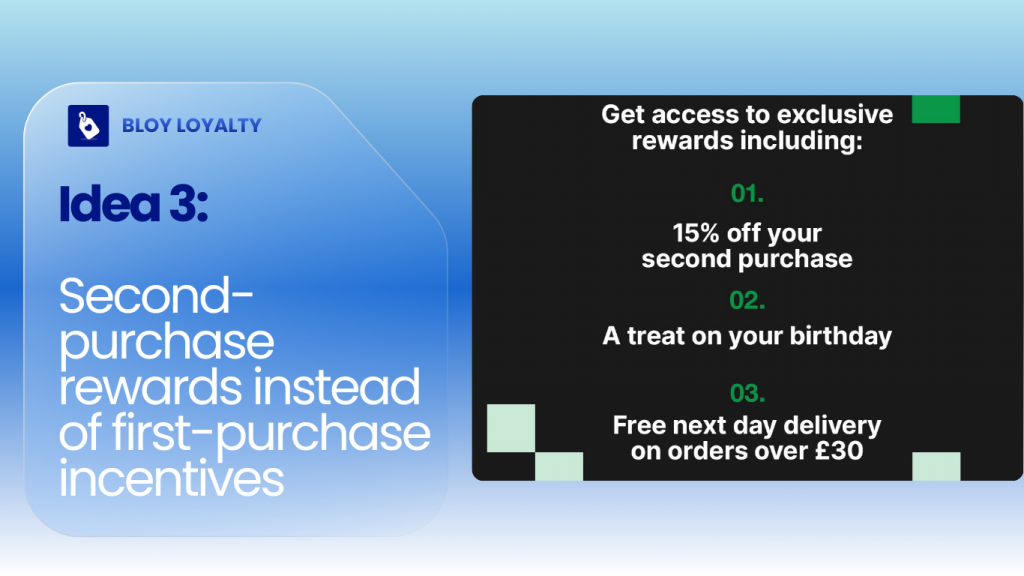
Focusing rewards on the second purchase aligns loyalty investment with long-term value. Repeat customers tend to generate higher lifetime value, and repeat customers deliver more value over time than one-time buyers.
For small businesses, this approach keeps loyalty spending efficient while directly targeting the behavior that matters most.
Common mistake to avoid
Many small businesses weaken this idea by combining it with aggressive first-purchase discounts. When customers are rewarded too early, there is little incentive to come back. Keep the reward clearly tied to the second purchase to reinforce the habit.
3.4. Idea 4: Referral rewards unlocked after repeat behavior
When this works best for small businesses
This idea works best for small businesses that want referrals but struggle with low-quality or one-time referral traffic. It is effective when existing customers are satisfied but not yet actively promoting the brand.
Why this loyalty program idea fits small businesses
Referral rewards are unlocked only after the referring customer has shown repeat behavior, such as completing a second or third purchase. This ensures that referrals come from genuinely loyal customers rather than first-time buyers chasing incentives.
For small businesses, this approach reduces referral abuse and keeps reward costs tied to customers who already generate value.
Common mistake to avoid
A common mistake is allowing referrals immediately after the first purchase. This often attracts deal-seekers rather than loyal advocates. Delay referral rewards until repeat behavior is established to maintain quality and trust.
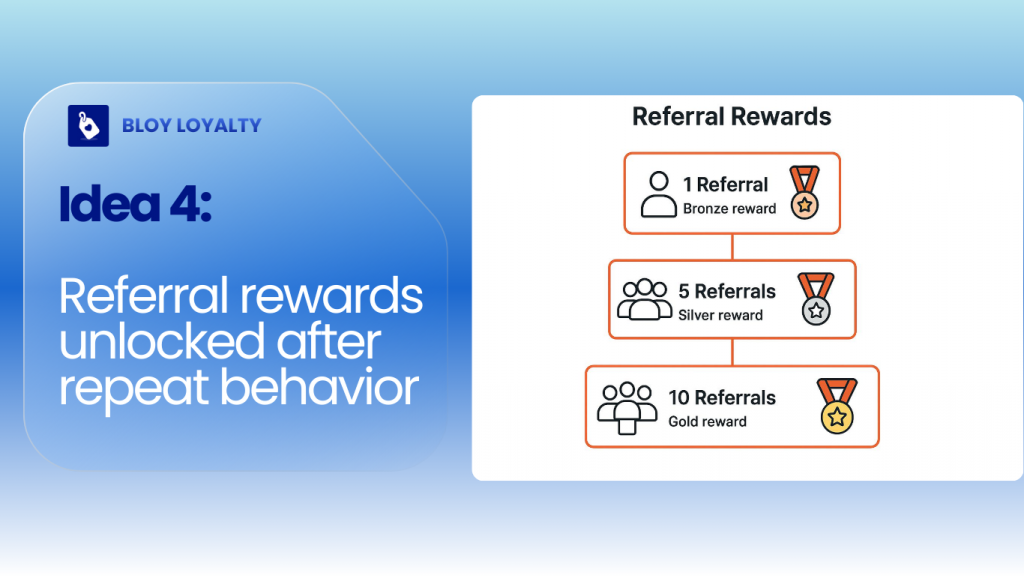
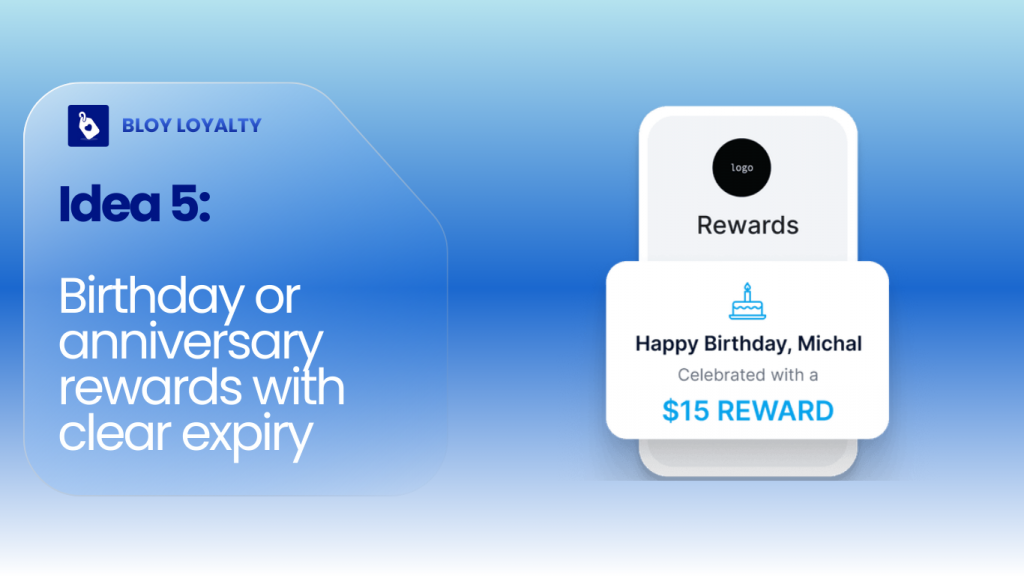
3.5. Idea 5: Birthday or anniversary rewards with clear expiry
When this works best for small businesses
This loyalty program idea works well for small businesses that already collect basic customer data such as email or birthday. It is especially effective when customers do not have a strong reason to return regularly on their own.
Why this loyalty program idea fits small businesses
Birthday or anniversary rewards create a natural moment to re-engage customers without relying on constant promotions. For small businesses, this idea is easy to automate or even manage manually, since it only triggers once per customer each year.
A clear expiration date encourages customers to act without requiring ongoing follow-up. This keeps the loyalty program lightweight while still driving meaningful return visits.
Common mistake to avoid
Many small businesses forget to set a clear expiry or make the reward too generic. When customers feel no urgency or do not understand the benefit, the reward is often ignored. Keep the offer simple and time-bound.
3.6. Idea 6: Early access for returning customers only
When this works best for small businesses
This idea works best for small businesses that launch new products, collections, or limited-stock items. It is especially useful when repeat customers already show interest but lack a sense of exclusivity.
Why this loyalty program idea fits small businesses
Early access rewards loyalty without relying on discounts. Returning customers feel recognized, while small businesses protect margins and avoid training customers to wait for sales.
Operationally, early access is simple to manage and easy to explain. Customers immediately understand the value without needing points, tiers, or complex rules.
Common mistake to avoid
A common mistake is offering early access too broadly. If everyone qualifies, the sense of exclusivity disappears. Keep early access limited to customers who have already demonstrated repeat behavior.
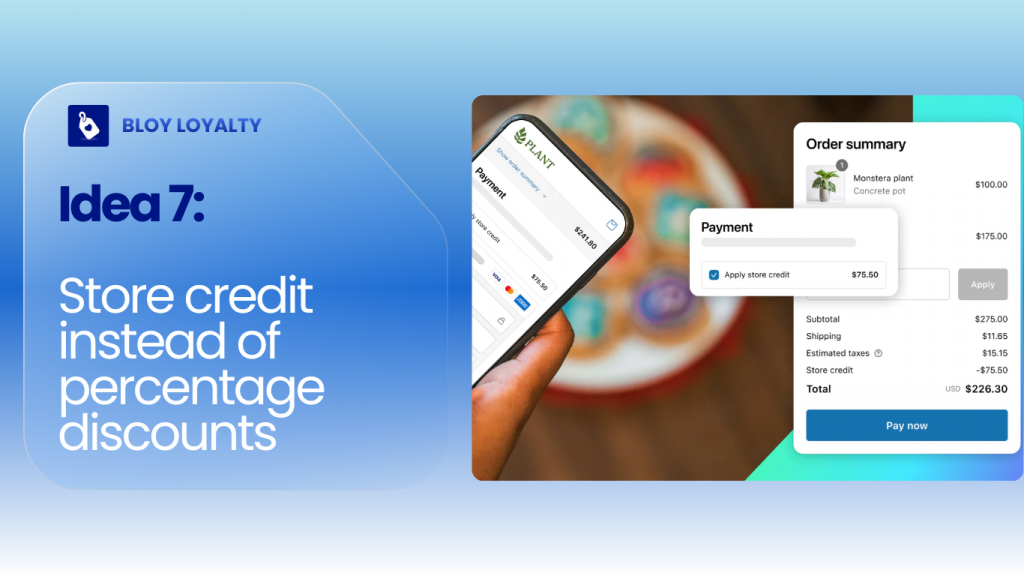
3.7. Idea 7: Store credit instead of percentage discounts
When this works best for small businesses
This loyalty program idea works best for small businesses that want to encourage repeat purchases while protecting profit margins. It is especially useful when discounting has become the default incentive.
Why this loyalty program idea fits small businesses
Store credit feels tangible to customers while keeping value inside the business. Unlike heavy discounting, credit-based rewards help preserve pricing integrity, especially when excessive discounting can hurt long-term profitability.
This makes store credit a practical loyalty option for small businesses that want to encourage repeat purchases without eroding margins.
Common mistake to avoid
Many small businesses offer store credit without clearly communicating how it can be used. If customers forget or feel unsure about redemption, the reward loses impact. Make credit visibility and redemption rules very clear.
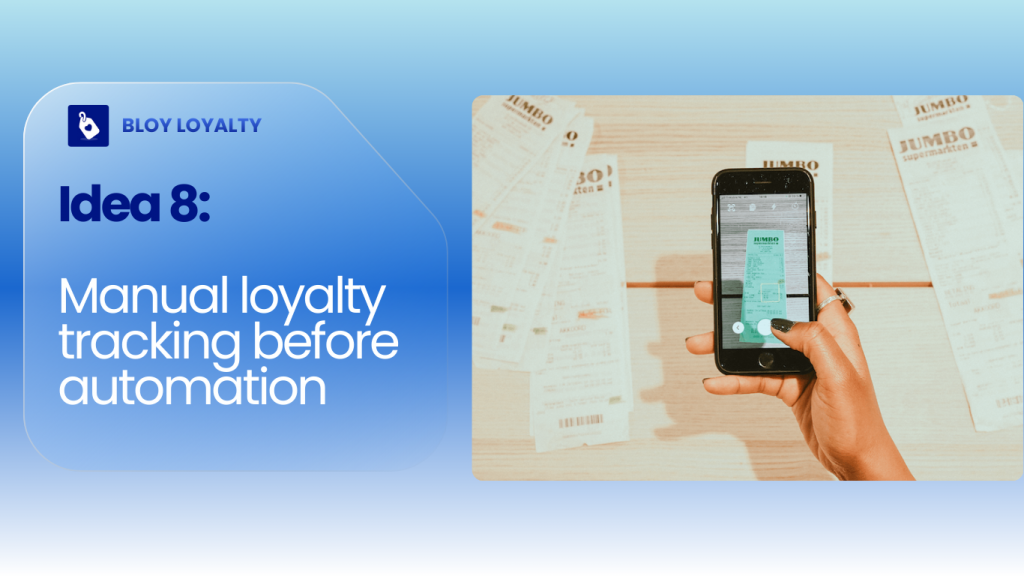
3.8. Idea 8: Manual loyalty tracking before automation
When this works best for small businesses
This loyalty program idea works best for small businesses that are new to loyalty and are unsure which program structure will work long term. It is especially useful when transaction volume is still manageable and merchants want to learn before committing to a tool.
Why this loyalty program idea fits small businesses
Starting with manual tracking allows small businesses to validate loyalty behavior before committing to tools or automation. In early stages, small businesses should validate loyalty behavior before scaling to avoid building programs that customers do not use.
This approach helps merchants learn quickly and transition to automation only when patterns are clear.
Common mistake to avoid
A common mistake is staying manual for too long. Manual tracking is a learning phase, not a permanent solution. Once patterns are clear and repeat behavior increases, small businesses should transition to a more scalable setup.
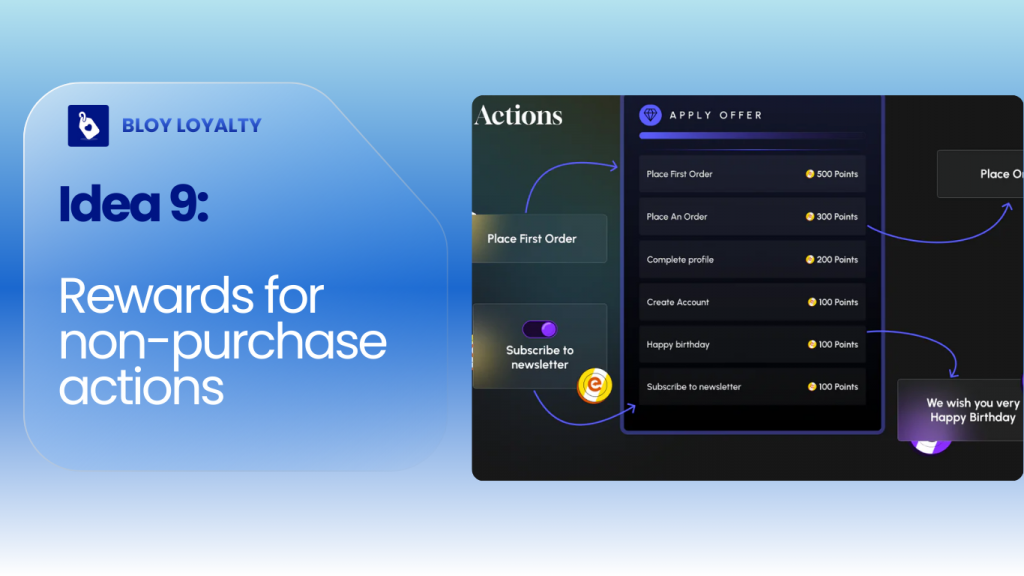
3.9. Idea 9: Rewards for non-purchase actions
When this works best for small businesses
This idea works best for small businesses with low purchase frequency but strong customer engagement. It is effective when customers interact with the brand but do not buy often.
Why this loyalty program idea fits small businesses
Rewarding actions such as reviews, feedback, or referrals allows small businesses to build loyalty even when purchases are infrequent. These actions improve trust, visibility, and long-term conversion without relying solely on discounts.
For small businesses, non-purchase rewards create multiple touchpoints and keep customers engaged between purchases.
>> Maybe you want to read: How Referral Loyalty Programs Can Supercharge Your Shopify Store?
Common mistake to avoid
Many small businesses reward too many actions at once. This makes the program confusing and harder to manage. Start with one non-purchase action that supports your current growth goal.
3.10. Idea 10: Time-based loyalty perks
When this works best for small businesses
This loyalty program idea works best for small businesses that want to encourage consistent return behavior rather than occasional spikes. It is useful when customers purchase irregularly and need a reason to come back within a specific time frame.
Why this loyalty program idea fits small businesses
Time-based perks reward customers for staying active within a set period, such as monthly or quarterly benefits. This keeps loyalty simple and predictable without complex calculations.
For small businesses, time-based loyalty programs are easy to communicate and help establish a regular buying rhythm.
Common mistake to avoid
A common mistake is setting the time window too aggressively. If customers feel rushed or pressured, they may disengage. Choose a timeframe that matches natural buying cycles.
4. Conclusion
Loyalty does not have to start with complex systems or fully automated setups. The most effective loyalty program ideas for small business are the ones that fit your current resources and help you build repeat behavior step by step.
Once you find an idea that works in practice, the next challenge is maintaining consistency as your customer base grows. This is where tools like Bloy can help small businesses turn simple loyalty ideas into structured programs without adding unnecessary complexity. Instead of rebuilding from scratch, you can scale what already works and keep loyalty aligned with how your business actually operates.
The goal is not to launch the most advanced loyalty program, but to start with the right idea and grow it at a pace your business can sustain.

Yến Lê Hải
Content author at BLOY, focusing on product-led content, SEO, and educational resources to help merchants improve conversion and customer engagement.