Grocery Loyalty Programs: How to Turn Shoppers Into Weekly Customers
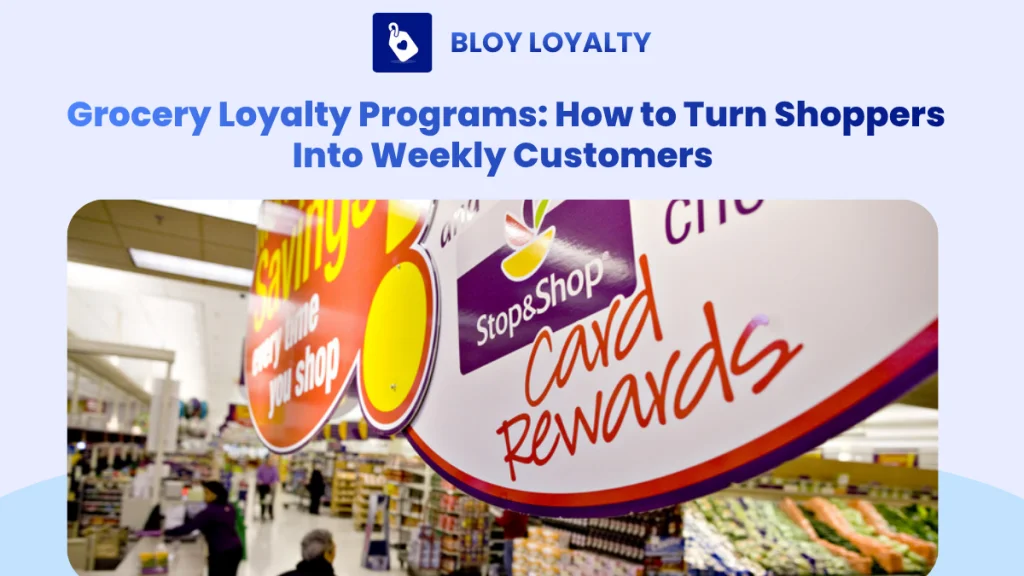
Grocery is not like other industries. Customers shop weekly, margins are thin, and competition from large chains is relentless.
That means your grocery store loyalty program cannot rely on discounts alone.
In this guide, you will learn how grocery store loyalty programs actually work, see real-world examples from leading retailers, and discover how to implement one on Shopify to increase repeat purchases and long-term customer retention.
1. Why Grocery Store Loyalty Programs Are Different
Before designing a grocery store loyalty program, it helps to understand what makes this industry structurally unique compared to fashion, electronics, or DTC brands.
1.1 High-Frequency, Low-Margin Business
Grocery customers shop frequently. A typical household visits a grocery store one to two times per week, which means a single loyal customer generates dozens of purchase opportunities every year. That frequency is an asset, but it comes with a catch: grocery margins are notoriously thin, often sitting between 1% and 3% for traditional supermarkets.
This creates a core tension in grocery store loyalty programs. You cannot afford to give away 10% discount coupons on every basket without destroying your margins. The program needs to reward customers without cannibalizing the thin margin that sustains the business.
According to research compiled by Capital One Shopping, supermarkets and food retail loyalty programs have the highest customer participation rate of any industry, with 33% of consumers actively enrolled. That level of participation signals a real opportunity, but it also means customers expect something meaningful in return for their data and attention.
1.2 Grocery Loyalty Is About Habits, Not Incentives
Here is the most important insight that separates effective grocery store loyalty programs from ineffective ones: grocery loyalty is not about triggering a purchase. It is about becoming the default choice.
When a household decides where to shop this week, they are not weighing loyalty points. They are following a habit. The job of a grocery loyalty program is to place your store inside that habit loop, so that choosing a competitor requires active effort rather than passive behavior.
The habit loop in grocery looks like this:
- Trigger: Running low on weekly staples
- Routine: Go to the same store
- Reward: Familiar experience, consistent prices, earned perks
A well-designed grocery store loyalty program inserts meaningful rewards into this loop without disrupting it. The goal is reinforcement of existing behavior, not manufacturing new behavior through discounts.
This is also why grocery stores with strong loyalty programs tend to outperform competitors on retention. Research from Envive shows grocery leads all retail categories with a 65.2% repeat purchase intent rate, and online grocery stores reach even higher retention at 71%, driven by the convenience of saved preferences and recurring orders.
2. How Grocery Store Loyalty Programs Work
At their core, grocery store loyalty programs follow a simple loop: customers earn rewards through purchases and defined behaviors, track their progress, and redeem those rewards at future touchpoints.
The mechanics that make this loop functional in a grocery context are:
Earn: Points or credits accumulate when customers purchase at your store, whether in-person via POS or online through your ecommerce channel. Some programs also reward non-purchase behaviors like writing product reviews or completing a profile.
Track: Customers see their balance in real time through a loyalty app, account dashboard, or receipt. Visibility is critical. If customers cannot easily check their balance, engagement drops.
Redeem: Rewards are applied at checkout, either automatically or through a manual claim. The smoother this step, the higher the redemption rate and the stronger the loyalty signal.
Where most grocery stores struggle is the gap between online and in-store. A customer who earns points online should be able to redeem them at your physical register without friction, and vice versa. Shopify merchants have a structural advantage here because Shopify POS syncs natively with the online store, making omnichannel loyalty significantly easier to manage without building a custom integration.
For a deeper breakdown of the different program structures available to Shopify merchants, the BLOY guide on loyalty program business models covers the financial mechanics in detail.
3. Five Types of Grocery Store Loyalty Programs (With Examples)
Not every loyalty model fits the grocery context equally well. Below are the five most common program types used in grocery retail, with real examples and practical guidance on when each makes sense.
3.1 Points-Based Programs
Points-based programs are the most widely used structure in grocery retail. Customers earn a defined number of points per dollar spent, and those points accumulate toward a reward threshold.
The appeal is simplicity. Customers understand the mechanic, and it is easy to communicate at the register or via email. Points programs also generate behavioral data over time, which becomes valuable for personalization.
Real-world example: Kroger’s loyalty program awards fuel points on qualifying purchases, giving customers a visible and immediately useful reward. The program links directly to Kroger’s app, where members see point totals, personalized offers, and weekly deals.
For Shopify merchants building a points-based grocery loyalty program, the BLOY guide on points-based loyalty programs for Shopify stores is a useful starting point for understanding earn rates, redemption design, and common setup mistakes.
3.2 Subscription or Paid Membership Programs
Subscription-based grocery loyalty programs charge customers a monthly or annual fee in exchange for a premium set of benefits: free delivery, exclusive discounts, early access to offers, or cashback on every purchase.
The Amazon Prime model has proven that customers will pay for access when the value is clearly greater than the cost. Several grocery chains have followed with their own versions.
Real-world example: Kroger Boost is a paid loyalty add-on that offers free delivery, double fuel points, and exclusive savings on top of the base loyalty program. According to Voucherify’s grocery loyalty research, Boost members show markedly higher engagement and longer lifetime value compared to standard loyalty members.
According to Capital One Shopping’s brand loyalty statistics, 79% of consumers participated in at least one paid loyalty program in 2024, and 82% of paid members purchase from the brand more frequently than free program members.
For Shopify merchants considering this model, the BLOY guide on paid loyalty programs explains how to calculate your break-even point and structure benefits that justify the membership fee.
3.3 Tiered Loyalty Programs
Tiered programs assign customers to membership levels (Bronze, Silver, Gold, or similar) based on their cumulative spending or purchase frequency. Each tier unlocks a progressively stronger set of benefits.
In a grocery context, tiers work best when they reward frequency rather than pure spend. A customer who shops every week at a modest basket size is more valuable long-term than a customer who shops once a month with a large order. Designing tier thresholds around visit frequency rather than total spend aligns the program with the behavior you actually want to reinforce.
How tiers create momentum: Research from the Journal of Marketing Research confirms that goal gradient effects, where effort and purchase frequency increase as customers approach a reward threshold, are amplified in tiered programs compared to flat reward structures. A customer who can see they are three visits away from Silver status has a behavioral reason to return that no coupon can replicate.
For a complete breakdown of how to build a tiered structure on Shopify, see the BLOY guide on tiered loyalty programs for Shopify stores.
3.4 Cashback and Store Credit Programs
Cashback and store credit models give customers a percentage of their spend back as credit that can be applied to future purchases. This approach is often more margin-friendly than percentage discounts at checkout because the credit is only realized when redeemed, and a portion of credits typically expire unused.
Cashback programs also feel tangible to customers. Unlike abstract point balances, a store credit balance reads as real money, which increases perceived value and redemption motivation.
Real-world example: Albertsons for U awards instant savings at checkout and store credit that applies across all Albertsons-owned brands, including Safeway, Vons, and Jewel-Osco. The cross-brand applicability increases the perceived usefulness of each credit earned.
3.5 Non-Transactional Rewards Programs
Non-transactional programs reward behaviors that go beyond purchasing: recycling packaging, leaving product reviews, completing a preference survey, attending a community event, or participating in wellness challenges.
These programs build a stronger relationship between the brand and the customer because they position the grocery store as a values-aligned community hub rather than a transactional venue. They also generate zero-party data (information customers voluntarily provide about their preferences) which becomes increasingly valuable as third-party tracking becomes less reliable.
Real-world example: Publix Club Publix rewards members for purchasing healthy foods and engaging with wellness challenges. According to Voucherify’s breakdown of grocery loyalty programs, what sets this program apart is its focus on wellness-based rewards that connect members to the store’s community identity rather than purely to discounts.
4. Grocery-Specific Loyalty Strategies That Competitors Are Missing
The five program types above are widely known. The strategies in this section are less commonly implemented, which is precisely why they represent the biggest opportunity for independent and mid-size grocery retailers to differentiate.
4.1 Expiration-Based Rewards to Drive Urgency
In most grocery store loyalty programs, points accumulate indefinitely with no urgency to act. This reduces behavioral impact because customers feel no pressure to return within a defined window.
Expiration-based rewards solve this problem by assigning a time limit to earned points or credits. “Your 200 bonus points expire in 14 days” is a specific, actionable prompt. It triggers a return visit in a way that a static balance never will.
The BLOY guide on repeat purchase rate for Shopify notes that expiry-based redemption nudges are among the most effective economic prompts for bringing customers back within their natural purchase window, precisely because they convert a passive balance into an active reason to act.
The key is calibrating the expiration window to your natural purchase cycle. For weekly shoppers, a 30-day expiration is appropriate. For customers who shop fortnightly, a 60-day window prevents alienating them while still creating urgency.
4.2 Basket-Based Incentives
Basket-based incentives reward customers for the composition of their purchase rather than the total value. “Buy any five fresh produce items this week and earn bonus points” is an example of a basket-based mechanic.
This strategy is particularly useful for grocery stores that want to shift purchasing behavior toward higher-margin categories. If your prepared meals section has stronger margins than packaged goods, a basket reward that includes a prepared meal in the qualifying criteria directs customers toward that section without discounting it directly.
Basket incentives also integrate naturally with weekly meal planning, which is how most households actually shop. A program that helps customers plan their week around a basket goal becomes a useful tool rather than just a reward mechanism.
4.3 Local and Fresh Product Rewards
One of the clearest advantages an independent grocery store has over a national chain is local sourcing and community identity. A loyalty program can make this advantage tangible by awarding bonus points on locally sourced products, seasonal produce, or fresh categories that large chains cannot replicate.
“Earn double points on all local farm products this week” does two things simultaneously: it rewards purchasing behavior and it signals community values. Customers who care about local sourcing have a reason to prefer your store over a national competitor, and your loyalty program becomes the vehicle through which that preference is expressed.
This approach also supports your fresh produce and prepared food departments, which typically carry better margins than packaged goods while reinforcing the store’s community positioning.
4.4 Weekly Habit Reinforcement
Weekly habit reinforcement rewards customers for visit consistency rather than per-purchase spend. “Shop three weeks in a row and unlock a bonus reward” is an example of a streak-based mechanic that has proven highly effective in high-frequency retail.
The psychology here draws on commitment and consistency: once customers start a streak, they become motivated to protect it. A customer who has shopped four weeks in a row is unlikely to let that streak lapse for a competitor’s weekly promotion.
This mechanic is best implemented through a mobile app or email automation that tracks visit consistency and sends progress updates. “You are one visit away from your bonus” is a highly effective re-engagement trigger that does not require discounting.
According to BLOY’s guide on loyalty program trends for 2026, brands that use loyalty to influence behavior before, during, and between purchases outperform those that treat loyalty purely as a post-purchase incentive. Streak mechanics are one of the clearest ways to execute on this principle in grocery.
5. POS and Online Loyalty Sync: The Shopify Advantage
One of the most common failure points in grocery store loyalty programs is the disconnect between in-store and online behavior. A customer who earns points online but cannot redeem them at the register (or vice versa) experiences friction that quietly erodes program trust.
5.1 The Omnichannel Myth Explained
Many grocery retailers assume that true omnichannel loyalty requires a custom mobile app, a dedicated loyalty platform, or a large technical team to build integrations between systems. This assumption leads smaller operators to defer or simplify their loyalty program in ways that reduce effectiveness.
The reality for Shopify merchants is more practical. Shopify POS syncs natively with the online store, meaning a customer’s loyalty balance, purchase history, and reward eligibility are accessible from both the online checkout and the physical register. No separate app is required for a functional omnichannel experience.
The absence of a separate app is often an advantage. App download rates for independent grocery stores are low, and requiring customers to download an app before accessing loyalty benefits creates a barrier that reduces enrollment. A web-based account or a loyalty card linked to a phone number achieves the same tracking without the friction.
5.2 How Shopify Merchants Can Sync Loyalty Across Channels
For a Shopify merchant running a grocery store with both physical and online operations, the loyalty sync process follows this structure:
- Earn in-store: Customer makes a purchase at the physical register. POS records the transaction and the loyalty app logs points to the customer’s account via their phone number or loyalty card.
- Earn online: Customer completes a checkout on the Shopify store. Points are logged automatically to their account.
- Redeem anywhere: Customer chooses to redeem their store credit or points at either the physical register or the online checkout. Both channels reflect the updated balance in real time.
This structure requires a loyalty app that is built on Shopify’s native infrastructure and supports both POS and online checkout events. Apps that only track standard online checkout transactions will miss in-store purchases, which in a grocery context may represent the majority of activity.
For merchants who want to understand how to set this up from a practical standpoint, the BLOY guide on how to set up a loyalty program walks through the configuration steps for Shopify stores, including POS integration.
6. Traditional vs. Digital Grocery Loyalty Programs
Many grocery stores still rely on paper punch cards or basic discount cards as their primary loyalty mechanism. The table below compares these traditional approaches against a digital loyalty program built on Shopify.
| Feature | Punch Card / Stamp Card | Digital Loyalty (Shopify) |
| Data tracking | No | Yes, per-customer purchase history |
| Personalization | No | Yes, based on behavior |
| Automation | No | Yes, email and SMS triggers |
| Omnichannel sync | No | Yes, POS and online |
| Expiration mechanics | Difficult | Easy to configure |
| Basket-based rewards | Not possible | Yes |
| Analytics and reporting | No | Yes |
| Cost to run | Low setup, no insight | Moderate setup, high return |
The core limitation of traditional punch cards is not cost, it is the absence of data. A punch card tells you nothing about which customers are churning, which categories drive repeat visits, or which reward structures are changing behavior. A digital loyalty program generates this information automatically, and that data compounds in value over time.
According to Digital Silk’s customer loyalty statistics, 75% of loyalty program members adjust their behavior to deliver greater value to the business when the program is designed effectively. That behavior change only happens when the program has the data infrastructure to deliver timely, relevant rewards. Punch cards cannot do that.
7. How to Build a Grocery Store Loyalty Program on Shopify
The following steps are designed for grocery store operators running Shopify, either pure online, pure in-store via Shopify POS, or a hybrid combination.
Step 1: Define Behavior First, Not Rewards
Most grocery store loyalty programs fail not because the rewards are wrong but because the program has no clear behavioral target. Before selecting a reward model, identify the one behavior you most want to change.
Common behavioral targets for grocery stores:
- Increase visit frequency from once to twice per week
- Increase basket size by adding one fresh category per visit
- Reduce churn in the 30-to-60-day window after a first online purchase
Each of these targets calls for a different program mechanic. Frequency goals respond to streak-based incentives. Basket goals respond to category-specific bonuses. Churn reduction responds to win-back automations tied to point expiration.
As a general decision rule: if your average order value is below $40 and your product is replenishable (which it is in grocery), focus on repeat frequency above all other metrics. The BLOY guide on how to set up a loyalty program breaks this decision framework down in practical detail.
Step 2: Choose Your Reward Model
For most grocery stores on Shopify, a points-based program with store credit redemption is the most effective starting structure. Points are easy to communicate, store credit is easy to understand, and the combination keeps customers in your store ecosystem rather than converting rewards to external value.
If you have a loyal base of high-frequency customers who shop multiple times per week, a tiered program layered on top of your base points structure will add status-driven motivation. Tiers are most effective once you have enough active members for tier status to feel meaningful. For a detailed look at membership tier structures, the BLOY guide on membership tiers for Shopify covers naming, threshold design, and benefit stacking.
A subscription tier (paid membership) becomes viable once your customer relationship is strong enough that customers will pay upfront for access to exclusive benefits. The BLOY analysis of the Costco loyalty program is a useful case study for understanding how upfront commitment changes customer spending behavior, and how any repeat-purchase brand can adapt this principle.
Step 3: Sync POS and Online
Install a loyalty app that supports both Shopify POS and online checkout. Verify that the app tracks point events from both channels and that the customer’s balance is accessible in both interfaces.
Test the sync before launch by completing a test purchase in-store and verifying that the loyalty balance updates in the customer’s online account. Repeat in reverse. If the sync does not work cleanly in testing, it will not work cleanly in production.
Step 4: Automate Personalization
The leverage in a grocery loyalty program comes not from the program structure itself but from the automations that run around it. Set up the following trigger-based sequences at minimum:
- Welcome sequence: Customer enrolls in the loyalty program. Automated email confirms enrollment, explains how to earn, and delivers a welcome bonus.
- Streak reinforcement: Customer completes their second consecutive weekly visit. Email acknowledges the streak and shows progress toward the next reward.
- Expiration warning: Customer has unused points approaching expiration. Email delivers a specific “your points expire in X days” prompt with a direct link to redeem.
- Win-back: Customer has not visited in 21 to 30 days (relative to their typical frequency). Email surfaces a bonus offer to re-engage.
These four sequences cover the highest-impact moments in the grocery loyalty lifecycle without requiring complex segmentation. They can be built in Klaviyo and connected to your Shopify loyalty app in a single afternoon.
8. Key Metrics to Track for Your Grocery Loyalty Program
A grocery store loyalty program that does not generate measurable behavior change is a cost center, not a growth tool. Track the following metrics from day one.
Repeat purchase frequency: How many times per week or month does the average loyalty member visit? Segment this by tier if applicable. If frequency is not increasing over time, the program is not working.
Redemption rate: What percentage of earned points or credits are actually redeemed? A very low redemption rate (below 20%) suggests customers do not find the rewards meaningful or the redemption process is too difficult. A very high redemption rate (above 80%) may indicate the program is too generous and eroding margin.
Basket size by category: Is the program shifting purchasing toward higher-margin or strategically important categories? Track basket composition for loyalty members versus non-members.
Customer lifetime value: What is the average total revenue generated by a loyalty member over 12 months compared to a non-member? This is the core ROI metric that justifies ongoing investment in the program.
Churn rate in the first 60 days: What percentage of customers who make a first purchase never return within 60 days? This window is where most grocery customer churn occurs, and the loyalty program’s most important job is reducing it.
Research from McKinsey, cited in the BLOY guide on how to set up a loyalty program, shows that the best-performing loyalty programs grow member revenue 15 to 25% annually, and that growth comes from structural behavior change, not deeper discounts. Measuring the metrics above is how you confirm whether your program is achieving that.
9. Conclusion
Grocery store loyalty programs work when they are built around habit engineering rather than discount mechanics.
The independent or mid-size grocery store that wins on loyalty does not do so by competing with Kroger on reward depth. It wins by becoming indispensable to its customers’ weekly routines through relevant, frictionless, and consistent rewards that reinforce existing behavior.
The strategies in this guide, from streak-based visit incentives to basket rewards and expiration mechanics, are precisely the kind of grocery-specific mechanics that large chains are slower to adapt to because of their complexity. For a Shopify merchant, these mechanics are accessible without enterprise-level infrastructure.
Start with a clear behavioral target. Choose a program model that fits your current stage. Sync your POS and online channels. Add automations for the highest-impact moments. Then measure frequency, redemption, and lifetime value to confirm the program is working.
For merchants ready to build or improve their grocery store loyalty program on Shopify, BLOY is built on Shopify’s native infrastructure and supports points, tiers, and store credit across both POS and online channels.

Yến Lê Hải
Content author at BLOY, focusing on product-led content, SEO, and educational resources to help merchants improve conversion and customer engagement.