Loyalty Program Trends 2026: How Loyalty Is Being Redefined
For years, loyalty programs in ecommerce followed a familiar formula: earn points, redeem discounts, repeat. It worked when acquisition was cheap and customer expectations were low. But as we move into 2026, that formula is showing its limits.
Customer acquisition costs continue to rise, privacy regulations restrict data usage, and shoppers are increasingly indifferent to generic rewards. Many brands now face a quiet but costly problem: their loyalty program is active, but it no longer influences behavior.
This shift explains why discussions around loyalty program trends have intensified. Merchants are no longer asking which rewards to offer. They are asking whether their loyalty program still deserves a place in their growth strategy.
This article looks beyond surface-level trends and focuses on what actually matters for Shopify SMB and mid-market brands in 2026: how loyalty is evolving from a transactional add-on into a relationship system that drives repeat purchase, margin, and long-term differentiation.
1. The State of Loyalty in 2026: Why Points Are No Longer Enough
Points are not disappearing. But points alone are no longer sufficient to sustain customer loyalty in a crowded ecommerce landscape.
Most Shopify merchants today run loyalty programs that look structurally identical. Customers earn points for purchases, referrals, or reviews, then exchange them for discounts. From the shopper’s perspective, the experience feels interchangeable across brands. From the merchant’s perspective, the program becomes another operational layer to maintain, rather than a strategic lever.
This sameness creates what many industry reports describe as loyalty fatigue. Customers still join programs, but engagement declines over time. Redemptions cluster around sales periods. Outside of discounts, loyalty rarely shapes purchasing decisions.
The underlying issue is not the reward itself, but the role loyalty plays in the customer journey. In many programs, loyalty reacts to transactions instead of guiding them. Rewards arrive after the purchase, not at the moment of decision. As a result, loyalty activity becomes invisible during the most important stages of the funnel.
For Shopify SMB and mid-market brands, this creates a strategic risk. When loyalty is reduced to post-purchase incentives, it competes directly with paid promotions and margin-heavy discounts. The program may increase repeat orders, but it struggles to prove incremental value.
The loyalty program trends emerging toward 2026 reflect this tension. Brands are beginning to rethink loyalty not as a points engine, but as a system that influences behavior before, during, and between purchases. This shift sets the foundation for the trends that follow, including personalization, zero-party data, and emotional engagement.
2. Trend 1 – Hyper-Personalization Is Shifting Toward Smart AI Experiences
One of the clearest loyalty program trends for 2026 is that personalization isn’t just a nice-to-have, it’s becoming table stakes, driven by AI and customer expectations that feel frictionless and relevant.
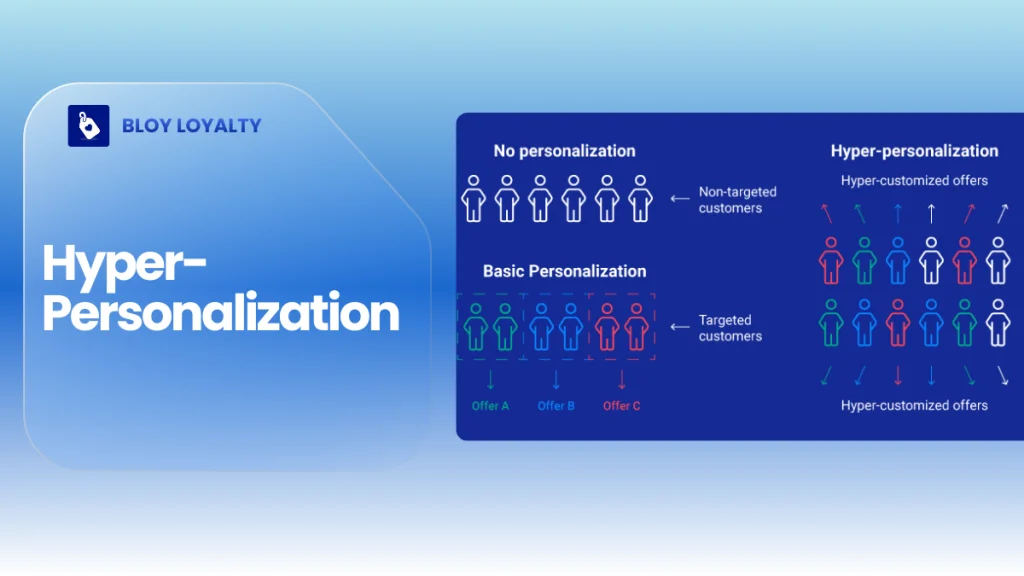
What this trend actually means:
In earlier loyalty programs, personalization often meant segmenting customers into broad buckets (e.g., “Frequent Shopper,” “High Spender”) and sending them templated messages or offers. In 2026, personalization is becoming:
- Real-time and behavior-driven: choosing which reward or communication makes the most sense for a customer right now rather than based on rigid cohorts.
- Predictive: anticipating what a customer might value before they explicitly ask for it.
- Experience-centred: shaping the loyalty journey across channels (app, email, checkout) rather than isolated interactions.
This shift is significant for ecommerce brands because it changes when and how loyalty influences shopping behavior – no longer only after purchase, but throughout the customer journey.
2.1 Why personalization matters for ecommerce loyalty
According to industry trend analysis, loyalty programs that focus on personalized engagement, not generalized incentives, are more likely to drive habitual behavior. This reflects an important shift: loyalty is no longer just about tallying points, it’s about meeting customers where they are, with relevance and value that feels unique to them.
Some specific ways personalization manifests include:
- Predictive product offers based on browsing behavior or past purchase signals
- Dynamic reward timing (e.g., rewarding a browsing session, not just a purchase)
- AI-powered recommendations for complementary products or upsells
These approaches help loyalty programs become more anticipatory than reactive, which increases perceived relevance without requiring massive manual segmentation.
2.2 Can small Shopify brands benefit from this?
Yes. AI-powered personalization is no longer exclusive to enterprise retailers. Many loyalty platforms and marketing tools now embed intelligent personalization layers that Shopify SMB and mid-market brands can adopt incrementally.
Rather than building a separate data science team, merchants can focus on:
- Using first- and zero-party data to feed personalization logic
- Setting simple rules that trigger next-best offers based on behaviors
- Testing personalization increases incremental engagement, not overall traffic
This trend ultimately means loyalty becomes more customer centric – rewarding behaviors that indicate brand affinity rather than just purchases.
3. Trend 2 – Gamified Zero-Party Data: From Asking Questions to Earning Answers
As privacy regulations tighten and third-party cookies fade out, one of the most important loyalty program trends heading into 2026 is the shift toward zero-party data – information customers intentionally choose to share with a brand. Zero-party data is increasingly viewed as more valuable than inferred behavioral data for personalization and retention.
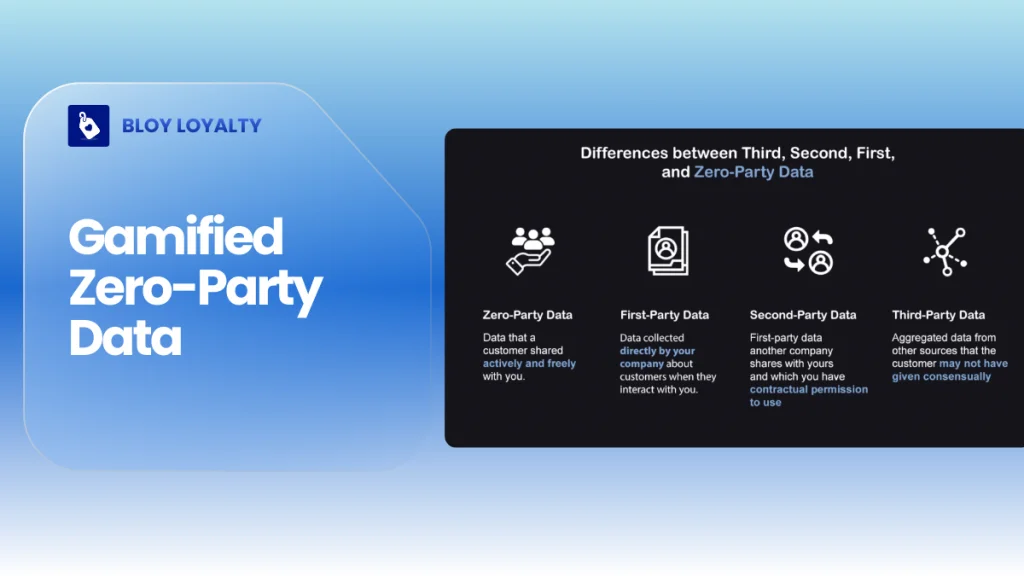
3.1 Why zero-party data now shapes loyalty effectiveness
From a loyalty perspective, zero-party data addresses two growing constraints:
- Brands need consent-based customer data as privacy regulations restrict traditional tracking.
- Generic rewards lose impact when brands lack clear signals about customer intent or preferences.
When customers understand why data is being requested and how it improves their experience, loyalty programs gain both trust and relevance. Without that clarity, data collection feels extractive instead of reciprocal.
3.2 From forms to progression: how gamification changes data sharing
High-performing loyalty programs no longer ask for information upfront. Instead, they embed data sharing into progression, revealing insights gradually as customers engage.
Common patterns include:
- Progressive profiling, where benefits unlock as members share small details over time
- Choice-based inputs, allowing customers to select interests or reward preferences
- Contextual prompts, triggered after meaningful actions rather than at sign-up
This mirrors broader gamification principles already used in modern loyalty and retention strategies.
3.3 Execution reality for Shopify SMB and mid-market brands
Enterprise brands often rely on complex data stacks, but Shopify SMB and mid-market merchants can apply zero-party strategies more selectively.
Modern loyalty tools increasingly support zero-party data capture through rewards, tiers, and on-site interactions without heavy infrastructure.
The key is restraint. Effective loyalty programs prioritize the next most useful insight, not every possible data point. In this model, loyalty becomes a filtering system, capturing intent only when customers are ready to share it.
4. Trend 3 – Emotional & Ethical Loyalty: Moving Beyond Discounts
As loyalty programs mature, one of the most important loyalty program trends for 2026 is the shift from purely transactional rewards toward emotional and value-driven loyalty. Discounts may still drive short-term conversion, but they rarely create attachment. Emotional loyalty fills that gap.
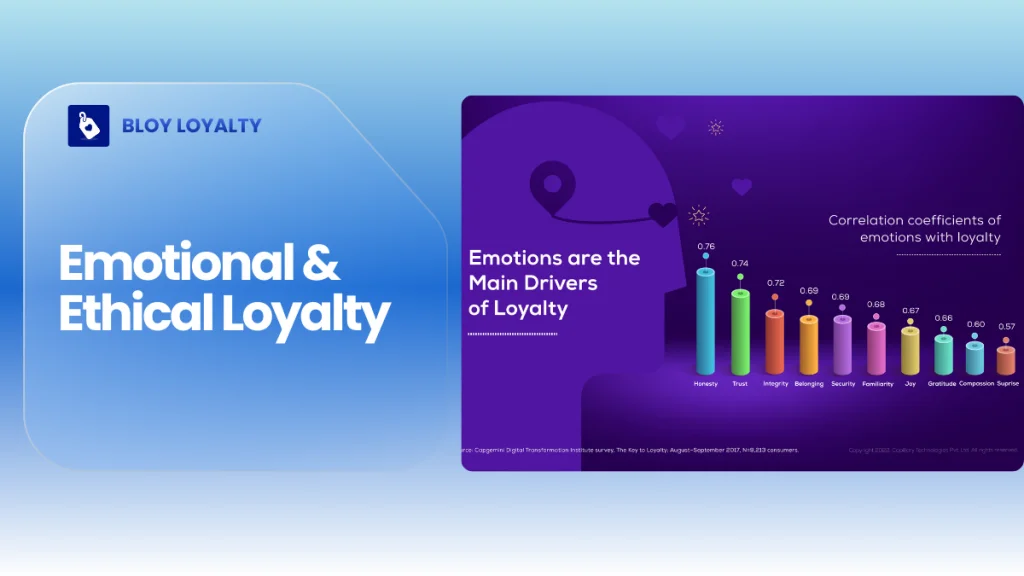
Industry research consistently shows that emotional connection is a stronger driver of long-term loyalty than rational incentives alone.
For ecommerce brands, this shift reflects a deeper change in customer expectations. Shoppers increasingly evaluate brands not only on price or convenience, but on shared values, identity, and trust. Loyalty programs are becoming one of the few owned channels where brands can express those values repeatedly.
4.1 The emotional loyalty ladder: a practical framing
Rather than treating “emotional loyalty” as an abstract idea, it helps to view it as a progression:
- Transactional loyalty – Customers return because of points or discounts
- Functional loyalty – Customers stay for convenience, service, or utility
- Emotional loyalty – Customers feel understood, appreciated, and aligned
- Identity loyalty – Customers see the brand as part of who they are
Most ecommerce loyalty programs remain stuck at the transactional level, even when brands invest heavily in rewards. The opportunity in 2026 is not to abandon points, but to layer emotional signals on top of existing mechanics.
4.2 What emotional and ethical loyalty looks like in practice
High-performing loyalty programs increasingly incorporate:
- Recognition over redemption, such as status, early access, or exclusive experiences
- Value-based rewards, including charitable donations, sustainability actions, or community initiatives
- Narrative-driven engagement, where loyalty participation reinforces brand purpose
Sustainability and ethical positioning are becoming loyalty differentiators, not just brand messaging.
For Shopify SMB and mid-market brands, emotional loyalty does not require large-scale campaigns. Small, consistent signals – how rewards are framed, when recognition appears, and what values are reinforced often have more impact than expensive perks.
4.3 Why this trend matters for loyalty effectiveness
Emotional and ethical loyalty reduces reliance on discounts and increases tolerance for price changes. More importantly, it shifts loyalty from a cost center to a relationship asset. In 2026, the brands that stand out will not be the ones offering the most points, but the ones making customers feel meaningfully connected.
5. A Structural Loyalty Trend: Moving Beyond Points and Discounts
By 2026, one of the most visible loyalty program trends is not what brands are adding, but what they are moving away from. When every program offers points, tiers, and discounts, differentiation collapses. Customers stop comparing programs and start ignoring them.
Industry reports increasingly describe this as “loyalty fatigue”, where programs feel interchangeable and fail to influence decisions.
To break out of this pattern, leading ecommerce brands are expanding beyond points into non-point reward structures that create perceived value without constant margin pressure.
5.1 A practical non-point rewards checklist (2026-ready)
Instead of asking “How many points should we give?”, high-performing programs ask “What kind of value feels scarce?”
Access-based rewards
- Early access to launches or limited collections
- Members-only drops or invite-only sales
- Priority support or faster fulfillment
Access rewards create value through exclusivity, not cost.
Utility-based rewards
- Free shipping thresholds unlocked by loyalty status
- Extended returns or flexible exchanges
- Functional perks that reduce friction, not prices
Utility rewards work because they remove pain, not because they offer excitement.
Impact-based rewards
- Points converted into charitable donations
- Sustainability actions (carbon offsets, tree planting)
- Community-driven goals unlocked collectively
Purpose-driven rewards increasingly influence brand preference and repeat behavior.
Recognition over redemption
- Status visibility (badges, tiers, milestones)
- Personal acknowledgment instead of monetary incentives
- Progress indicators that signal long-term membership value
Recognition rewards are powerful because they reinforce identity, not transactions.
5.2 Why non-point rewards matter for ecommerce margins
Discount-heavy loyalty programs often increase repeat purchases while quietly eroding margins. Non-point rewards change this equation by shifting loyalty from cost-based incentives to experience-based differentiation.
For Shopify SMB and mid-market brands, this approach allows loyalty programs to scale without escalating discount dependency. Points can remain part of the system, but they stop being the only lever.
6. Trend 4: Financial Accountability in Loyalty Programs (The CFO’s Corner)
As budgets tighten and retention costs rise, one of the most practical loyalty program trends in 2026 is the shift toward financial accountability. Loyalty programs are no longer evaluated only by engagement or participation. They are increasingly judged by their ability to deliver incremental business value.
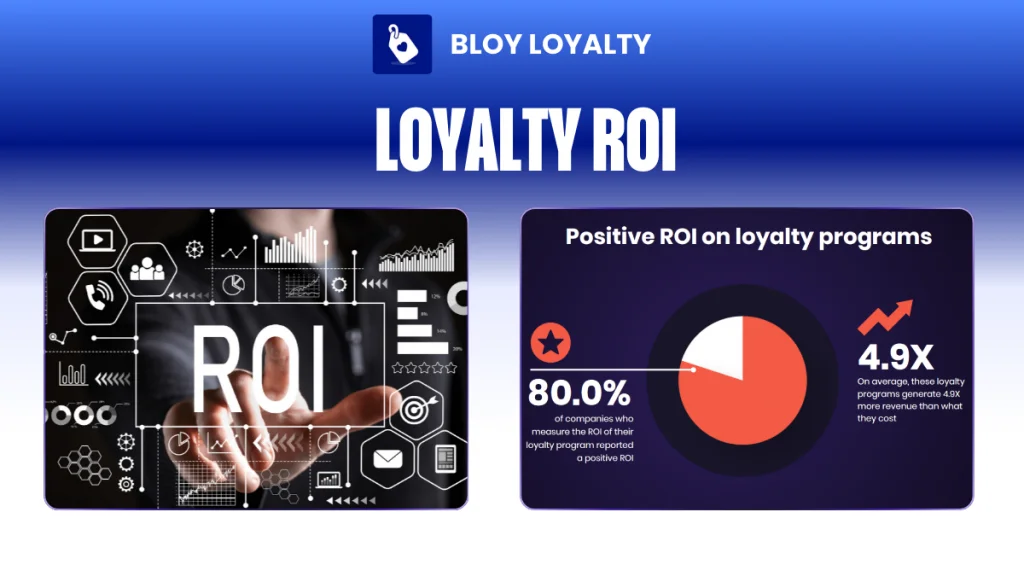
Many ecommerce teams still struggle to clearly prove loyalty ROI beyond surface metrics like repeat purchase rate or member growth. From a finance perspective, these indicators describe activity, not impact. As a result, loyalty often becomes vulnerable during budget reviews.
6.1 The most common loyalty ROI mistake
The biggest mistake brands make is relying on vanity metrics to justify loyalty performance:
- Total loyalty members
- Points issued or redeemed
- Engagement rates without financial context
These metrics fail to answer the question CFOs actually ask:
Would this revenue have existed without the loyalty program?
6.2 The loyalty KPIs CFOs actually care about
High-performing ecommerce brands narrow loyalty measurement down to a small set of financially meaningful KPIs.
Incremental margin from loyalty members
This measures profit generated above baseline customer behavior, rather than total revenue attributed to loyalty. Incremental margin helps isolate whether loyalty is creating value or simply subsidizing purchases that would have happened anyway.
Repeat purchase velocity
This tracks how quickly loyalty members return compared to non-members. Faster purchase cycles improve cash flow, inventory planning, and demand predictability, making loyalty easier to justify financially.
Cost to serve a loyalty member
This includes all loyalty-related costs: discounts, rewards, free shipping perks, fulfillment upgrades, and operational overhead. Without this metric, loyalty programs often appear profitable while quietly eroding margin.
Redemption efficiency
Redemption efficiency evaluates whether rewards are being redeemed profitably. Low redemption can signal weak engagement, while high but unprofitable redemption suggests over-incentivization.
Retention-adjusted customer lifetime value (CLV)
Rather than calculating CLV in isolation, this metric compares lifetime value with and without loyalty participation. It shows whether loyalty meaningfully changes long-term customer economics.
5.3 What this means for loyalty strategy in 2026
In 2026, loyalty programs must earn their place in the growth stack. Programs that can connect rewards to margin, velocity, and retention are far more likely to secure long-term buy-in from finance teams.
For Shopify SMB and mid-market brands, this shift reframes loyalty from a marketing expense into a measurable performance system. Loyalty programs that survive budget scrutiny will be those designed with ROI in mind from day one.
Conclusion
The key loyalty program trends shaping 2026 are not about more points or bigger rewards. They reflect a shift in expectations: loyalty must now influence decisions, not just reward transactions.
Points still play a role, but points alone are no longer enough. As acquisition costs rise and margins tighten, loyalty programs are expected to collect consent-based data, create emotional connection, and prove incremental financial impact.
For Shopify SMB and mid-market brands, the most effective loyalty strategies treat loyalty as a system, not a campaign. The programs that succeed in 2026 will be the ones that quietly guide behavior, reinforce brand value, and deliver measurable business outcomes.

Yến Lê Hải
Content author at BLOY, focusing on product-led content, SEO, and educational resources to help merchants improve conversion and customer engagement.