Loyalty Healthcare: The Strategy Behind Effective Healthcare Loyalty Programs
Most healthcare organizations assume patient loyalty is earned after care is delivered. In reality, loyalty in healthcare is shaped much earlier through trust, continuity, and how care fits into a patient’s life over time.
Many healthcare loyalty programs appear active on the surface. Points are issued. Members are enrolled. Engagement metrics look healthy.
Yet patient return behavior often stays unchanged. The problem is rarely execution. It is a strategy.
This article breaks down what loyalty healthcare actually means, why it works differently from retail loyalty, and the strategic foundations behind healthcare loyalty programs that truly influence long term patient commitment.
1. What does loyalty healthcare really mean?
Loyalty healthcare refers to a patient’s sustained decision to return to the same healthcare provider over time, not because of incentives, but because continuing care feels like the safest and most reliable choice.
Unlike retail loyalty, where repeat purchases are often driven by price, convenience, or rewards, loyalty in healthcare is shaped by risk perception. Patients do not simply choose where to return. They choose where they feel confident enough to place their health again.
Research on patient behavior consistently shows that trust and perceived care quality play a central role in shaping patient loyalty over time.
From a behavioral perspective, loyalty healthcare is not a moment. It is an accumulation of trust built across multiple interactions, including diagnosis, treatment, follow up, and ongoing communication. Each step reinforces whether the provider remains the default choice for future care.
This is why loyalty healthcare should be understood as a long term behavioral outcome rather than a marketing tactic. A patient can be satisfied with a single visit and still not be loyal. Loyalty only exists when returning feels easier and safer than starting over elsewhere.
In this context, healthcare loyalty programs do not create loyalty by themselves. They only amplify or weaken the underlying loyalty healthcare strategy already in place.
2. Why traditional loyalty thinking fails in healthcare
Traditional loyalty models are built around transactional behavior. Customers buy, earn rewards, and return when incentives are attractive enough. This logic breaks down in healthcare because patient decisions are rarely transactional.
Healthcare decisions carry personal risk. Patients are not optimizing for savings or points. They are minimizing uncertainty. When traditional loyalty thinking is applied to healthcare, programs often focus on visible activity rather than meaningful behavior.
2.1. Why retail style loyalty programs do not translate to healthcare
Retail loyalty programs are designed to influence frequency and basket size. In healthcare, frequency is often dictated by medical need, not desire. Encouraging unnecessary visits through rewards can feel inappropriate or even unethical.
As a result, point based or discount driven healthcare loyalty programs often fail to change real patient behavior. Patients may enroll, but enrollment does not equal commitment. The program exists, but it does not influence the moment when patients decide where to return for care. Several studies have highlighted that loyalty programs designed for commercial services often fail when directly applied to healthcare environments.
2.2. The illusion of loyalty created by surface level metrics
Many healthcare organizations measure loyalty through enrollment rates, app usage, or campaign engagement. These metrics suggest activity, but they do not confirm loyalty.
True loyalty healthcare is reflected in repeat care decisions, continuity across treatments, and long term patient relationships. When organizations optimize for surface level metrics, they risk mistaking participation for trust.
This gap explains why many healthcare loyalty programs appear successful internally while patient retention remains flat. The program is active. Loyalty is not. Clinical studies also suggest that patient satisfaction and engagement metrics alone are not sufficient indicators of long term patient loyalty.
3. The core drivers behind patient loyalty in healthcare
Patient loyalty in healthcare is not created by a single interaction. It is shaped by a small set of drivers that consistently influence whether patients feel confident returning to the same provider over time.
Understanding these drivers is essential before designing any healthcare loyalty programs. Without them, programs may increase activity but fail to change long term behavior.
3.1. Trust is the foundation of loyalty healthcare
Trust is the primary driver of loyalty healthcare. Patients return when they believe a provider will make decisions in their best interest, not simply deliver a service. Empirical research in healthcare settings has repeatedly shown that trust in care teams strongly influences patient loyalty and return behavior.
Trust is built through clinical competence, transparency in communication, and consistency in care outcomes. Small breakdowns, such as unclear explanations or fragmented follow up, can weaken loyalty even when treatment quality is high.
Because trust accumulates slowly and erodes quickly, loyalty healthcare depends less on individual touchpoints and more on how reliably expectations are met over time.
3.2. Continuity of care reinforces return behavior
Continuity of care plays a critical role in patient loyalty. When patients feel that their history, preferences, and progress are understood and remembered, returning becomes the lowest risk option.
This continuity reduces the effort required to explain symptoms again, rebuild context, or adjust to a new provider. Over time, staying feels safer than switching, even when alternatives are available.
Loyalty healthcare strengthens when care feels like an ongoing relationship rather than a series of disconnected visits.
3.3. Experience consistency matters more than delight
In healthcare, consistency outweighs novelty. Patients value predictable processes, clear communication, and stable outcomes more than surprising or promotional experiences.
When experience quality varies from visit to visit, patients reassess their decision to return. Even positive surprises cannot compensate for uncertainty.
Effective healthcare loyalty programs support this consistency by reinforcing reliable touchpoints across the patient journey, rather than introducing incentives that distract from care delivery.
4. Where healthcare loyalty programs actually fit
Healthcare loyalty programs are often treated as the starting point for patient retention. In reality, they should be the structural layer that supports an existing loyalty healthcare strategy.
When programs are introduced before trust, continuity, and experience consistency are established, they tend to amplify weak signals rather than create new ones. Activity increases, but patient return decisions remain unchanged.
The role of healthcare loyalty programs is not to persuade patients to return. It is to make returning easier once loyalty healthcare already exists.
4.1. Healthcare loyalty programs should support care decisions, not influence them
In healthcare, loyalty programs should reduce friction around care, not attempt to steer medical choices. Programs that push incentives at the wrong moment can undermine trust and create hesitation instead of confidence.
Effective healthcare loyalty programs focus on enabling behaviors that naturally align with patient needs, such as follow up adherence, continuity across visits, and long term engagement with care plans.
When programs reinforce these behaviors, they strengthen loyalty healthcare without interfering with clinical judgment.
4.2. Programs work best when they align with the patient lifecycle
Healthcare loyalty programs are most effective when they follow the patient lifecycle rather than isolated visits. This includes onboarding, active treatment, recovery, and ongoing care.
By aligning program touchpoints with each stage, organizations ensure that loyalty mechanisms appear relevant and timely. This alignment prevents programs from feeling promotional or disconnected from care.
At this point, loyalty programs stop being campaigns and start functioning as part of the care infrastructure.
5. Examples of effective healthcare loyalty programs and why they work
Effective healthcare loyalty programs share one common trait. They do not try to create loyalty. They are designed to support loyalty healthcare that already exists.
Below are three program patterns that consistently work in healthcare, along with the mechanisms behind why they influence long term patient return behavior.
5.1. Care continuity driven healthcare loyalty programs
What the program looks like
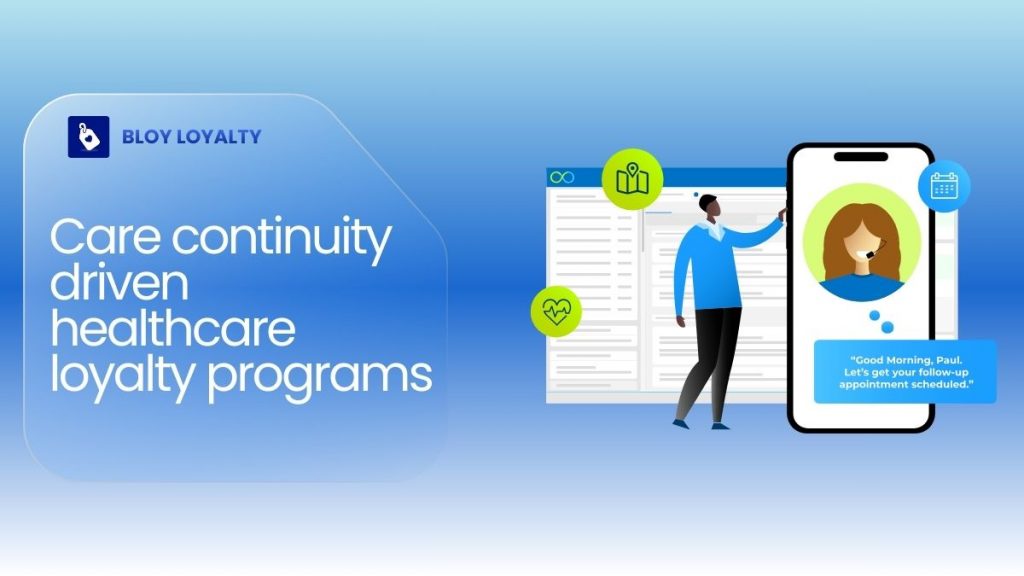
This type of healthcare loyalty program does not rely on points or rewards. Instead, it focuses on structured follow up, treatment milestones, and ongoing care reminders. Patients receive timely communication related to their condition, recovery, or next steps in care.
Mechanism behind it
The program reduces cognitive load for patients. Rather than deciding when or where to return, patients feel guided through a care journey that remains incomplete without continuity. Loyalty healthcare emerges because returning feels like the natural continuation of care, not a separate decision.
Why it works in healthcare
Healthcare decisions are risk sensitive. When continuity is embedded into the program, patients are less likely to reassess alternatives. The program reinforces trust and makes switching feel unnecessary.
5.2. Membership based healthcare loyalty programs
What the program looks like
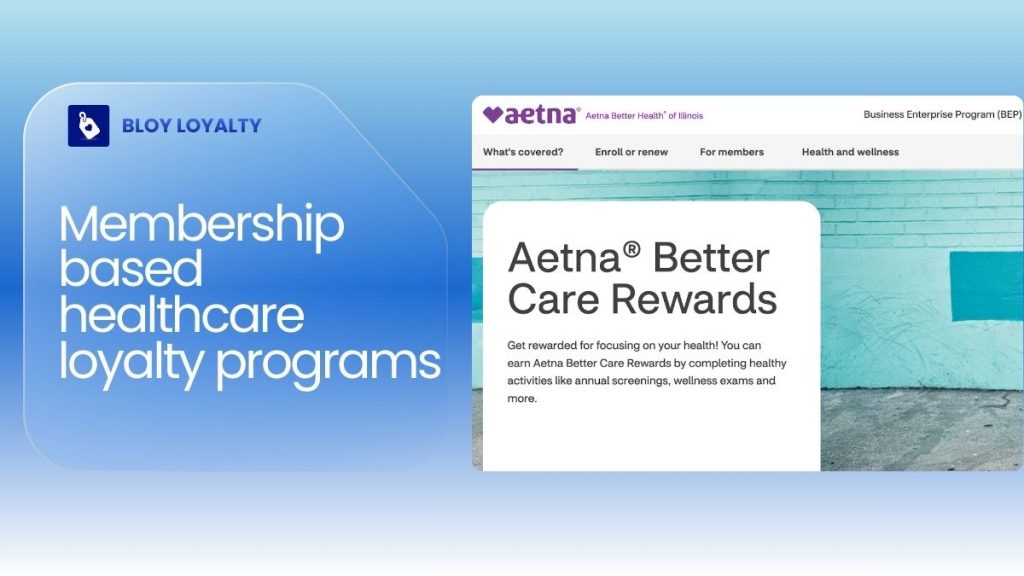
Patients enroll in a long term care membership that offers stable access rather than transactional benefits. Typical elements include priority scheduling, ongoing care coordination, and predictable access to providers.
Mechanism behind it
The program creates psychological commitment before the next care decision occurs. Patients perceive an ongoing relationship rather than isolated visits. This sense of commitment increases the likelihood of returning when care is needed again.
Why it works in healthcare
Loyalty healthcare strengthens when patients feel anchored to a care system. Membership based healthcare loyalty programs shift loyalty from reactive behavior to proactive attachment, without relying on promotional incentives.
5.3. Experience consistency focused loyalty programs
What the program looks like
These programs may not be labeled as loyalty initiatives. Instead, they ensure that patient information, communication style, and care processes remain consistent across visits and touchpoints.
Mechanism behind it
Consistency lowers perceived risk. When patients know what to expect, returning feels safer than exploring new providers. Loyalty healthcare forms through predictability rather than delight.
Why it works in healthcare
In healthcare, certainty outweighs novelty. Programs that reinforce consistent experiences support long term loyalty by reducing uncertainty at every return decision.
6. Conclusion
Loyalty healthcare is not something that can be added after care is delivered. It is shaped across every interaction that influences whether patients feel safe returning to the same provider over time.
When healthcare loyalty programs are designed without this foundation, they often become isolated initiatives. They generate activity, but they do not change behavior. Patients may participate, but they do not commit.
Effective healthcare loyalty programs work because they are built on strategy, not tactics. They support trust, reinforce continuity of care, and reduce uncertainty throughout the patient journey. In this role, programs stop trying to create loyalty and instead make existing loyalty easier to sustain.
Organizations that approach loyalty healthcare as a long term system gain a clearer view of patient retention. The focus shifts from short term engagement metrics to durable relationships that influence real return decisions. This shift is what separates programs that look successful from those that actually work.

Yến Lê Hải
Content author at BLOY, focusing on product-led content, SEO, and educational resources to help merchants improve conversion and customer engagement.