Loyalty program name ideas to make your program worth joining
Naming a loyalty program is often treated as a finishing step. A quick label added after rewards, points, and tiers are already defined.
But in practice, the name is one of the first things customers see and one of the few elements they may actually remember. A strong loyalty program name helps customers immediately understand what the program stands for and why it exists. Before exploring loyalty program name ideas, it’s important to look at how names influence perception, recognition, and long-term engagement.
1. Why loyalty program names matter more than you think
Customers today are enrolled in more loyalty programs than ever before. As brands across industries launch points, rewards, and VIP tiers, loyalty becomes crowded by default. In that environment, attention is the real constraint.
This is where naming starts to matter. A loyalty program can be fully functional while slowly losing influence. Points are issued. Rewards exist. Yet the program stops shaping repeat purchase decisions because it no longer stands out in the customer’s mind.
The name is often the first thing to fade. Generic or unclear names give customers no mental shortcut to recognize the program or recall why it exists. When loyalty feels interchangeable, customers treat it as background infrastructure rather than a reason to return.
A strong loyalty program name acts as framing. It signals whether the program is about value, status, belonging, or behavior. Before customers see benefits or rules, the name already sets expectations. When that signal is weak, even well-designed loyalty mechanics struggle to stay relevant.
2. Common loyalty program naming mistakes
Many loyalty programs lose impact at the naming stage, long before execution becomes an issue.
One common mistake is relying on generic names. Labels such as Rewards Program, Points Club, or Member Rewards feel safe but interchangeable. When customers are enrolled in multiple programs at once, these names blend together and are quickly forgotten.
Another issue is naming based purely on mechanics. Names that focus only on points, discounts, or redemptions explain how the system works, but not why it exists. This frames loyalty as transactional rather than relational, making it easy for customers to compare programs purely on discounts.
Some names also limit future growth. A name that fits a simple discount-based setup may no longer make sense once the program expands into VIP tiers, referrals, or experiences. Renaming later can confuse existing members and weaken consistency.
Finally, over-branding without clarity can hurt adoption. Abstract or internal brand terms may sound distinctive, but if customers cannot immediately understand the value of joining, the name fails its core purpose.
3. Core frameworks for loyalty program naming
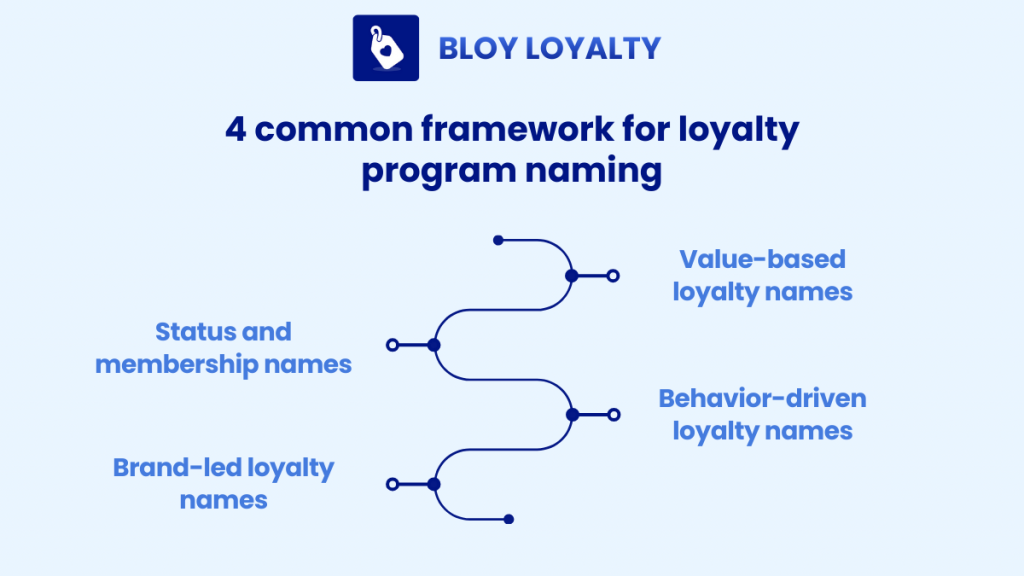
Most effective loyalty program names are not chosen at random. They usually follow a clear logic based on what the brand wants loyalty to signal. In practice, loyalty program names tend to fall into four common frameworks.
Understanding these frameworks helps narrow down loyalty program name ideas that fit both the program’s goal and its long-term direction.
3.1 Value-based loyalty names
Value-based names focus on what customers receive from joining the program. They highlight benefits or perks rather than mechanics.
This framework works best when loyalty is designed to deliver clear, practical value. The name should stay broad enough to remain relevant as the program evolves.
3.2 Status and membership names
Status-based names frame loyalty as belonging rather than earning. They signal recognition, access, or progression.
This approach fits programs that reward long-term commitment, especially those built around tiers or exclusive benefits.
3.3 Behavior-driven loyalty names
Behavior-driven names emphasize the action a brand wants to encourage, such as returning, staying active, or unlocking more value.
These names work best when loyalty goals are focused and tied to specific repeat behaviors.
3.4 Brand-led loyalty names
Brand-led names draw from the brand’s own language or identity, helping loyalty feel integrated rather than separate.
They are most effective when the brand voice is strong and clarity is preserved.
4. Loyalty program name ideas by category
The loyalty program name ideas below are grouped by intent rather than creativity. Each category reflects a different way brands position loyalty, making it easier to shortlist names that fit your strategy instead of browsing randomly.
4.1 Simple and universal loyalty names
These names are neutral, easy to understand, and work across many industries. They are a good starting point for brands launching their first loyalty program.
Examples:
- Member Benefits
- Extra Perks
- Thank You Rewards
- More for Members
- Insider Benefits
These names are flexible and low-friction, but they rely heavily on execution to avoid feeling generic.
4.2 VIP and membership loyalty names
Membership-based names frame loyalty as belonging rather than earning. They are effective when the program rewards commitment or offers differentiated access.
Examples:
- Inner Circle
- Priority Club
- Members Only
- Gold Society
- Insider Access
These names work best when customers can clearly see what makes membership special.
4.3 Points-based loyalty names
Points-based names clearly communicate how the program works. They prioritize transparency and ease of understanding.
Examples:
- Earn & Redeem
- Bonus Points
- Points Plus
- Reward Balance
- Point Exchange
While straightforward, these names often struggle to create emotional attachment on their own.
4.4 Community and brand-led loyalty names
These names emphasize connection, identity, or brand voice rather than rewards. They suit brands that invest in ongoing engagement beyond transactions.
Examples:
- The Collective
- Brand Circle
- The Clubhouse
- Our Circle
- The Community
Community-led names feel more relational, but they require consistent activation to stay meaningful.
5. Loyalty program name examples (and why they work)
Looking at individual name ideas is helpful, but understanding why certain loyalty program names work provides much more long-term value. The examples below illustrate common patterns that make loyalty programs easier to recognize, remember, and engage with.
5.1 Inner Circle
“Inner Circle” works because it immediately signals belonging and exclusivity. Customers can infer that joining the program provides access to something not available to everyone.
The name avoids describing rewards or mechanics. Instead, it frames loyalty as status. This makes it especially effective for programs built around tiers, early access, or recognition-based benefits.
5.2 Member Benefits
“Member Benefits” is a clarity-first name. It tells customers exactly what to expect without requiring explanation.
This type of name reduces friction at the sign-up stage. It works well for brands that want loyalty to feel simple and accessible, especially when the program’s value is straightforward and easy to communicate.
5.3 Insider Access
“Insider Access” combines two signals: belonging and action. “Insider” suggests status, while “Access” implies concrete advantages.
This balance makes the name effective for loyalty programs that offer early access, exclusive drops, or gated content. The name sets expectations before customers ever see the reward structure.
5.4 Earn More
“Earn More” is behavior-driven. It reinforces the idea that continued engagement leads to increased value.
Rather than highlighting specific rewards, the name focuses on progression. This makes it suitable for loyalty programs designed to influence repeat behavior rather than one-time participation.
What these examples have in common
Despite different styles, effective loyalty program names tend to share a few traits:
- They communicate value, status, or behavior clearly
- They avoid over-explaining mechanics
- They remain flexible as the program evolves
- They require little to no explanation for customers
6. How to choose the right loyalty program name
After reviewing frameworks, ideas, and examples, the final step is selection. A strong loyalty program name is not the most creative option on the list, but the one that best supports how the program is meant to work in practice.
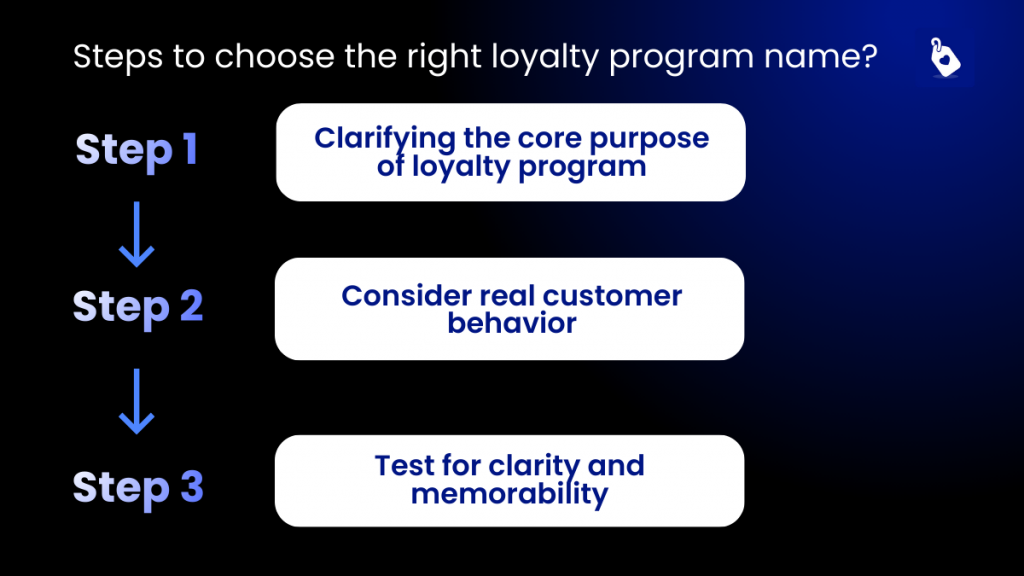
Start by clarifying the core purpose of your loyalty program. Some programs are designed to increase purchase frequency, others to reward long-term customers, and some to build a sense of belonging. If the name does not reflect this primary role, it will struggle to feel relevant no matter how generous the rewards are.
Next, consider real customer behavior. A loyalty program name should match how customers actually engage, not how the brand hopes they will. Casual shoppers respond better to clear, accessible names, while highly engaged customers are more receptive to status or membership framing.
It is also important to think beyond the initial launch. Loyalty programs tend to evolve over time, adding tiers, referrals, experiences, or non-monetary benefits. Choosing a name that can stretch with the program reduces the need for rebranding and protects long-term consistency.
Before finalizing a name, test it for clarity and memorability. If customers need an explanation to understand what the program is or why they should join, the name is doing too little work.
As a quick final check, ask:
- Does this name clearly signal why the program exists?
- Would it still make sense if the program expands in the future?
- Could a customer remember it after a month?
If the answer is yes, the name is likely strong enough to support your loyalty strategy.
7. FAQs – Loyalty program name ideas
What makes a good loyalty program name?
A good loyalty program name is easy to understand, easy to remember, and clearly signals why the program exists. It should help customers quickly grasp the value of joining without needing a detailed explanation. Strong names also remain relevant as the program evolves.
Should a loyalty program name include “points” or “rewards”?
Including “points” or “rewards” can improve clarity, especially for early-stage programs. However, names that rely too heavily on mechanics often struggle to create emotional connection. Many brands start with clear, mechanic-based names and later shift toward broader or more identity-driven naming as loyalty matures.
Is it better to use a creative or descriptive loyalty program name?
Neither approach is inherently better. Descriptive names reduce friction and help customers understand the program quickly. Creative names can feel more distinctive but require stronger communication. The right choice depends on how complex the program is and how familiar customers are with the brand.
Can I change my loyalty program name later?
Yes, but renaming a loyalty program comes with risks. Existing members may feel confused or disconnected if the change is not clearly communicated. Choosing a name that can scale from the start reduces the likelihood of needing a rebrand later.
Should loyalty program names be the same across all channels?
Yes. Consistency matters. Using the same loyalty program name across your website, emails, checkout, and customer accounts helps reinforce recognition. Fragmented naming makes loyalty harder to remember and easier to ignore.
TL;DR – Choosing the right loyalty program name
- A loyalty program name is not just a label. It frames how customers perceive, remember, and value your program.
- Generic or mechanic-first names often blend in and fail to influence repeat decisions.
- Strong loyalty program names usually follow one of four frameworks: value-based, status-based, behavior-driven, or brand-led.
- Listing name ideas helps, but understanding why certain names work leads to better long-term decisions.
- The best loyalty program name is one that matches how your program actually works today and can still make sense as it evolves.
If customers can understand the purpose of your loyalty program at a glance and remember its name weeks later, you’re likely on the right track.

Yến Lê Hải
Content author at BLOY, focusing on product-led content, SEO, and educational resources to help merchants improve conversion and customer engagement.