Customer Loyalty Programs for Restaurants: How to Choose the Right Approach
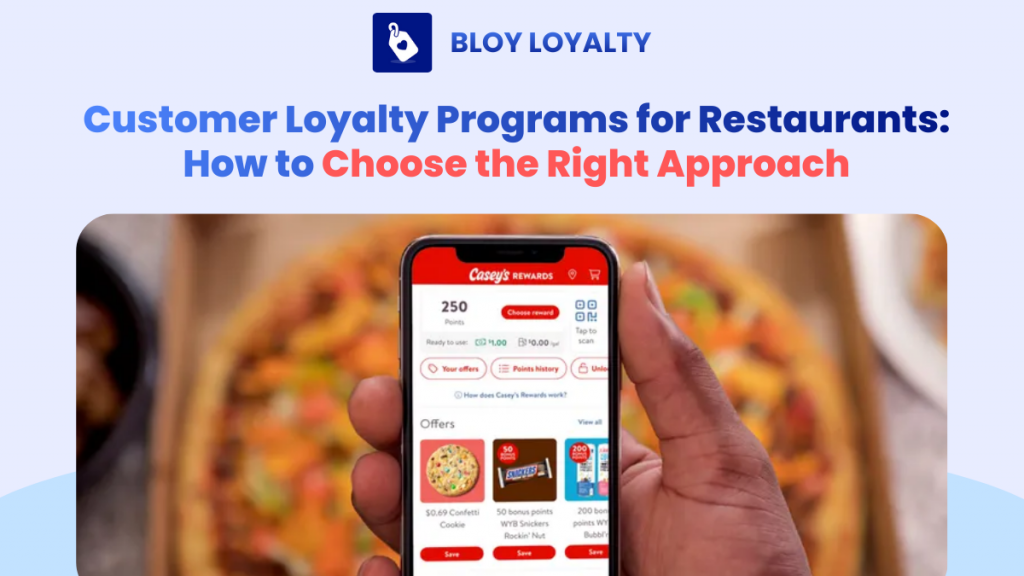
Many restaurants invest in loyalty programs, yet still struggle to increase repeat visits and customer retention. Points are issued, cards are distributed, but customer behavior often remains unchanged.
The challenge is that customer loyalty programs for restaurants must be designed around dining habits, visit frequency, and daily operations, not just rewards or discounts.
In this guide, we’ll explore how restaurant loyalty programs actually work, share proven loyalty ideas across fast food, pizza, and pubs, and examine global examples to help you build a loyalty program that drives real repeat visits.
1. Why do customer loyalty programs matter for restaurants?
Many restaurants focus heavily on acquiring new customers, but long-term growth is often driven by repeat visits rather than one-time transactions. Research shows that acquiring new customers can cost up to 5× more than retaining existing ones, making customer loyalty a far more cost-effective strategy for restaurants looking to build sustainable revenue.
Customer behavior data also highlights the impact of loyalty programs on visit frequency and spending. According to industry insights, customers enrolled in restaurant loyalty programs visit 20% more often and spend 20% more per visit than non-members, indicating that loyalty incentives directly influence dining habits and decision-making.
Beyond frequency, loyalty initiatives help retain a larger base of repeat customers. A typical “good” repeat-customer rate for restaurants is between 30% and 40%, suggesting that well-designed loyalty programs can convert first-time diners into regular patrons at scale.
These trends show why customer loyalty programs for restaurants matter: they not only reduce customer acquisition costs, but also increase visit frequency and spending, ultimately translating into more predictable and profitable revenue streams.
2. Restaurant loyalty program ideas that drive repeat visits
Not all loyalty programs work equally well for restaurants. The most effective models are those that align with dining frequency, average order value, and how customers naturally interact with the brand. Below are the restaurant loyalty program ideas that have consistently shown positive impact on repeat visits and customer spend.
2.1 Points based loyalty programs for restaurants
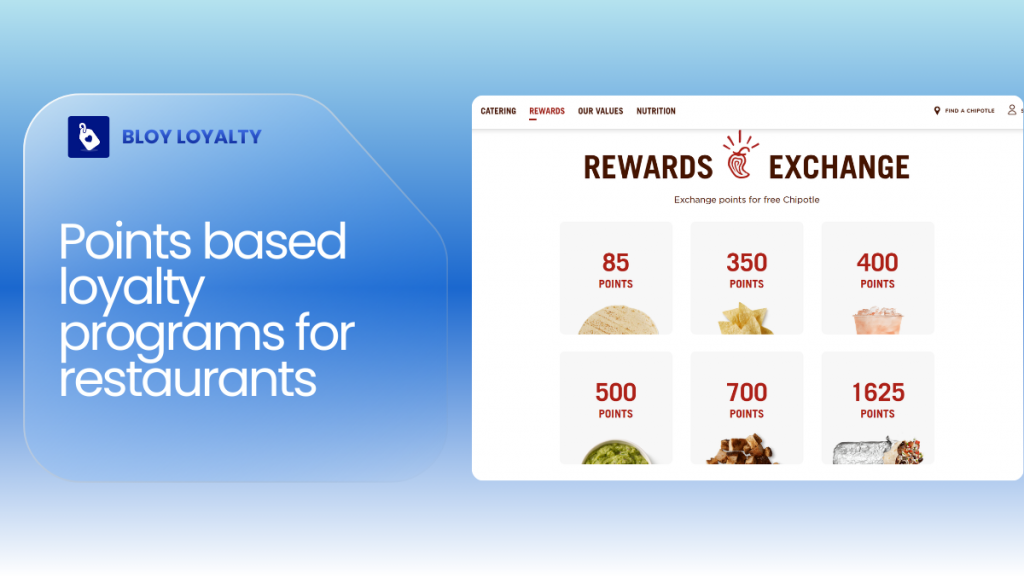
Points based loyalty programs reward customers for purchases or actions, allowing them to accumulate points and redeem rewards over time. This model works best for restaurants with consistent pricing and repeat visits.
Industry data shows that restaurant loyalty members spend between 12% and 18% more per visit compared to non members, particularly when points accumulation feels attainable and rewards are clearly communicated.
When implemented correctly, points based loyalty programs encourage customers to return more frequently to reach the next reward threshold rather than chasing one time discounts.
Use when
- Average order value is stable
- Customers visit multiple times per month
- Rewards can be redeemed without operational friction
2.2 Visit based and punch card loyalty programs
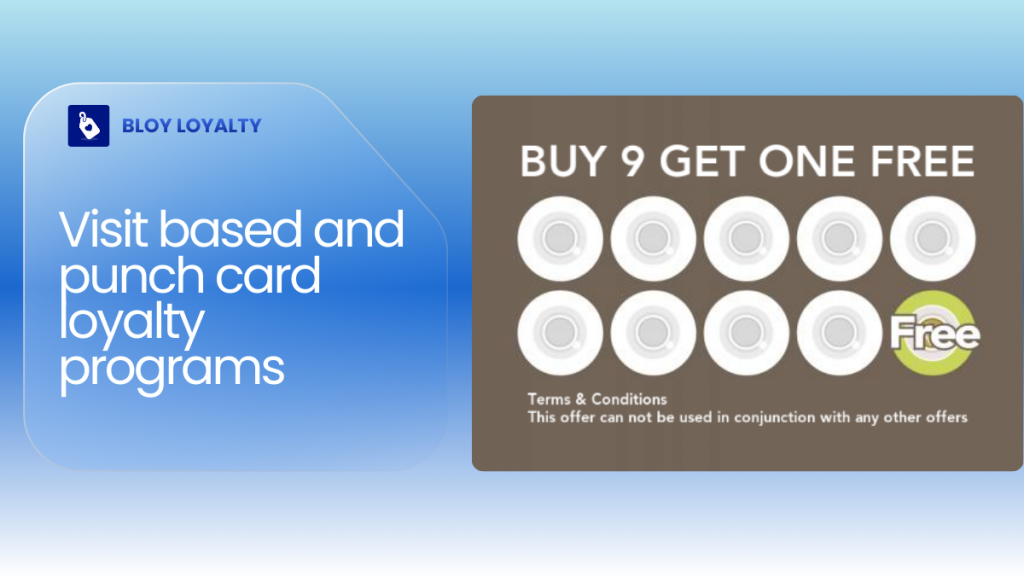
Visit based loyalty programs reward customers after a fixed number of visits rather than total spend. This approach is especially effective for casual dining, cafes, and local restaurants where purchase value varies but visit frequency matters most.
Research indicates that loyalty program members visit restaurants up to 22% more often per year than non members, making visit based rewards a strong driver of habitual dining behavior.
Punch card style loyalty programs work best when rewards are simple, visible, and easy for both staff and customers to understand.
Use when
- Visit frequency is more important than basket size
- The restaurant serves walk in or neighborhood traffic
- Staff need a simple loyalty flow
2.3 VIP and regular customer rewards
VIP loyalty programs focus on recognizing a restaurant’s most frequent customers with exclusive perks rather than purely transactional discounts. This model works especially well for pubs, neighborhood restaurants, and casual dining where relationship and familiarity are part of the experience.
Restaurant guest data supports why regulars matter. Based on Olo’s analysis of more than 100 million guest records, repeat guests drive about 60% of restaurant revenue. This suggests that loyalty programs designed to turn occasional diners into regulars can have an outsized impact on revenue stability, even without aggressive discounting.
VIP rewards are most effective when perks feel exclusive and operationally easy to deliver, such as members only offers, early access to specials, birthday perks, or priority seating. The goal is to reinforce belonging and routine, not to create complex redemption rules.
Use when
- The restaurant has a base of frequent diners
- Community and experience are part of the value proposition
- You want to reward consistency without relying on deep discounts
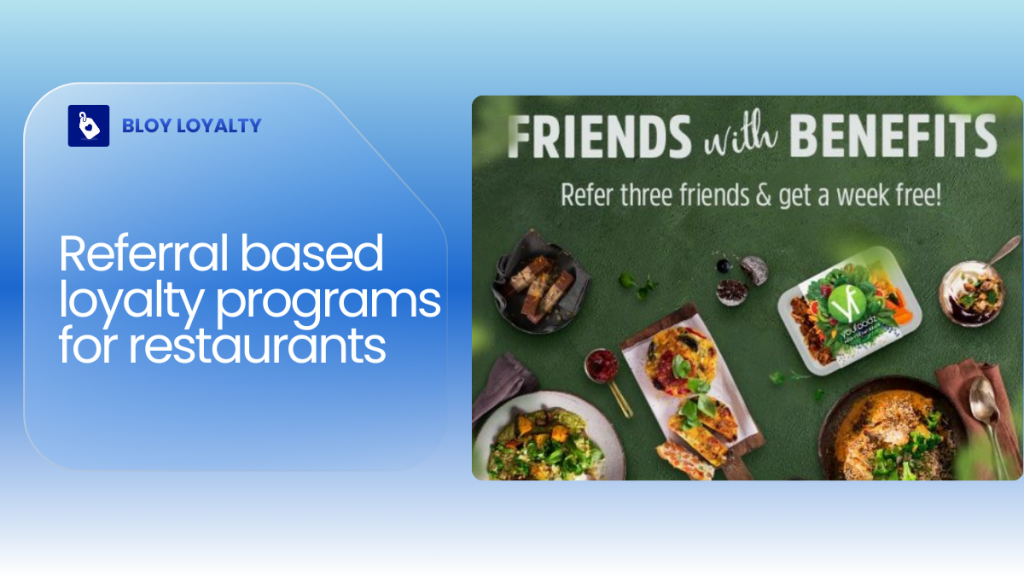
2.4 Referral based loyalty programs for restaurants
Referral based loyalty programs reward existing customers for bringing in new diners. For restaurants, referrals work best when the experience is consistent, because the “trust transfer” from a friend can turn a first visit into a repeat habit.
Academic research on referral programs (tracking roughly 10,000 customers over nearly three years) found that referred customers have higher retention and are more valuable in both the short and long run, with the average value of a referred customer at least 16% higher than comparable non referred customers.
Harvard Business Review also highlights that customer referral programs can be profitable, reinforcing that referrals often work because they bring in customers who are better matched and more likely to stay.
For restaurants, referral rewards should be simple, trackable, and tied to a real completed visit rather than a sign up alone, so the program drives genuine repeat visits instead of low quality claims.
Use when
- Word of mouth already plays a role in growth
- The restaurant delivers a consistent first visit experience
- Referral rewards do not create margin pressure
3. How to choose the right customer loyalty program for your restaurant
A practical decision framework for restaurant owners
Most restaurant loyalty programs fail not because rewards are weak, but because the program is chosen before the restaurant fully understands its customer behavior and operational limits.
This framework helps restaurant owners make loyalty decisions step by step, so the program fits how customers actually dine and how the restaurant actually operates.
3.1 Step 1: Identify the dominant repeat behavior
Before choosing any loyalty model, restaurants must identify why customers come back.
Most restaurants fall into one dominant repeat behavior, even if multiple behaviors exist.
Common repeat behaviors in restaurants
Frequency driven behavior
Customers return often, but spend relatively small amounts per visit.
Typical examples include fast food, cafés, lunch spots, and convenience focused dining.
Routine driven behavior
Customers return as part of a predictable routine, such as weekly orders or regular time slots.
Examples include pizza delivery, takeout dinners, or after work visits.
Relationship driven behavior
Customers return because of familiarity, atmosphere, and personal connection rather than price.
This is common in pubs, neighborhood restaurants, and community based venues.
Occasion driven behavior
Customers return around specific events or group occasions, such as celebrations, gatherings, or seasonal visits.
3.2 Step 2: Match behavior to the right loyalty model
Once the dominant behavior is clear, the next step is selecting a loyalty model that reinforces that behavior rather than working against it.
| Dominant behavior | Loyalty models that fit | Models to avoid |
| Frequency driven | Visit based rewards, simple points | Complex VIP tiers |
| Routine driven | Points accumulation, reorder rewards | Referral first programs |
| Relationship driven | VIP perks, member recognition | Broad discount campaigns |
| Occasion driven | Referral rewards, event based offers | Punch cards |
This step prevents one of the most common loyalty mistakes: copying a model that works for another restaurant type without considering behavioral differences.
3.3 Step 3: Adapt the loyalty model to your restaurant type
Even when the right loyalty model is chosen, implementation still matters.
The same model can perform very differently depending on restaurant type.
For example, a visit based loyalty program may look like this:
- In fast food, rewards are earned quickly and redeemed frequently
- In pizza restaurants, rewards focus on repeat orders rather than visits
- In pubs, rewards emphasize recognition or experience rather than transactions
3.4 Step 4: Decide the right execution level
The final step is determining how complex the loyalty program should be, based on operational capacity.
Common execution levels
Manual execution
Physical cards or staff based recognition
Works for very small teams with strong regulars
Light digital execution
QR codes, phone number based tracking, simple dashboards
Works for most independent restaurants and growing chains
Systemized execution
Full loyalty software with automation, segmentation, and reporting
Best for multi location restaurants or teams scaling quickly
Choosing a level that is too advanced often results in low adoption by staff and customers.
3.5 How this framework fits the rest of the guide
This decision framework is not theoretical.
Each section that follows builds on it:
- Section 4 shows how global food brands apply these principles in practice
- Section 5 explains how to choose loyalty software that supports the right execution level
- The conclusion helps restaurants apply the framework to their own situation
By following these steps, restaurant owners can design customer loyalty programs for restaurants that fit real customer behavior and real operational constraints, rather than copying models that look good but rarely get used.
4. Best food loyalty programs and global examples to learn from
Not all of the best food loyalty programs belong to traditional restaurants. However, many global food brands succeed because they design loyalty around customer behavior and habit formation rather than short term discounts. These examples offer practical lessons that restaurants of any size can apply.
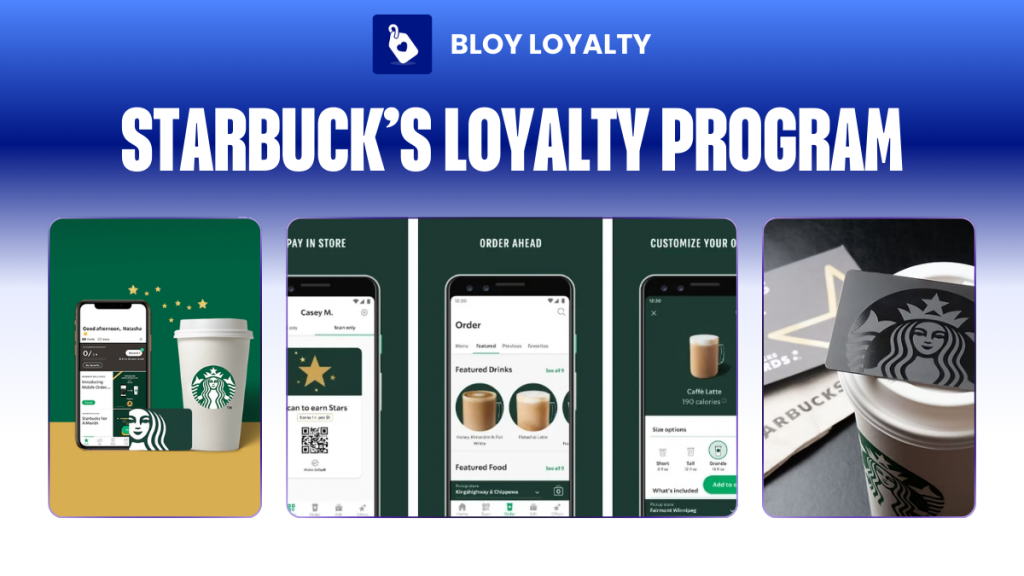
4.1 Starbucks Rewards and habit driven loyalty
Starbucks Rewards is often cited as one of the most successful food loyalty programs globally because it is built around daily consumption habits. The program integrates rewards directly into ordering and payment, making participation effortless for frequent customers.
Public disclosures from Starbucks have consistently highlighted that loyalty members account for a significant share of total transactions, reinforcing the idea that loyalty works best when it becomes part of an everyday routine rather than a separate promotional layer.
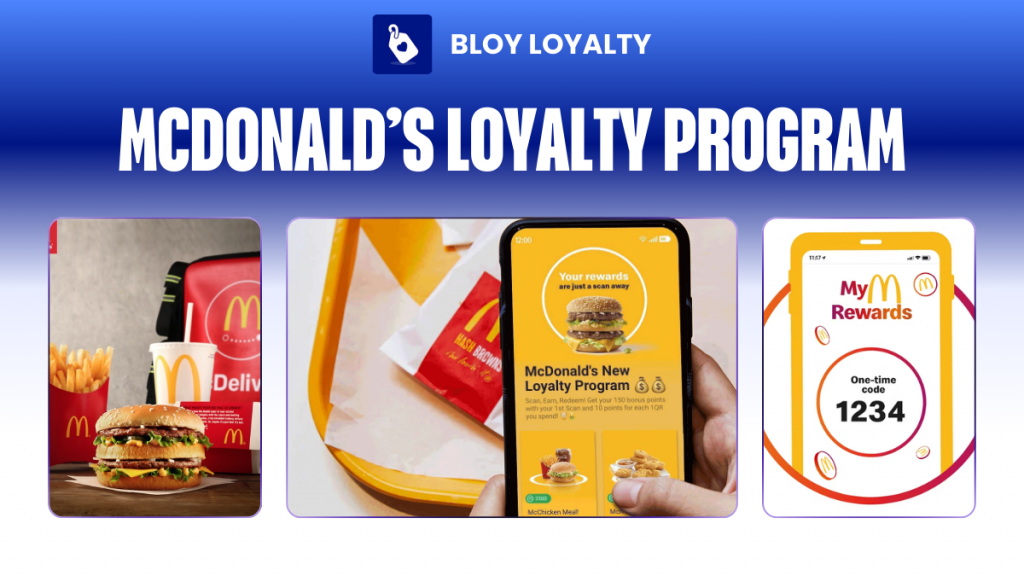
4.2 McDonald’s loyalty and convenience at scale
McDonald’s has positioned its loyalty program as part of a broader digital ecosystem that includes mobile ordering, personalization, and convenience. Loyalty rewards are embedded into the ordering journey rather than treated as a standalone program.
In earnings communications, McDonald’s has emphasized that loyalty plays a key role in driving digital engagement and repeat visits, particularly among customers who value speed and ease of ordering.
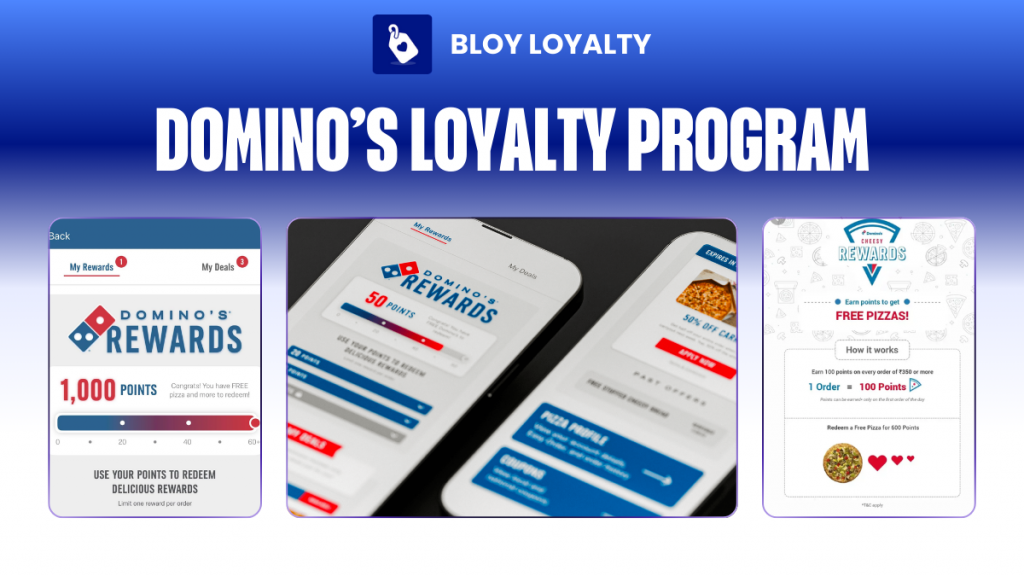
4.3 Domino’s Rewards and repeat ordering behavior
Domino’s Rewards is designed around repeat ordering, especially through digital channels. The program focuses on encouraging customers to reorder frequently by keeping rewards simple and progress easy to track.
Domino’s has publicly stated that repeat customers make up the majority of its business, underscoring how loyalty programs can support predictable revenue when they are aligned with habitual purchasing behavior.
4.4 What restaurants can learn from the best loyalty programs
Across these global examples, the common thread is not reward generosity but behavioral alignment. The best food loyalty programs succeed because they fit naturally into how customers already order, pay, and return.
Key takeaway
Customer loyalty programs for restaurants should be designed to reinforce habits, simplify repeat visits, and integrate smoothly into daily operations instead of competing for attention with short term discounts.
5. How to choose the best restaurant loyalty software
Choosing the right loyalty software is often where restaurant loyalty programs succeed or fail. A tool that looks powerful on paper can quickly become unused if it does not fit daily operations, staff workflows, or customer behavior.
Rather than asking which software has the most features, restaurants should focus on how well a loyalty tool supports repeat visits without adding friction.
5.1 Start with customer behavior, not software features
The best restaurant loyalty software is designed around how customers already dine and return. Before choosing any tool, restaurants should be clear on which behavior they want to reinforce.
Some restaurants benefit from rewarding frequent visits, while others need to encourage reordering, off peak visits, or consistent weekly routines. Software should support these goals directly instead of forcing a generic points model.
5.2 Prioritize operational simplicity for staff
Restaurant loyalty programs live or die at the point of execution. If staff need to remember complex rules or follow extra steps during busy hours, adoption will quickly drop.
The best loyalty software minimizes staff involvement by automating earn and redeem actions or integrating naturally into existing checkout flows. Simpler execution leads to higher consistency, which directly impacts customer trust and repeat usage.
5.3 Avoid forcing customers to download another app
Many restaurants assume that loyalty software must rely on a branded mobile app. In practice, app fatigue is a real barrier, especially for local and independent restaurants.
Effective restaurant loyalty software allows customers to participate through low friction methods such as phone numbers, QR codes, or digital receipts. The goal is to make loyalty participation feel optional but effortless.
5.4 Look for flexibility across loyalty models
Restaurants evolve over time. A loyalty program that starts with visit based rewards may later need to support VIP perks, referrals, or seasonal campaigns.
Choosing software that supports multiple loyalty models allows restaurants to adjust without rebuilding their program from scratch. Flexibility also makes it easier to test what actually drives repeat visits before committing long term.
5.5 Measure what actually matters for loyalty success
Loyalty software should make it easy to track outcomes, not just activity. Metrics like repeat visit rate, visit frequency, and returning customer share are more meaningful than total points issued or sign ups.
Restaurants should choose tools that surface these insights clearly so loyalty decisions can be adjusted based on real behavior rather than assumptions.
6. Why many customer loyalty programs for restaurants fail
Most customer loyalty programs for restaurants do not fail because the idea of loyalty is wrong. They fail because the program does not match customer behavior or restaurant operations. Below are the most common reasons loyalty programs break down in practice, especially for independent and growing restaurants.
6.1 Choosing a loyalty model before understanding customer behavior
One of the most common mistakes is selecting a loyalty program based on what competitors are doing or what software is available, rather than why customers actually return.
Restaurants often launch points or VIP programs without first identifying whether their customers are driven by frequency, routine, relationships, or occasions. When the loyalty model does not reinforce the dominant behavior, customers either ignore the program or forget it exists.
6.2 Making loyalty too complex for staff to execute
Even well designed loyalty programs fail when staff cannot execute them consistently. During busy service hours, complex rules, manual steps, or unclear redemption flows quickly get skipped.
When staff stop mentioning or applying loyalty, customers lose trust in the program. Over time, loyalty becomes something customers signed up for once but never actively use again.
6.3 Treating loyalty as a discount strategy
Many restaurants mistake loyalty for ongoing discounts. While discounts may drive short term traffic, they rarely build long term retention when used as the core loyalty mechanic.
Customers begin to wait for rewards instead of returning out of habit or preference. This shifts loyalty from behavior reinforcement to price dependency, which weakens margins over time.
6.4 Setting the execution level too high too early
Some restaurants adopt advanced loyalty software or complex automation before their team or customers are ready. This creates friction at both the operational and customer levels.
When loyalty feels difficult to use, customers disengage and staff avoid promoting it. The program may look sophisticated on paper, but adoption remains low.
6.5 Measuring activity instead of outcomes
Another common failure is focusing on surface level metrics such as sign ups, points issued, or rewards claimed. These numbers do not necessarily reflect whether customers are returning more often.
Without tracking repeat visits, visit frequency, or returning customer share, restaurants cannot tell whether loyalty is driving meaningful behavior change.
6.6 Why these failures are preventable
Each of these failure points ties back to the decision framework outlined earlier. When restaurants understand customer behavior, choose the right loyalty model, adapt it to their restaurant type, and execute at the right level, loyalty programs become far more effective and sustainable.
This sets the stage for designing loyalty programs that support long term retention rather than short lived campaigns.
7. Conclusion
Effective customer loyalty programs for restaurants are not built by copying popular reward models or choosing the most advanced software. They work when restaurants understand why customers return, select a loyalty model that reinforces that behavior, and execute it consistently within daily operations.
By focusing on customer behavior first, adapting loyalty models to restaurant type, and avoiding unnecessary complexity, restaurants can turn loyalty from a passive reward system into a reliable driver of repeat visits. The most successful programs are not the most sophisticated ones, but the ones customers and staff actually use.
For restaurant owners, the goal is simple: design loyalty programs that fit how people dine, how teams operate, and how the business plans to grow over time.

Yến Lê Hải
Content author at BLOY, focusing on product-led content, SEO, and educational resources to help merchants improve conversion and customer engagement.