B2B Loyalty Program Explained: Models, Examples, and What Actually Works
Most B2B businesses understand that retention drives long-term growth. But when it comes to loyalty programs, many still struggle to apply the concept effectively.That’s because a B2B loyalty program operates very differently from consumer loyalty models.
In B2B, buying decisions are slower, deal values are higher, and relationships often involve multiple stakeholders rather than a single end customer. Simply copying a points-based system from B2C rarely delivers meaningful results.
In this guide, we’ll explain what B2B loyalty programs really are, how they are designed differently, and which models actually work in practice. You’ll also see real-world B2B loyalty program examples and learn the core principles that help businesses build stronger, longer-lasting customer relationships.
1.What Is a B2B Loyalty Program?
A B2B loyalty program is a structured strategy designed to strengthen long-term relationships between businesses by rewarding commitment, collaboration, and strategic behaviors over time.
Unlike traditional loyalty programs designed for consumers, B2B loyalty is not primarily about purchase frequency or emotional brand attachment. Instead, it focuses on:
- Relationship continuity
- Account growth and expansion
- Long-term commercial alignment
In B2B environments, customers rarely make impulse purchases. Buying decisions often involve procurement teams, finance stakeholders, and operational leaders, with contracts negotiated over months rather than minutes. As a result, loyalty programs for B2B customers are built to reinforce trust, reliability, and partnership rather than short-term incentives.
Most B2B customer loyalty programs aim to achieve outcomes such as:
- Increased account retention and lifetime value
- Deeper engagement across multiple roles within an organization
- Stronger preference for one supplier over alternatives
In practice, this means a B2B loyalty program often rewards:
- Long-term relationships rather than individual transactions
- Strategic behaviors such as adoption, training, or collaboration
- Commitment levels that signal partnership, not just spend
Understanding this foundation is critical before choosing any specific model or incentive structure. Without it, even well-intentioned loyalty initiatives risk becoming disconnected from how B2B customers actually buy and operate.
2. How B2B Loyalty Programs Are Designed Differently
2.1. Loyalty Is Account-Based, Not Transaction-Based
Unlike consumer loyalty programs that reward individual purchases, loyalty programs for B2B customers are typically structured at the account level.
This means rewards and benefits are aligned with:
- Total relationship value over time
- The breadth of engagement across teams
- Strategic importance of the account
Instead of asking “How often did this customer buy?”, B2B loyalty programs ask: “How committed is this customer to working with us long term?”
This account-based approach makes loyalty a natural extension of customer retention and account management strategies rather than a standalone marketing initiative.
2.2. Rewards Are Tied to Strategic Behaviors
In B2B, rewarding spending alone is rarely enough to build meaningful loyalty.
Well-designed B2B customer loyalty programs often incentivize behaviors that strengthen the partnership, such as:
- Product adoption and usage
- Training and certification completion
- Collaboration in joint initiatives
- Referrals within a business network
These activities increase switching costs and embed the supplier more deeply into the customer’s operations – something discounts alone cannot achieve.
This is where behavior-based loyalty becomes especially relevant in B2B contexts.
2.3. Loyalty Functions as a System, Not a Campaign
Another key difference is how B2B loyalty programs are positioned internally.
Rather than running as short-term promotions, B2B loyalty programs are most effective when treated as:
- Ongoing relationship frameworks
- Part of the commercial operating model
- Closely connected to sales, success, and account teams
This system-level approach ensures loyalty initiatives remain consistent throughout long buying cycles and across multiple touchpoints.
Research on B2B loyalty programs consistently shows that long-term relationship value is driven less by isolated incentives and more by sustained trust and collaboration.
3. Common B2B Loyalty Program Models (And When They Work Best)
Not all B2B loyalty program models are created for the same business context.
The effectiveness of a model depends heavily on how customers buy, how relationships are managed, and what behaviors the business wants to reinforce.
Instead of looking for a single “best” approach, successful B2B loyalty programs choose models that align with their commercial structure and growth goals.
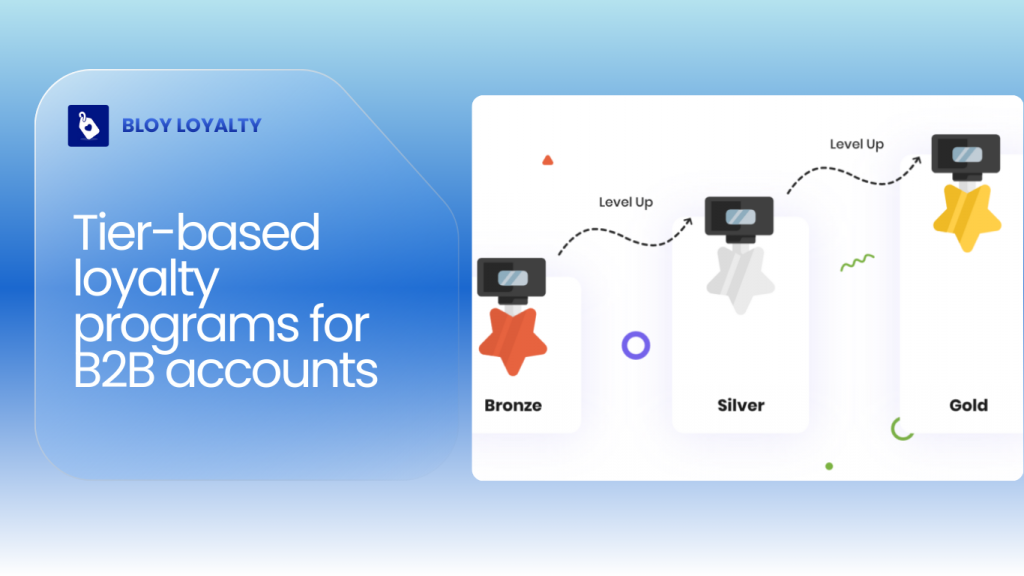
3.1. Tier-Based Loyalty Programs for B2B Accounts
Tier-based loyalty is one of the most widely used B2B loyalty program models, especially for businesses managing accounts of varying size and strategic importance.
In this model, customers are grouped into tiers based on criteria such as:
- Annual revenue or contract value
- Length of the business relationship
- Level of engagement or commitment
Each tier unlocks a different set of benefits. In B2B, these benefits are often less about discounts and more about status and access.
Common examples include:
- Priority support or service levels
- Dedicated account management
- Early access to products, features, or programs
- Invitations to exclusive events or training
💡 This approach works best when:
- The business serves a mix of small, mid-market, and large accounts
- Retention and expansion of key accounts are strategic priorities
- Account teams need a clear framework to justify differentiated treatment
In practice, tier-based loyalty programs for B2B customers function as a way to formalize relationship depth.
Higher tiers signal partnership maturity rather than just higher spend.
This is why tier structures in B2B often resemble VIP tiers more than traditional points ladders.
When designed well, tier-based B2B loyalty creates clarity on both sides:
- Customers understand what deeper commitment unlocks
- Businesses can invest resources where long-term value is highest
3.2. Incentive-Based Programs for Dealers and Partners
Incentive-based loyalty programs are especially common in B2B channel loyalty programs, where growth depends on distributors, resellers, or dealer networks rather than direct sales.
Instead of rewarding end purchases, these B2B incentive programs are designed to influence partner behavior at scale. Typical incentives are tied to actions such as:
- Meeting or exceeding sales targets
- Completing product training or certifications
- Participating in co-marketing or joint campaigns
What makes incentive-based models effective in B2B is that rewards go beyond simple financial payouts. Many successful B2B dealer loyalty program ideas focus on value-added benefits, including:
- Sales enablement resources
- Marketing development funds
- Access to exclusive tools, insights, or support
💡 This model works best when:
- Revenue is driven through indirect sales channels
- Partner performance varies significantly
- The business needs a structured way to align partner behavior with strategic goals
Rather than competing on margin alone, incentive-based loyalty helps brands guide how partners sell, position, and grow the relationship over time.
3.3. Relationship-Based and Contract-Driven Loyalty Programs
Some of the most mature B2B loyalty programs are built directly into commercial relationships rather than layered on top of them.
In relationship-based or contract-driven models, loyalty is reinforced through:
- Long-term agreements
- Volume or usage commitments
- Clearly defined service-level expectations
Instead of earning points or short-term rewards, customers benefit from:
- Priority service or support
- Customized solutions
- Strategic collaboration opportunities
This approach is common in enterprise B2B, SaaS, manufacturing, and professional services, where loyalty is measured by continuity and expansion rather than transaction frequency.
For these businesses, a loyalty program for B2B customers acts as a framework for managing trust and reliability across long buying cycles. The value comes from reducing friction, strengthening partnerships, and making the relationship harder to replace.
When loyalty is embedded at this level, it becomes part of how the business operates, not an extra initiative customers need to remember to use.
4. What Makes a B2B Loyalty Program Actually Work
Across industries, effective B2B loyalty programs tend to succeed not because of complex mechanics, but because they are designed around how B2B relationships actually function.
Rather than trying to “motivate” customers in the short term, these programs reinforce behaviors that strengthen long-term partnerships.
4.1. Loyalty Is Tied to Clear Business Objectives
A B2B loyalty program works best when its purpose is clearly defined from the start.
Instead of vague goals like “engagement” or “activity,” successful programs are built to support outcomes such as:
- Retaining high-value accounts
- Expanding existing customer relationships
- Increasing partner commitment and alignment
When loyalty is connected directly to commercial objectives, it becomes easier to justify internally and easier for customers to understand why it exists.
4.2. Rewards Reflect Roles, Not Just Spend
One of the biggest differences between B2B and B2C loyalty is who influences buying decisions.
In B2B, loyalty programs are more effective when they account for:
- Decision-makers
- Influencers
- Day-to-day users
That’s why many loyalty programs for B2B customers reward access, recognition, or enablement rather than individual transactions. The goal is to reinforce the relationship across the entire account, not just incentivize the person placing the order.
4.3. Behavior Matters More Than Transactions
In practice, the most durable B2B customer loyalty programs are built around behavior rather than purchase frequency.
Common behaviors that successful programs encourage include:
- Product adoption and usage
- Training participation and certification
- Collaboration on joint initiatives
- Referrals within professional networks
By rewarding these actions, businesses strengthen integration and increase switching costs in a way that discounts alone cannot.
This is where behavior-based loyalty becomes especially powerful in B2B contexts.
Simplicity Drives Adoption
While B2B relationships are complex, the loyalty program supporting them should not be.
Programs that rely on:
- Overly detailed rules
- Too many tiers or conditions
- Complicated reward structures
often see lower participation, even among high-value accounts.
Effective B2B loyalty programs prioritize clarity. Customers should immediately understand:
- What behaviors are rewarded
- Why those behaviors matter
- What benefits deeper commitment unlocks
4..4. Loyalty Works Best as a System, Not a Layer
Finally, B2B loyalty delivers the most value when it is treated as an ongoing system rather than a standalone initiative.
When loyalty aligns with sales, account management, and customer retention efforts, it reinforces consistent experiences across long buying cycles.
This system-level approach ensures loyalty remains relevant long after the initial setup and continues to support growth as relationships evolve.
5. World B2B Loyalty Program Examples
Looking at real-world B2B loyalty program examples helps clarify an important point:
successful programs rarely revolve around points or discounts. They’re built to strengthen ecosystems, guide partner behavior, and formalize long-term collaboration.
Below are two widely referenced examples that illustrate how B2B loyalty works in practice.
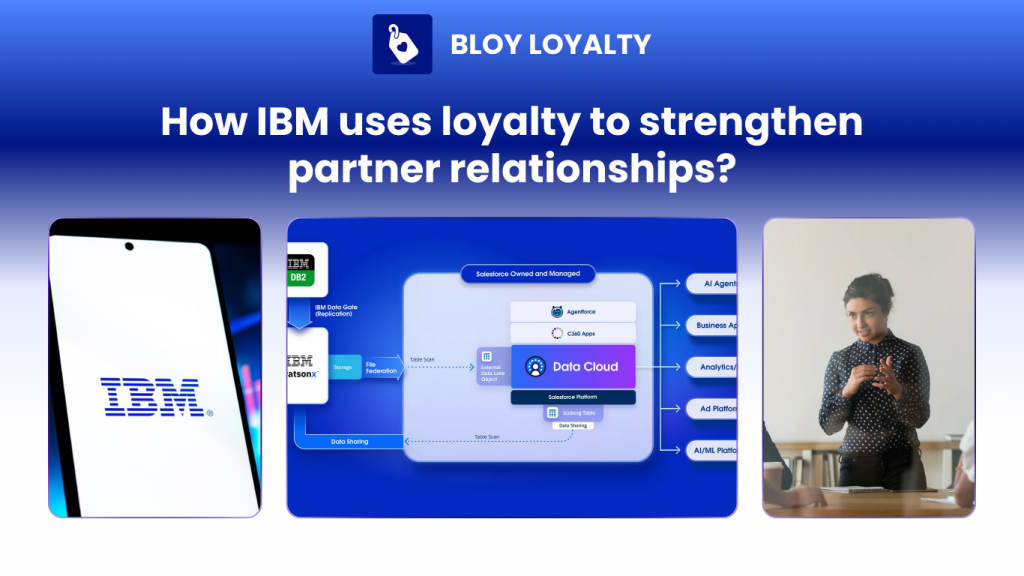
5.1. How IBM Uses Loyalty to Strengthen Partner Relationships
IBM approaches B2B loyalty through its global partner ecosystem rather than a traditional rewards scheme.
Instead of focusing on transactional incentives, IBM’s loyalty logic centers on:
- Partner enablement and education
- Recognition of expertise and specialization
- Access to resources, support, and co-selling opportunities
In this model, loyalty is expressed through status, capability, and trust. Partners that invest more deeply in the relationship by building skills, aligning with IBM’s roadmap, or delivering consistent performance, gain greater visibility and priority within the ecosystem.
The result is a loyalty structure that:
- Rewards long-term commitment rather than short-term volume
- Encourages partners to grow alongside the brand
- Makes switching less attractive by increasing mutual dependency
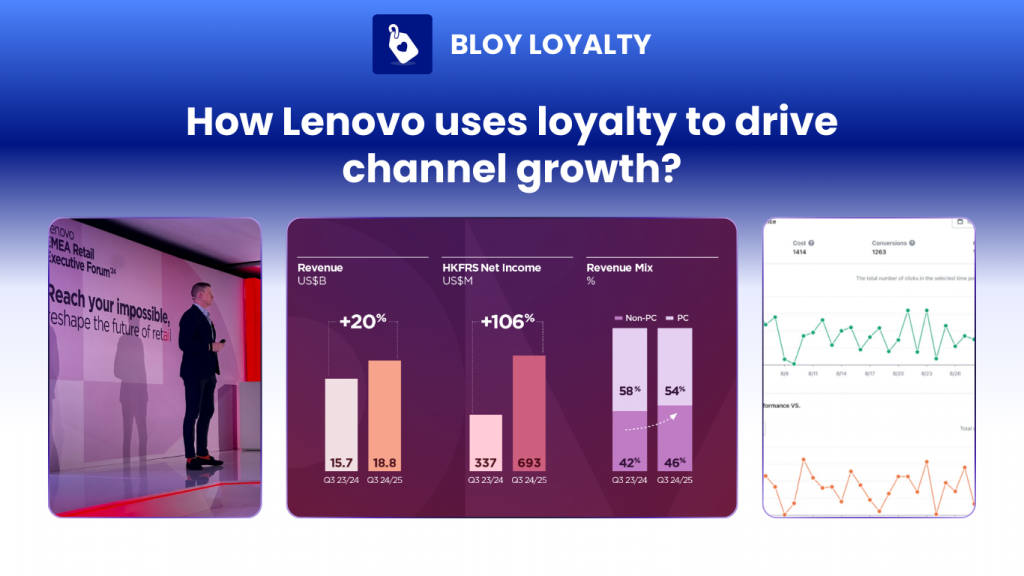
5.3. How Lenovo Uses Loyalty to Drive Channel Growth (PIC)
Lenovo’s B2B loyalty efforts are closely tied to its channel and partner strategy.
Rather than offering broad discounts, Lenovo aligns loyalty with:
- Sales performance and execution quality
- Collaboration on go-to-market initiatives
- Consistency in representing the brand to end customers
Partners are rewarded not just for selling more, but for selling well – in ways that support Lenovo’s long-term growth objectives. Loyalty, in this context, becomes a tool for shaping partner behavior across the entire sales cycle.
This approach works particularly well in channel-heavy B2B environments, where loyalty programs must balance:
- Motivation
- Control
- Strategic alignment
6. Common Pitfalls to Be Aware Of
Even well-intentioned B2B loyalty programs can lose impact if a few fundamentals are overlooked.
One common pitfall is treating B2B loyalty as a direct extension of B2C mechanics. Points, discounts, and short-term rewards may look familiar, but they often fail to reflect how B2B customers evaluate long-term partners.
Another issue arises when loyalty exists in isolation. If a loyalty program for B2B customers is disconnected from sales, account management, or customer success teams, it quickly becomes an underused layer rather than a strategic system.
Finally, some programs struggle because their purpose is unclear. Without a defined objective such as retention, expansion, or partner alignment – loyalty initiatives risk becoming busywork rather than a meaningful driver of relationship value.
Being aware of these pitfalls helps ensure loyalty remains aligned with how B2B relationships actually operate.
7. Conclusion
A B2B loyalty program is not designed to trigger quick repeat purchases or short-term spikes in activity.
Its real value lies in:
- Reinforcing long-term partnerships
- Encouraging behaviors that deepen collaboration
- Creating continuity across complex buying journeys
When loyalty is built around commitment, trust, and shared growth, it becomes more than a rewards mechanism. It becomes a strategic advantage that is difficult for competitors to replicate.
For B2B businesses, loyalty works best when it reflects how customers buy, how decisions are made, and how relationships evolve over time.

Yến Lê Hải
Content author at BLOY, focusing on product-led content, SEO, and educational resources to help merchants improve conversion and customer engagement.