Nike Loyalty Program: 5 Lessons for Shopify Brands
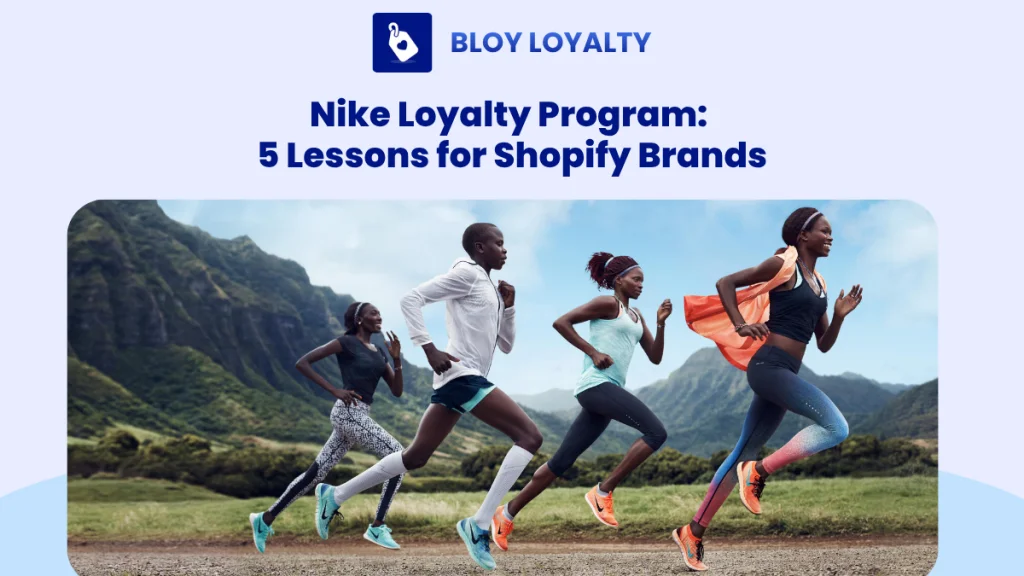
The Nike loyalty program is often discussed as a rewards program. But its real strength has nothing to do with coupons or cashback. Nike wins loyalty by making customers feel like members of something larger than a store.
For Shopify merchants, that distinction matters. A program built only around points and discounts will attract deal-seekers. A program built around membership, access, and identity will attract the kind of customers who come back because they want to, not because they are waiting for a sale.
This guide breaks down how the Nike loyalty program actually works, why it performs the way it does, and how Shopify brands can apply the same logic using practical mechanics like points, VIP tiers, referrals, lifestyle actions, and member-only rewards.
1. What Is the Nike Loyalty Program?
Nike loyalty program is built around membership, not just rewards
Most people know the Nike loyalty program through Nike Membership, the brand’s free sign-up system that connects customers across the Nike app, Nike Run Club, Nike Training Club, and SNKRS. But the program is far more than a points balance.
Nike Membership is a loyalty ecosystem built around belonging, access, identity, and engagement. Members do not simply accumulate points toward a discount. They unlock exclusive products, receive personalized recommendations, access app-based training communities, and earn recognition at key moments in their lives. The experience is designed to make membership feel meaningful before, during, and after a purchase.
According to data cited by Nector, Nike’s loyalty program has surpassed 100 million members, who spend three times more than non-members. More recently, RetailWire reported that Nike’s loyalty program and app ecosystem has grown to over 160 million members, reflecting years of sustained investment in the membership experience.
Key benefits of Nike Membership
| Nike Loyalty Element | What It Does | Loyalty Purpose |
| Member-only products | Gives members access to selected products unavailable to the public | Creates exclusivity |
| Birthday rewards | Recognizes personal milestones with a personalized gift | Builds emotional connection |
| Nike app experience | Centralizes shopping, training, and membership in one place | Reduces friction |
| Nike Run Club / Training Club | Connects the brand with a fitness lifestyle | Builds community |
| Personalized recommendations | Makes shopping feel relevant to each member’s history and goals | Increases repeat engagement |
The real lesson for Shopify brands is not that you need to copy every Nike feature. The lesson is to copy the logic behind the system: access, identity, and belonging before discount.
2. Why the Nike Loyalty Program Works So Well
Nike turns customers into members, not just buyers
There is a meaningful difference between a customer and a member. A customer buys a product and leaves. A member has a profile, a history, preferences, and an ongoing relationship with the brand.
Nike frames membership as a club, not a checkout benefit. In 2026, Nike’s loyalty machine runs on three core fuels: access, identity, and seamlessness. When customers see themselves as Nike members rather than Nike shoppers, they are harder to lose to a competitor offering a 10% discount.
This is the difference between transactional loyalty and emotional loyalty. Transactional loyalty lasts until a better deal appears. Emotional loyalty is built on identity and belonging, and it compounds over time.
Nike prioritizes access over discounts
The most distinctive feature of the Nike loyalty program is what it does not center on: discounts. Instead of leading with percentage-off coupons, Nike leads with early access, exclusive product drops, limited collections, and member-only experiences.
That number did not come from discounting. It came from making membership feel like a genuine advantage. For Shopify merchants, this is a critical insight: access-based rewards create urgency and perceived value without eating into margins the way a sitewide discount does.
Nike connects loyalty with lifestyle
Nike does not only reward purchases. It rewards participation in an active lifestyle. Through Nike Run Club and Nike Training Club, members have a reason to open the app even when they are not planning to shop. This continuous engagement keeps Nike top of mind and strengthens community around a shared identity.
Research shows that 47% of customers say they stay loyal to a brand with a like-minded community. Nike has built that community by connecting its loyalty program to the lifestyle its customers already live. Shopify brands can apply the same logic by rewarding actions that reflect the identity of their customer base, not just the transactions in their checkout history.
Nike uses customer data to personalize the journey
Nike’s apps funnel behavioral data into a single member view, covering goals, sizes, engagement rhythms, and spending patterns, which allows for segmentation as granular as “members who train three times a week and buy tights quarterly”. This level of personalization makes membership feel more valuable over time. The more Nike knows about a member, the more relevant the experience becomes.
Shopify merchants do not need enterprise infrastructure to start. Birthday rewards, VIP tiers based on spend or engagement, purchase-category segments, and personalized post-purchase emails are all accessible starting points that apply the same underlying logic.
3. The Nike Loyalty Gap: What Shopify Merchants Usually Miss
Most stores copy the reward, not the system
Many Shopify merchants look at the Nike loyalty program and copy the surface: a birthday reward here, a members-only discount there. But the part worth copying is the system underneath: access as the primary value, identity as the emotional hook, community as the retention engine, and personalization as the differentiator.
If a loyalty program is built only around discounts, it becomes a coupon engine. Coupon engines attract price-sensitive buyers who leave the moment a competitor offers a better deal.
Most Shopify loyalty programs overuse discounts
A discount creates a fast conversion. But it also trains customers to expect lower prices. If every reward in a loyalty program is a percentage-off code, two things happen: margins shrink and customers learn to wait for the deal instead of buying at full price.
As the BLOY guide on how to set up a loyalty program points out, the best-performing programs grow member revenue not through deeper discounts, but through structural behavior change. Nike demonstrates that value, status, and access can drive that change without compromising the price perception of the brand.
Most programs reward only purchases
Purchase-based rewards are a foundation, but they leave large gaps in the customer journey. Loyalty also comes from reviews, referrals, user-generated content, event participation, and community engagement. These behaviors keep customers engaged between buying cycles and give them reasons to return even when they do not have an immediate purchase need.
Most loyalty value is hidden at the wrong moment
If a loyalty program only appears in the account page or a small widget in the corner of the site, customers struggle to perceive its value. Nike makes membership visible throughout the entire journey: in the app, at checkout, in physical stores, and at events.
For Shopify merchants, this means loyalty must be surfaced on product pages, in the cart, at checkout, in post-purchase emails, and at any point of sale. The BLOY guide on personalized loyalty programs covers how to make loyalty visible at the moments that actually influence buying decisions.
4. Five Nike Loyalty Program Lessons Shopify Brands Can Apply
Lesson 1: Build a membership, not just a points program
The language a brand uses around its loyalty program shapes how customers perceive it. “Earn points” sounds transactional. “Join the club” sounds like belonging.
Shopify brands should treat their loyalty program as a named membership with its own identity: a branded currency, a clear set of member benefits, and a dedicated page that explains how to join, how to earn, how to redeem, and what members unlock. The goal is to make enrollment feel like opting into something valuable, not just clicking “sign up for discounts”.
For practical guidance on naming a program in a way that creates that sense of belonging, the BLOY guide on loyalty program name ideas is a useful starting point.
BLOY execution: Use BLOY to build a branded loyalty page, set a custom points currency name, and display clear earning and redemption rules so customers understand the full value of membership before they even join.
Lesson 2: Use VIP tiers to create status and progression
Nike creates a sense of status through exclusive access. Shopify merchants can do the same through VIP tiers that give customers something visible to progress toward.
A simple three-tier structure works well for most stores. Something like Member, Insider, and Elite is enough to create aspiration without overcomplicating the experience. Higher tiers can unlock early access to new collections, free shipping, birthday gifts, bonus points multipliers, or priority support.
The key is to make tier benefits feel meaningfully different, not just incrementally better. A member who reaches the top tier should feel genuinely recognized, not just slightly more rewarded. For a detailed framework on building tier structures that motivate progression, the BLOY guide on tiered loyalty programs for Shopify walks through both spend-based and value-based approaches.
BLOY execution: Set up VIP tiers based on spending, points, or engagement actions. Give top-tier customers a 24-hour head start on new collection drops or access to member-only products.
Lesson 3: Reward lifestyle actions, not only transactions
Nike rewards its customers for being part of an athletic lifestyle. Shopify brands can apply the same logic by rewarding actions that signal community membership and brand advocacy, not just checkout behavior.
A fitness brand can reward workout content or challenge participation. A beauty brand can reward before-and-after photo submissions or product tutorials. A fashion brand can reward styling posts or waitlist signups for upcoming collections. A pet brand can reward photo submissions or community event check-ins.
These custom earning actions keep customers engaged with the brand between purchases and create behavioral data that makes future personalization more effective. The BLOY guide on points-based loyalty programs for Shopify covers how action-based earning rules work alongside purchase-based points.
BLOY execution: Use BLOY’s custom earning actions to reward social follows, review submissions, referrals, user-generated content, event participation, or any community activity that reflects the identity of your brand.
Lesson 4: Make exclusive access your strongest reward
Nike’s most powerful loyalty lever is not a discount. It is a drop. When members know they get first access to a limited product, joining the program becomes urgent. Missing the drop becomes a reason to pay closer attention next time.
Shopify brands can apply this by creating member-only product launches, early sale access, private previews, or limited reward campaigns timed around seasonal moments. Done consistently, this transforms loyalty from a price-based program into a value-based membership where the reward is access rather than a coupon code.
This approach also protects margins. Access costs the brand almost nothing to deliver but creates significant perceived value for the customer.
BLOY execution: Create VIP benefits such as early access to new collections, member-only gifts with purchase, limited points multiplier events, or first-look product previews reserved for top-tier members.
Lesson 5: Personalize rewards with customer data
Nike’s personalization operates at scale because of years of behavioral data. Shopify brands can start far simpler and still see meaningful impact.
Birthday rewards, member anniversary bonuses, tier-based campaign targeting, and purchase-category segments are all forms of personalization that require minimal data and deliver a genuinely personal experience. A customer who receives a birthday reward feels recognized. A customer who gets a win-back offer after 45 days of inactivity feels the brand noticed their absence.
Research from Deloitte shows that only 25% of loyalty programs provide personalized member experiences, which means personalization is still a genuine differentiator for most Shopify stores.
BLOY execution: Use customer birthday, purchase history, loyalty tier, and redemption behavior to trigger personalized campaigns and email flows. BLOY integrates with Klaviyo so these triggers can be automated without manual effort.
5. Nike Loyalty Program vs. Shopify Loyalty Program: What to Copy and What to Avoid
| Nike Strategy | What Shopify Brands Should Copy | What to Avoid |
| Member-first ecosystem | Create a clear loyalty identity with a named program and dedicated page | Copying Nike’s technical scale too literally |
| Exclusive access as primary value | Offer early access, member-only drops, or VIP perks | Making every reward a discount |
| Community connection | Reward reviews, referrals, UGC, and community engagement | Rewarding only purchases |
| Personalization at scale | Use birthday, purchase history, and tier data to personalize | Overcomplicating the setup before you have enough members |
| Omnichannel visibility | Connect online store loyalty with POS | Hiding the program in the account page |
| Repeatable member rituals | Create monthly drops, bonus events, or member days | Running loyalty as a set-and-forget widget |
6. How to Build a Nike-Inspired Loyalty Program on Shopify with BLOY
Translating Nike’s loyalty logic into a Shopify program does not require a large team or an enterprise tech stack. It requires building five layers in sequence.
Phase 1: The Hook. Start with a simple baseline perk that makes joining feel immediately valuable. Welcome points, a first-purchase bonus, free shipping for members, or a birthday reward all work as enrollment incentives. The goal is to answer the question “why should I join?” before the customer has to ask it.
Phase 2: The Habit. Reward repeatable actions that keep customers engaged between purchases. Following on social media, leaving a product review, completing a profile, referring a friend, or sharing user-generated content are all actions that build engagement without requiring a purchase. This is where the program starts to feel active rather than passive.
Phase 3: The Status. Introduce VIP tiers that give customers a visible goal. A suggested structure: Member (welcome points and birthday reward), Insider (free shipping and bonus points), Elite (early access, priority support, and member-only gifts). Three tiers is enough for most Shopify stores. Adding more too early creates confusion, not aspiration.
Phase 4: The Ritual. Create repeatable moments that members expect and look forward to. A monthly member drop, a double-points weekend, a VIP-only preview before a major collection launch, or a Member Day campaign are all examples of rituals that make loyalty feel ongoing rather than static. This is what moves a loyalty program from a checkout tool to a brand habit.
Phase 5: The Signal. Track the metrics that show whether the program is influencing real behavior, not just issuing points. Key performance indicators to monitor include enrollment rate, active member rate, redemption rate, repeat purchase rate, tier upgrade rate, revenue attributable to loyalty members, and referral conversion rate. If these numbers are moving, the program is working. If only points issued are growing, the program needs adjustment.
7. Example: A Nike-Style Loyalty Setup for a Shopify Fitness Brand
Consider a Shopify fitness apparel brand that wants to build loyalty without relying on constant promotions. Here is how the Nike loyalty logic translates into a practical setup:
| Loyalty Layer | Setup Example | Purpose |
| Membership hook | 100 welcome points for joining | Increase enrollment |
| Lifestyle action | Points for workout selfie or fitness challenge participation | Build community |
| VIP tier benefit | Elite members get 24-hour early access to new drops | Create status and urgency |
| Member ritual | Monthly member-only product release | Build a returning habit |
| Personalized reward | Birthday reward or membership anniversary bonus | Strengthen emotional connection |
| Omnichannel layer | Earn points via Shopify POS, redeem online | Connect offline and online behavior |
This is not a copy of Nike’s technology. It is a Shopify-ready translation of Nike’s loyalty logic: membership as identity, access as the primary reward, community as the retention engine, and personalization as the differentiator.
8. Common Mistakes When Copying the Nike Loyalty Program
Trying to copy Nike’s scale instead of its principles. Shopify brands do not need four apps and a global event strategy to apply Nike’s loyalty logic. Start with a membership promise, a clear set of benefits, and a simple earning structure. The principles scale down; the infrastructure does not need to.
Making every reward a discount. Discounts have a role in loyalty programs, but they should be one tool among many. Add non-discount perks alongside them: early access, exclusive products, priority support, and community recognition all deliver perceived value without directly reducing margin. The BLOY guide on B2C loyalty programs covers how to structure a reward mix that does not train customers to wait for a price reduction.
Creating too many tiers too early. Three tiers is enough for most Shopify stores. Too many levels make the program harder for customers to understand and harder for merchants to manage. Complexity should be added only after the baseline is working and there are enough active members to populate each level meaningfully.
Forgetting to promote the program. A loyalty program that customers cannot see will not change their behavior. Promote the program on product pages, in the cart, in the post-purchase email sequence, on social media, and at any point of sale. Loyalty value needs to be visible at the moments that matter.
Not tracking the right metrics. If a merchant only tracks points issued, they will not know whether the program is actually driving retention. Track redemption rate, active member rate, repeat purchase rate, referral conversion, and tier movement. These are the signals that show whether loyalty is earning its place in the marketing budget.
9. Nike Loyalty Is a System, Not a Discount Program
The Nike loyalty program succeeds because it turns customers into members. The value is not primarily in the rewards. It is in the access, the identity, the community, and the personalization that membership delivers over time.
Nike’s loyalty members have consistently increased their buying frequency quarter over quarter, with member engagement through Nike Direct growing double digits year over year. That growth does not come from deeper discounting. It comes from building a system that makes customers want to belong.
Shopify brands do not need enterprise budgets or global app ecosystems to apply this logic. They need five things: a membership hook that makes joining feel worthwhile, VIP tiers that create progression and status, lifestyle rewards that build community between purchases, exclusive access that creates urgency without margin pressure, and measurable signals that prove loyalty is driving real behavior change.
That is the Nike loyalty program translated into a Shopify context. And it is within reach for any brand willing to think about loyalty as a membership system rather than a discount engine.
Want to build a Nike-inspired loyalty experience for your Shopify store? With BLOY, you can set up points, VIP tiers, referrals, birthday rewards, and member-only perks without custom development. Explore how BLOY works for Shopify merchants.

Yến Lê Hải
Content author at BLOY, focusing on product-led content, SEO, and educational resources to help merchants improve conversion and customer engagement.