Coffee Shop Loyalty Programs: Why Most Fail (And How to Build One That Actually Works)
Walk into any specialty coffee shop today and you’ll likely be asked: “Are you part of our rewards program?” The barista smiles, you nod politely, and then… nothing happens. Your digital stamp card sits unopened in your phone. The paper card crumples in your wallet. Three months later, you’ve forgotten the program exists.
This isn’t just a customer problem. It’s a business crisis hiding in plain sight.
Most coffee shop owners believe that offering free coffee equals customer retention. They launch coffee shop loyalty programs with genuine enthusiasm, expecting a surge in repeat visits and glowing word-of-mouth. Instead, they get lukewarm engagement, minimal redemptions, and baristas who forget to mention the program during morning rush. The program runs quietly in the background, consuming resources but barely influencing purchasing decisions.
The hard truth? Free coffee doesn’t automatically create loyalty. A poorly designed cafe loyalty program can actually damage your relationship with customers by adding friction, creating confusion, or setting expectations you can’t profitably meet.
This article will help you avoid these expensive mistakes. You’ll learn how to choose the right loyalty model for your shop’s size and customer base, calculate the true cost of each reward (spoiler: it’s higher than you think), and implement a program that enhances rather than disrupts your daily operations. Whether you’re launching your first coffee shop rewards program or fixing one that’s already failing, these insights will save you time, money, and countless headaches.
1. Why Most Coffee Shop Loyalty Programs Fail
The problem isn’t that loyalty programs don’t work. It’s that most coffee shops implement them without understanding why customers actually return.
Loyalty fatigue is real. Your customers already carry digital cards for their grocery store, pharmacy, gas station, and three other coffee chains. According to a 2023 study by Bond Brand Loyalty, the average consumer belongs to 16.6 loyalty programs but actively uses only 7.6 of them. Your cafe loyalty program is competing for mental space in an oversaturated market.
Redemption rates reveal the uncomfortable truth. Industry data shows that 30-40% of earned rewards in coffee shop loyalty programs go unredeemed. Customers earn the free drink, then forget about it, or the redemption process feels awkward enough that they’d rather just pay. When redemption is low, your program isn’t driving behavior. It’s just creating accounting noise.
Staff inconsistency kills momentum. Your baristas are your loyalty program’s salesforce, but most aren’t properly trained or motivated to promote it. During a busy morning rush, asking about rewards feels like one more task slowing down the line. Without staff buy-in, even the best-designed customer retention system becomes invisible.
Perhaps most critically, many programs suffer from what we might call “loyalty inertia.” They don’t break loudly, they just go inert. The program exists, some people use it occasionally, but it doesn’t fundamentally change behavior or strengthen emotional connection. It becomes a checkbox feature rather than a strategic advantage.
When loyalty programs fail for coffee shops, it’s rarely because customers don’t want rewards. It’s because the program was designed around what seemed easy to implement rather than what actually drives repeat visits.
2. Popular Coffee Shop Loyalty Program Models (And Their Trade-offs)
Not all coffee shop loyalty programs are created equal. Each model comes with distinct advantages and hidden costs that only become apparent after implementation.
2.1 Stamp Cards (Paper & Digital)
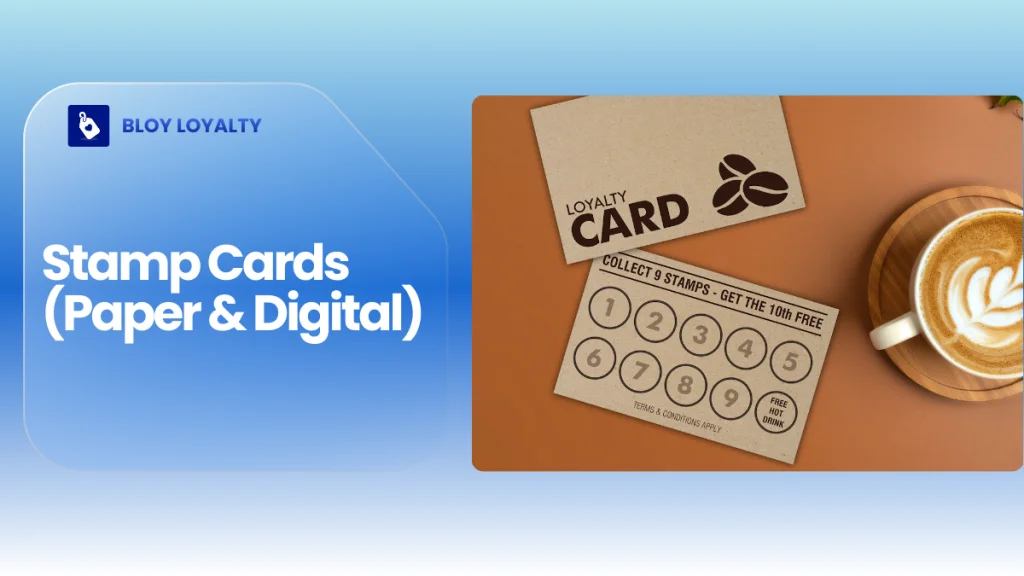
The classic “buy 9, get the 10th free” model remains popular because it’s instantly understandable. Paper stamp cards require zero technology investment and work for customers who resist downloading apps. Digital versions through platforms like Square Loyalty or LoyaltyLion eliminate the “I forgot my card” problem while providing valuable customer data.
When to use stamp cards: Your customer base skews older, you operate a single location, or you want the absolute simplest implementation. Paper cards work beautifully for neighborhood cafes where staff recognize regular faces.
When to avoid them: You can’t track customer data with paper cards, making marketing impossible. They’re also vulnerable to fraud (photocopied cards are common) and provide no insight into purchasing patterns. Digital stamp cards solve these issues but require customers to download yet another app, which creates a significant friction point.
2.2 Points-Based Programs
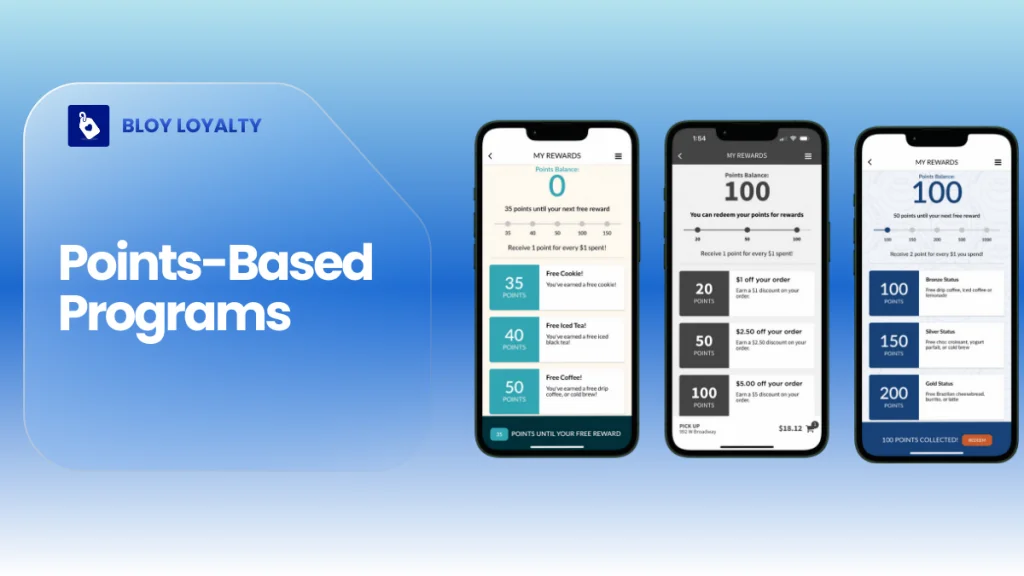
Points systems assign value to each purchase (typically 1 point per dollar spent) and let customers redeem accumulated points for rewards. This model, used successfully by Starbucks Rewards, offers flexibility. Customers can save points for a free drink or use them for a discounted pastry.
When to use points: You have a diverse menu with varying price points, multiple locations, or want to encourage upselling. Points systems reward higher spending naturally and can be tuned to promote specific items.
When to avoid them: The math gets complicated quickly. Customers need to calculate whether 150 points is good value. Staff must explain the system repeatedly. For a simple coffee-and-pastry shop, points add unnecessary cognitive load.
2.3 Tiered VIP Programs
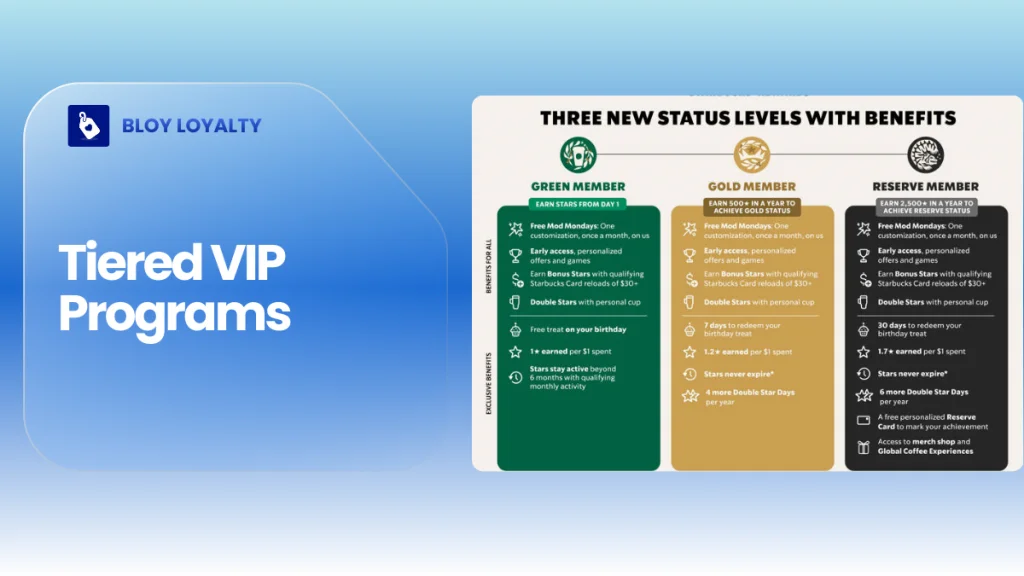
Tiered programs create status levels (Bronze, Silver, Gold) with escalating benefits. As customers spend more, they unlock better perks: free drink upgrades, birthday rewards, or early access to new menu items. This model leverages aspiration and status psychology, as explained in research from the Harvard Business Review on customer loyalty.
When to use tiered programs: You have enough customer volume to create meaningful tier populations, a range of perks to offer, and strong data infrastructure. This works for cafes with strong brand identity and customers who care about status within your community.
When to avoid them: Small shops struggle to create meaningful differentiation between tiers. If 80% of your customers end up in the top tier, you’ve just increased costs without driving behavior change. Tiers also require sophisticated tracking and communication.
The fundamental tension? Simple programs (like stamp cards) get high engagement but limited data. Complex programs (like tiered points) provide rich data but risk confusing customers and staff.
3. The Hybrid Loyalty Model (Best for Most Coffee Shops)
After analyzing hundreds of cafe loyalty programs, one approach consistently outperforms others for independent and small-chain coffee shops: the hybrid model.
Here’s how it works: publicly, you offer a simple digital stamp card. Buy 5 drinks, get one free. This is your entry-level program, visible to all customers, requiring minimal explanation. The threshold is low enough that first-time visitors can realistically achieve it within a few weeks of regular visits.
Behind the scenes, you run a hidden VIP tier for your top 10-20% of customers. These high spenders automatically unlock additional perks: double stamps on Mondays, free size upgrades, or first access to seasonal drinks. The key word is automatic. Customers don’t apply for VIP status; your system identifies and rewards them based on behavior.
Why does this hybrid approach solve the loyalty puzzle?
Simplicity at entry. New customers face zero complexity. “Get a stamp for each drink, free coffee on your sixth visit” requires no explanation and creates immediate progress (more on this psychological trick later).
Aspiration for high-value customers. Your frequent visitors get surprised with VIP perks, creating genuine delight. Because they didn’t expect these benefits, the emotional impact is stronger than if you’d advertised a multi-tier program upfront.
Operational clarity. Your staff only needs to explain one program. The VIP tier runs automatically through your POS system, requiring no additional training or scripts.
Cost control. You’re giving enhanced rewards only to customers who’ve already proven their high lifetime value, rather than offering premium perks to everyone who signs up.
This model works particularly well for coffee shop loyalty programs because it acknowledges a fundamental truth: most customers want simple, most business value comes from the top 20%, and surprising someone feels better than meeting an advertised expectation.
The hybrid model essentially combines the best aspects of stamp cards (simplicity, clear value) with tiered programs (rewarding your best customers) while avoiding their respective weaknesses.
4. The True Cost of a Free Coffee (Profit Math Breakdown)
Before you set your reward threshold at “buy 5 get 1 free” or “buy 9 get 1 free,” you need to understand what that free coffee actually costs your business. Most coffee shop owners dramatically underestimate this number.
💲 Let’s break down a standard $5 latte:
- Bean cost: $0.60 (assuming quality single-origin espresso at $18/lb)
- Milk: $0.35 (roughly 8oz of whole milk)
- Cup, lid, sleeve: $0.25
- Labor: $1.20 (assuming 2 minutes of labor at $36/hour effective cost including payroll taxes and benefits)
- Overhead allocation: $0.80 (rent, utilities, equipment depreciation per drink) ☕ Total cost per drink: $3.20
Your gross margin on that $5 latte is $1.80, or 36%.
Now let’s calculate your true coffee shop rewards program cost under different thresholds:
Buy 5 Get 1 Free:
- Customer spends: $25 for 6 drinks
- Your cost: $19.20 (6 drinks × $3.20)
- Net revenue: $5.80
- Effective discount: 16.7%
Buy 9 Get 1 Free:
- Customer spends: $45 for 10 drinks
- Your cost: $32.00 (10 drinks × $3.20)
- Net revenue: $13.00
- Effective discount: 10%
But here’s the hidden cost most owners miss: reward burn rate. This refers to how quickly customers redeem and the opportunity cost of that transaction.
When someone redeems a free drink during morning rush, that’s a paying customer who didn’t get served. If you have limited capacity (most coffee shops do), every redemption during peak hours represents lost revenue from a full-price transaction you couldn’t complete. A free drink redeemed at 8:15 AM costs you more than the same drink redeemed at 2:30 PM.
According to research from the National Restaurant Association, understanding the full cost structure of promotional offers is critical for maintaining healthy profit margins in the food service industry.
| Reward Threshold | Effective Discount | Annual Cost Per 100 Active Users* | Break-Even Increase in Visit Frequency |
| Buy 5 Get 1 Free | 16.7% | $1,872 | +20% visits/year |
| Buy 7 Get 1 Free | 12.5% | $1,404 | +15% visits/year |
| Buy 9 Get 1 Free | 10% | $1,120 | +12% visits/year |
*Assumes 2.5 visits per week, $5 average transaction, 80% redemption rate
The math reveals an uncomfortable truth: your cafe loyalty program only generates positive ROI if it increases visit frequency above these thresholds. A buy-5-get-1 program that doesn’t increase visits by at least 20% is actually destroying profit.
This is why so many coffee shop loyalty programs quietly bleed money. They reward existing behavior (customers who would have come anyway) rather than changing behavior (driving additional visits).
Smart operators combat this by making redemption slightly strategic. They offer double stamps on slow days (Tuesday afternoons), or require redemptions be used within 30 days to prevent stockpiling. These tactics shape customer behavior toward higher-value patterns while protecting profit margins.
5. App vs Wallet vs Paper: What Should a Coffee Shop Choose?
Technology decisions for customer retention systems often get made based on what seems modern rather than what actually works for your specific operation. Let’s compare the three main implementation methods:
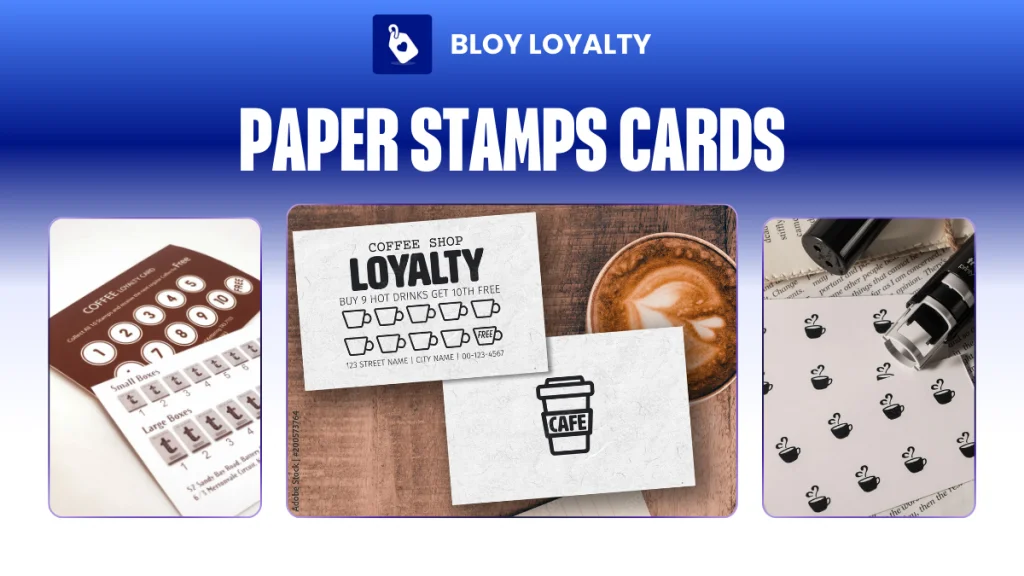
Paper Stamp Cards
Pros: Zero technology barrier for customers, no ongoing subscription costs, works for customers without smartphones, tangible reminder sits in wallet, instant implementation
Cons: No customer data collection, vulnerable to fraud and loss, staff must remember to stamp, impossible to run analytics or targeted marketing, can’t track redemption patterns
Best for: Single-location neighborhood cafes with older demographic, shops without reliable WiFi, owners who want to test loyalty before technology investment
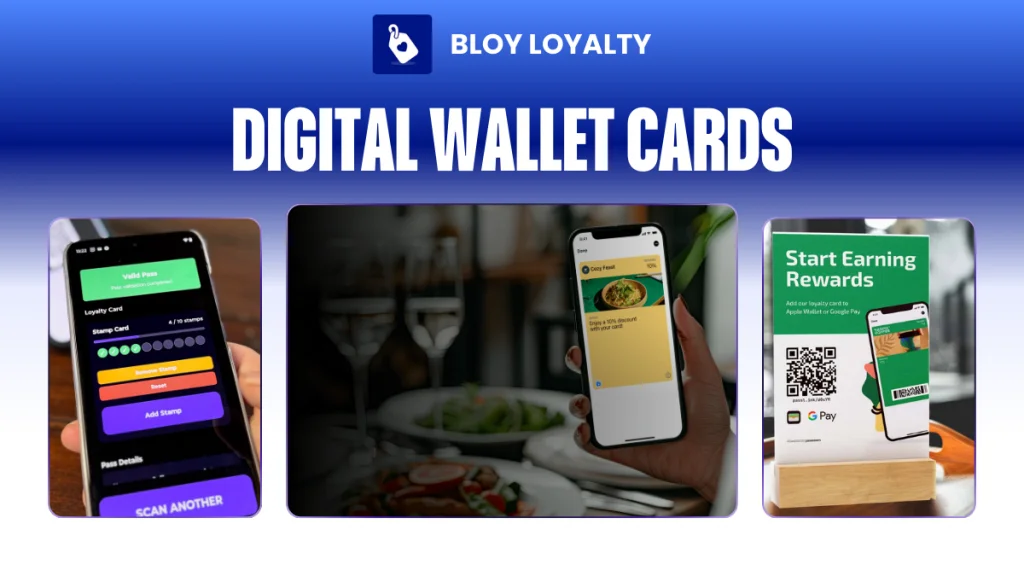
Digital Wallet Cards (Apple Wallet, Google Pay)
Pros: No dedicated app required, notifications remind customers of visits/progress, fraud-resistant, captures basic transaction data, works across devices
Cons: Limited customization, less engaging than full app experience, harder to build community features, no direct communication channel with customers
Best for: Coffee shops with 1-3 locations wanting digital benefits without app development costs, businesses with tech-savvy customers but limited IT resources
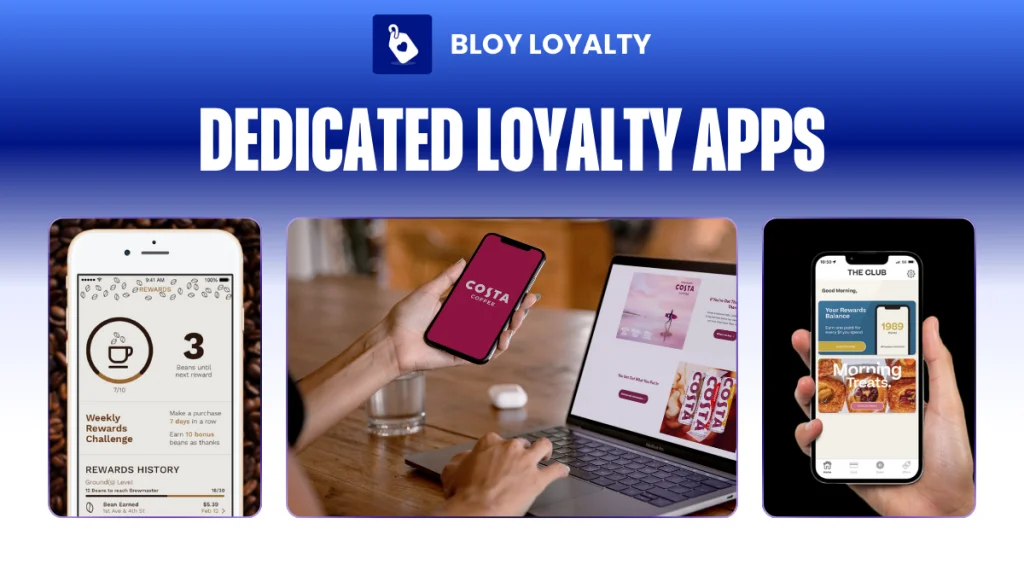
Dedicated Loyalty Apps
Pros: Rich customer data and purchase history, direct push notification channel, can include mobile ordering and payment, enables personalized offers, builds brand presence on customer’s phone
Cons: Significant development and maintenance cost ($10k-$50k+), requires customers to download yet another app (major friction), needs critical mass to justify investment, ongoing updates and bug fixes
Best for: Multi-location chains with strong brand, shops with mobile ordering strategy, businesses ready to invest in long-term customer relationship technology
The Hybrid Approach: Many successful independent coffee shop loyalty programs use platforms like Toast POS, Square, or Clover that integrate loyalty into existing POS systems. Customers can participate via phone number lookup (no app required) while the shop gains data advantages. This middle path costs $50-200/month but avoids both paper’s limitations and custom app development.
The wrong choice here can doom your entire loyalty strategy. A beautiful custom app that 8% of customers download is far less effective than a simple wallet card that 60% actively use.
6. How to Fix a Failing Coffee Shop Loyalty Program
Most coffee shop owners don’t need a new loyalty program. They need to fix the one they have. Here are the warning signs and rescue strategies:
Sign of failure #1: Low enrollment rate
If fewer than 30% of regular customers have joined your program, the sign-up process is too complicated or the value isn’t clear.
Fix: Simplify enrollment to literally two seconds. “What’s your phone number?” should be the only question. Automatically enroll first-time visitors and text them their first stamp. Opt-out is easier than opt-in.
Sign of failure #2: High enrollment but low active usage
Lots of people signed up but aren’t progressing toward rewards or have abandoned partially-completed stamp cards.
Fix: Your threshold is probably too high. If it takes 12 visits to earn a reward and your average customer visits 8 times per month, they’ll never reach it. Reduce the threshold or add a “fast start” bonus (first stamp is automatically doubled).
Sign of failure #3: Low redemption rate
Customers are earning rewards but not using them.
Fix: Redemption feels awkward or complicated. Staff should proactively say “I see you have a free drink available. Would you like to use it today?” Alternatively, auto-apply the reward and surprise customers with an unexpected free coffee.
Sign of failure #4: No impact on visit frequency
Customer data shows loyalty members visit at the same rate as non-members.
Fix: Your coffee shop rewards program isn’t offering anything meaningful. Either the threshold is too far away to motivate additional visits, or the reward itself isn’t compelling. Test lowering the threshold or adding non-discount perks (priority service, exclusive drinks).
When to kill the program: If you’ve adjusted thresholds, simplified redemption, and trained staff, but after six months you still see no measurable increase in visit frequency or average transaction value among members, your program is simply adding cost without return. Sometimes the most profitable decision is to eliminate the loyalty program and redirect those resources toward product quality or customer service excellence.
The reset process: Pick one month to relaunch. Communicate clearly to existing members what’s changing and why. Grandfather in customers who are close to rewards under the old system. Make the new program dramatically simpler than whatever you had before. Give it 90 days of perfect execution before judging results.
7. Training Baristas to Promote Loyalty (Without Being Annoying)
Your loyalty program lives or dies on the counter, in real moments between baristas and customers. Yet most coffee shops give staff zero training on how to actually promote the program without disrupting flow or irritating rushed customers.
The Morning Rush Script
During peak times (7-9 AM), every second counts. Your script needs to add exactly zero time to the transaction:
While preparing the drink: “Are you in our rewards program? Just need your phone number.”
If yes, type it in and continue.
If no, say “I can add you now. What’s your number? You just earned your first stamp.”
Total time added: 3 seconds. The key is doing enrollment during drink preparation, not before payment. This parallel processing maintains flow while capturing the sign-up, a technique supported by operational efficiency research from MIT.
The Upsell Script
When a customer orders a small coffee and is one stamp away from a reward:
Weak approach: “You’re one stamp away from a free drink.”
(Customer thinks: “Okay, I’ll come back tomorrow.”)
Strong approach: “You’re one stamp away from a free drink. Want to grab a pastry now and get your free coffee today?”
(Customer thinks: “That’s actually a good deal, I am hungry…”)
This drives immediate transaction growth rather than just announcing progress.
The Redemption Reminder
Many customers forget they have rewards available. Train staff to check during order-taking:
“I see you have a free drink available. Today’s a great day to use it on our new seasonal latte.”
Specific product suggestions turn redemptions into trial opportunities for new menu items.
What NOT to do:
- Don’t interrupt customers clearly in a hurry
- Don’t make enrollment feel mandatory
- Don’t push the program on obvious tourists who’ll never return
- Don’t ask “Would you like to join our rewards program?” (requires a decision)
- Instead state: “I’ll add you to rewards. What’s your number?” (assumes enrollment)
The best barista training for coffee shop loyalty programs emphasizes reading customer energy. Someone with headphones in, typing on their laptop while ordering, doesn’t want a rewards program pitch. Just add them silently if possible. Someone making friendly small talk is receptive to a 10-second explanation of benefits.
Role-play these scenarios during staff training. Record your fastest employee doing enrollment during rush and make it the standard. Reward staff when enrollment rates increase. Their bonus should be connected to program success.
8. Psychology That Actually Works in Coffee Loyalty
The most sophisticated coffee shop loyalty programs succeed not because of technology or discounts, but because they understand decision-making psychology.
Endowed Progress Effect
Research by Joseph Nunes and Xavier Drèze demonstrated that giving customers a head start dramatically increases completion rates. In their famous study, car wash customers who received a 10-stamp card with 2 stamps already filled were 82% more likely to complete it than customers who received an 8-stamp card starting empty. Both required 8 purchases, but the perceived head start made all the difference.
Application: When enrolling new loyalty members, automatically award their first stamp (or give double stamps on first purchase). This creates immediate progress and activates the completion desire. Customers who see “1 of 6” complete faster than those who see “0 of 6.”
Sunk Cost Fallacy
Once customers have invested in your rewards program, they become psychologically committed to reaching the reward. Each stamp or point represents sunk cost they don’t want to waste. This is why partially-completed stamp cards are powerful retention tools. Customers will go slightly out of their way to visit your cafe rather than “waste” their existing progress.
Application: Send monthly reminders showing progress: “You’re 60% toward your next free drink.” This makes sunk investment visible and motivates completion. Customers with 4 out of 6 stamps are unlikely to switch to a competitor, even if that competitor is more convenient.
Instant Gratification
Long reward horizons kill motivation. If earning a free coffee requires three months of visits, the reward feels too distant to influence today’s decision. The most effective customer retention systems for cafes balance reachability (customers can envision achieving it) with profitability (you’re not giving away too much).
Application: A “buy 5 get 1 free” program feels reachable to weekly customers (achievable in 5-6 weeks) while a “buy 15 get 1 free” program feels impossibly distant. Test your program with actual customer frequency data. If your median customer visits 1.5 times per week, a 10-stamp threshold means 7 weeks to reward. This is probably close to the maximum time horizon that maintains motivation.
Variable Rewards
Behavioral psychology shows that unpredictable rewards create stronger habit formation than consistent ones. This is why slot machines are more addictive than vending machines. The uncertainty drives engagement, as documented in behavioral economics research from Princeton University.
Application: Occasionally surprise loyalty members with random bonuses: “Today all stamps count double!” or “Mystery reward unlocked: free pastry with your next drink.” These unexpected delights create stories customers share and make each visit feel potentially special. A cafe loyalty program with occasional surprise rewards generates more word-of-mouth than one with perfectly predictable benefits.
The counterintuitive truth: a slightly unpredictable loyalty program often outperforms a more generous but perfectly predictable one. Humans are wired to seek variable rewards.
Conclusion
Coffee shop loyalty programs aren’t software. They’re behavior-change systems. Programs fail not because the tech is weak, but because they’re built to track transactions instead of shaping habits.
The most effective loyalty programs work quietly. They make customers feel recognized, give staff natural moments to engage, and subtly influence where people choose to get their daily coffee, without slowing down operations or needing constant explanation.
The goal isn’t to implement every tactic. It’s to choose a model that fits your operational reality, calculate the economics honestly, and execute with consistency. A simple stamp card, promoted daily by well-trained staff, will always outperform a sophisticated app that customers forget to use.
If you’re unsure where to start, ask three questions:
How many customers return weekly today? What would a 15% increase mean for revenue? What’s the simplest program that could drive that change without adding friction for staff?
Answer those, and the right coffee shop loyalty program becomes clear, not the flashiest one, but the one that changes behavior profitably.

Yến Lê Hải
Content author at BLOY, focusing on product-led content, SEO, and educational resources to help merchants improve conversion and customer engagement.