How Referral Loyalty Programs Can Supercharge Your Shopify Store?
What if each customer brought in 2–3 new buyers on average just by sharing your store? Referral programs can make that happen. In this article, we’ll explore how referral loyalty programs work, why they drive long-term growth, and how you can implement one that turns your shoppers into brand advocates.
1. What Is a Referral Loyalty Program?
A referral loyalty program rewards customers for inviting others to shop at your store. Rewards can be points, discounts, free products, or exclusive perks. Unlike standard loyalty programs, the focus is on customer advocacy, not just repeat purchases.
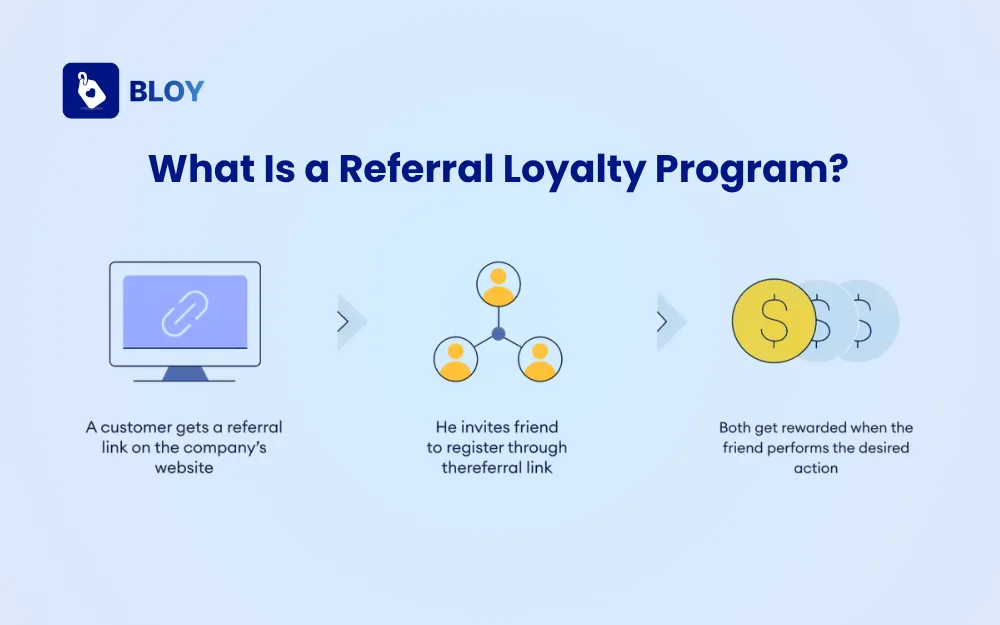
For Shopify stores, referral programs are easy to implement using apps like BLOY, which automatically tracks referrals, credits rewards, and integrates across POS, online checkout, and email campaigns.
Two main approaches:
- One-sided referral rewards: Only the referrer receives points, discounts, or perks.
- Two-sided referral rewards: Both the referrer and the referred friend benefit (e.g., $10 off each).
By leveraging existing customer networks, referral programs not only drive sales but also build trust and authenticity.
For a complete breakdown of loyalty‑program types, check out the BLOY guide on 7 types of Shopify loyalty programs.
2. The Psychology Behind Referral Loyalty Programs
Referral programs tap into several psychological triggers:
- Social Proof: People trust friends and family more than ads. A referral recommendation carries credibility.
- Reciprocity: Rewarding both referrer and referred encourages a sense of fairness and mutual benefit.
- Gamification: Tracking referral counts and offering exclusive badges or VIP perks creates motivation and engagement.
- Community Feeling: Customers feel part of your brand growth and gain status as advocates.
For Shopify merchants, this often translates to higher conversion rates, lower customer acquisition costs, and increased repeat purchase behavior.
3. 6 Key Benefits of Referral Loyalty Programs for Shopify Stores
Referral loyalty programs deliver measurable business outcomes beyond just new customer acquisition. Here’s a deeper look at the six main benefits for Shopify merchants:
- Lower Acquisition Cost: Acquiring new customers through traditional advertising can be expensive. Referral programs leverage existing customers as brand ambassadors, bringing in new shoppers who are already predisposed to trust your store. Studies show that referred customers are 4–5 times more likely to convert than cold leads, reducing marketing spend while increasing sales efficiency.
- Higher Customer Lifetime Value (CLV): Referred customers not only convert faster but also tend to stay loyal longer. Because they come via personal recommendations, they are more engaged with your brand, spend more per order, and are likely to become repeat buyers. Shopify merchants have reported 10–20% higher average order values from referred customers compared to non-referred ones.
- Viral Growth Potential: Referral programs create a self-propelling marketing loop. When customers are rewarded for inviting friends, each new customer has the potential to bring in more buyers, multiplying your audience organically. This “word-of-mouth engine” can significantly accelerate growth, especially when paired with shareable links, social media integration, or email forwarding.
- Boost Customer Engagement: Referral programs motivate customers to actively participate in your brand’s growth. By tracking referrals and offering tangible rewards, customers are encouraged to complete more actions, such as sharing via social media, writing reviews, or signing up friends. This keeps your audience consistently engaged beyond one-off purchases.
- Strengthen Brand Trust: People trust recommendations from friends and family far more than advertising. Each referral carries social proof, lending credibility to your products and your store. This trust is especially valuable for new or niche Shopify stores, helping reduce hesitation for first-time purchases.
- Easy Integration with Other Loyalty Programs: Referral programs are even more effective when combined with existing loyalty initiatives. For example, points earned from referrals can contribute toward tier upgrades in a VIP program, or trigger exclusive VIP perks. Shopify apps like BLOY enable merchants to integrate referral actions seamlessly with points-based and tiered loyalty programs, automating reward assignment and tracking.
💡 Pro-tips: Using BLOY, merchants can automatically reward referrals with points, discounts, or VIP perks. These rewards can be synced with marketing automation platforms like Klaviyo for personalized follow-ups, ensuring that every referral is tracked, credited, and leveraged for long-term engagement.
4. 8 Strategies to Run a Successful Referral Program
Launching a referral program is easy, but maximizing participation and impact requires thoughtful strategy. Here are eight proven tactics:
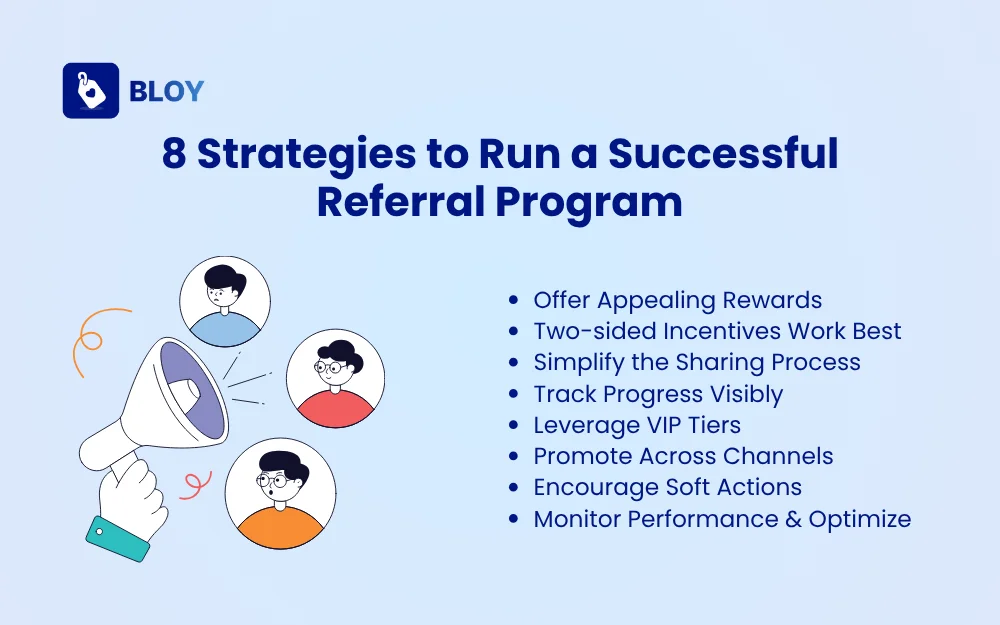
- Offer Appealing Rewards: The reward must be attractive enough to motivate sharing. Options include discounts, bonus points, free products, or VIP perks. The key is to balance value for both your brand and your customers. For example, a $10 discount per referred friend may encourage multiple referrals without hurting margins.
- Two-sided Incentives Work Best: Programs where both the referrer and the referred friend benefit tend to outperform one-sided systems. For instance, giving the referrer points or discounts and offering a welcome reward to the new customer creates mutual value, increasing participation and successful conversions.
- Simplify the Sharing Process: Make it effortless for customers to refer. Use one-click referral links, shareable codes, social media buttons, or email forwarding. Every additional step reduces engagement, so frictionless sharing is essential to program success.
- Track Progress Visibly: Customers are motivated when they can see results. Display referral counts, earned rewards, or progress toward milestones directly on your Shopify store, loyalty widget, or in email updates. Visual cues like “You’ve referred 3 friends — 2 more to unlock VIP status” create urgency and excitement.
- Leverage VIP Tiers: Referral actions can feed into VIP tier progression, encouraging top advocates to maintain engagement. For example, customers who refer 5 friends might unlock exclusive VIP perks such as early product access, free shipping, or personalized offers, giving them a stronger incentive to continue participating.
- Promote Across Channels: Don’t limit referrals to a single touchpoint. Promote your program on post-purchase pages, checkout flows, confirmation emails, social media, and even in-app notifications. The more exposure, the higher the participation rate.
- Encourage Soft Actions: Referral programs don’t need to rely solely on purchases. Completing non-transactional activities like leaving reviews, following on social media, or signing up for newsletters can also count as referral triggers, expanding the program’s reach and encouraging holistic engagement.
- Monitor Performance & Optimize: Track metrics such as referral conversion rate, average order value of referred customers, and reward redemption rates. Use this data to optimize reward structure, tweak messaging, or experiment with tier-linked incentives. Apps like BLOY provide dashboards that consolidate referral and loyalty data, making it easy to refine your strategy continuously.
Learn how tiered loyalty programs can skyrocket engagement and repeat purchases in our full guide: Tiered Loyalty Programs for Shopify Stores 🚀
5 Referral Loyalty Program Examples for Shopify Stores
Referral loyalty programs are highly effective because they turn your existing customers into brand advocates. When combined with points systems, VIP tiers, or non-transactional engagement rewards, they not only drive new customer acquisition but also increase repeat purchases, brand engagement, and community growth. Below are five detailed examples of Shopify stores successfully leveraging referrals alongside other loyalty strategies.
5.1 Mila & Co. – Organic Baby Clothing
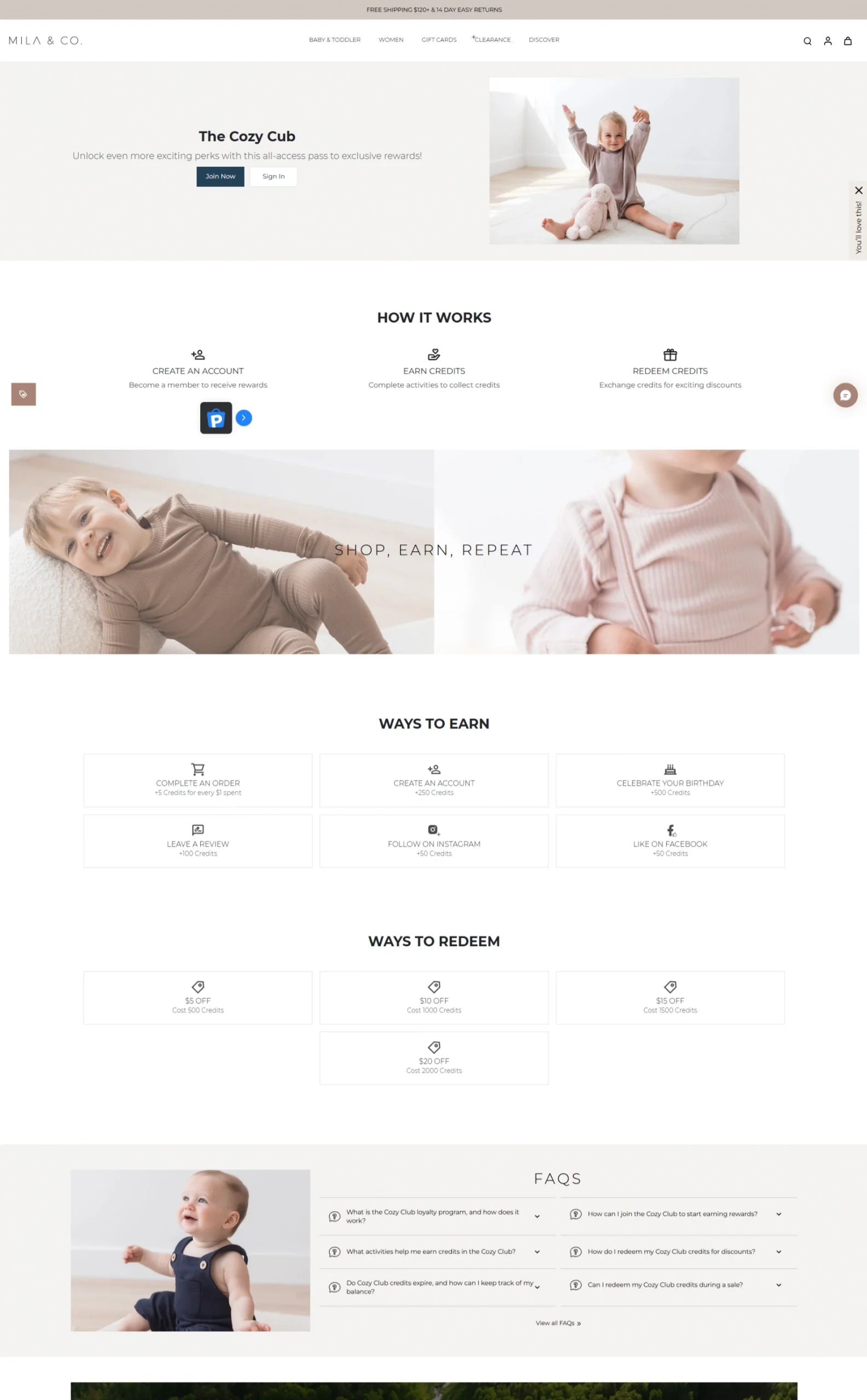
Mila & Co., a Canadian organic baby clothing brand, uses a referral loyalty program as a key growth driver. Customers earn 200 points for every friend who signs up and makes a purchase, which can be redeemed for discounts ($10–$20) or free products. Beyond the standard points system, referrals contribute to VIP tier progression, allowing top referrers to unlock early access to new collections or limited-edition items.
How it combines loyalty types:
- Points-based: Referrals earn points that can be redeemed for tangible rewards.
- Tiered loyalty: Referral activity contributes to VIP status upgrades, motivating customers to refer repeatedly.
- Non-transactional engagement: Social follows or newsletter sign-ups may also grant small bonus points, reinforcing community engagement.
Results: +18% new customer acquisition, +10% increase in repeat orders, higher engagement in VIP tiers.
5.2 Supra Protein – Health Supplements
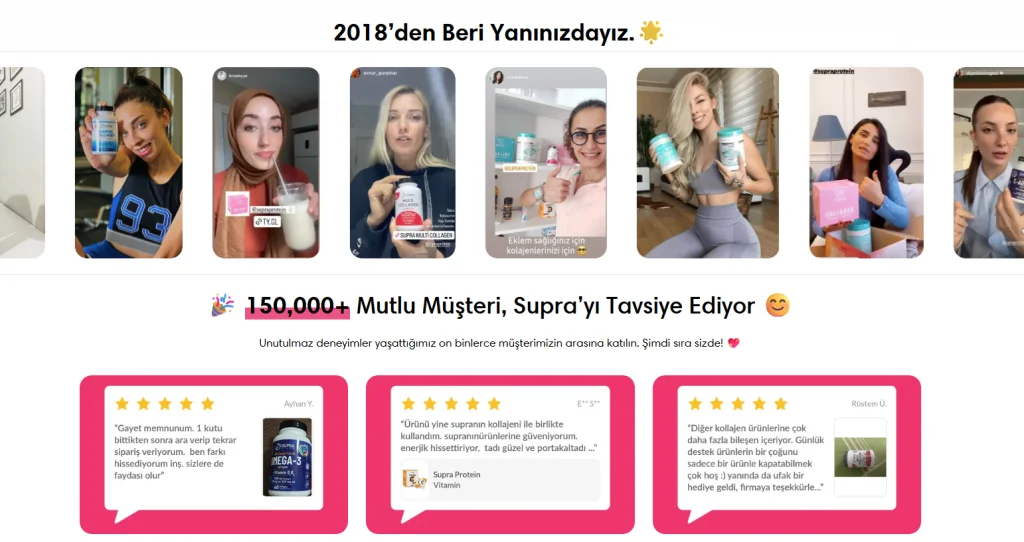
Supra Protein encourages health-conscious customers to refer friends via social media and email campaigns. Each successful referral earns 300 points and sometimes a free sample of their products. These points contribute not only to discounts but also to VIP tiers, giving top advocates early access to exclusive health bundles.
How it combines loyalty types:
- Points-based: Referral points accumulate alongside purchase points, encouraging both spending and advocacy.
- Tiered loyalty: Top referrers can unlock higher-tier benefits faster than non-referring customers.
- Experiential rewards: VIP tiers grant early access to new products or curated bundles, creating a sense of exclusivity.
Results: +15% referral conversions, improved brand advocacy, higher lifetime value from referred customers.
5.3 The Gentlemen’s Vault – Menswear
This curated online menswear store in the Netherlands integrates referrals into a VIP tier program. Each referral contributes points equivalent to 5 points per €1 spent by the referred friend, which feed into tier upgrades. High-tier members gain access to personalized styling consultations and limited-edition items, incentivizing continued referrals.
How it combines loyalty types:
- Points-based: Referral spending translates directly into points for both referrer and referred customer.
- VIP tier integration: Referrals accelerate progression through tiers, unlocking premium perks.
- Exclusive experiences: High-value rewards motivate both spending and advocacy.
Results: Increased repeat purchases, longer engagement with the brand, and higher perceived value from VIP perks.
5.4 Rugged Pirate Beard Co. – Grooming Products
The “Captain’s Club” combines referral rewards with adventure-themed VIP tiers. Customers earn free grooming kits or discounts for successful referrals, while VIP tiers provide early access to new products, exclusive event invites, and themed merchandise.
How it combines loyalty types:
- Referral rewards: Tangible products or discounts for every new customer referred.
- Tiered loyalty: Referrals contribute to tier progression, unlocking exclusive perks.
- Non-transactional engagement: Newsletter subscriptions or social shares count as referral-like actions, expanding participation beyond direct purchases.
Results: +20% overall sales increase, stronger community engagement, higher frequency of repeat purchases from VIP tier members.
5.5 Le Sens des Choses – Eco-Friendly Boutique
Le Sens des Choses encourages environmentally conscious shoppers to refer friends via social sharing and content engagement. Referral actions award 100–200 points depending on activity, and points feed into a minimalist VIP tier system that unlocks higher-value rewards, exclusive content, and personalized experiences.
How it combines loyalty types:
- Referral points: Each share, signup, or friend purchase grants points.
- VIP tier integration: Active referrers gain faster tier upgrades, earning special perks and access to exclusive newsletters.
- Community engagement: The program emphasizes non-transactional actions, rewarding advocacy, social shares, and content engagement as part of loyalty.
Results: Growing community engagement, higher referral participation, and stronger emotional connection to the brand.
6. How to Launch a Referral Program on Shopify
Launching a referral program on Shopify requires careful planning, clear incentives, and seamless automation. The goal is not just to get new customers, but to create advocates who actively promote your brand while also engaging with your loyalty program. Here’s a detailed step-by-step approach:
Step 1: Define Your Goals
Before implementing your referral program, clearly define what success looks like. Common goals include:
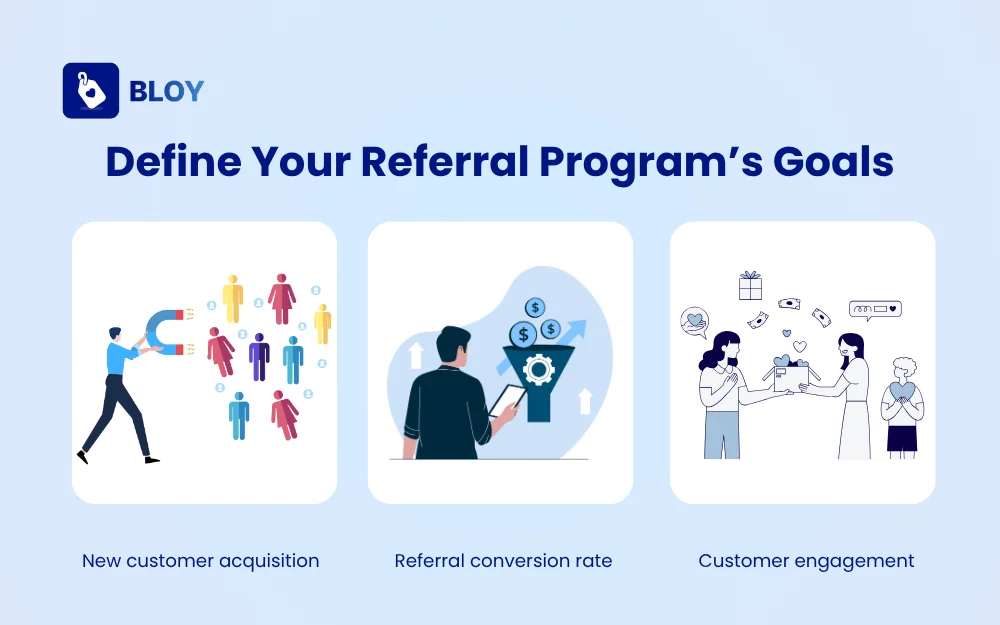
- New customer acquisition: Drive new buyers to your store through word-of-mouth.
- Referral conversion rate: Measure how many referred customers complete a purchase.
- Customer engagement: Encourage repeat purchases, social shares, or other non-transactional actions.
By defining goals upfront, you can choose the right rewards, messaging, and tracking metrics.
Step 2: Choose One-Sided or Two-Sided Rewards Structure
- One-sided rewards: Only the referrer earns a reward. Works well if you want to focus on existing loyal customers. Example: 200 points per successful referral.
- Two-sided rewards: Both the referrer and the friend earn rewards. This structure increases participation and encourages referrals. Example: Referrer earns 100 points, referred friend gets a $10 discount on first purchase.
For Shopify stores, two-sided incentives often perform better, especially when combined with VIP tiers that reward top advocates with exclusive perks.
Step 3: Automate Tracking and Rewards Using an App
Manually tracking referrals can be complex and error-prone. Using an app like BLOY streamlines the process:
- Automatically track which customers referred new buyers.
- Allocate points, discounts, or VIP tier progress automatically.
- Display referral progress via dashboards or customer accounts.
- Integrate with Shopify POS to ensure in-store purchases count toward referrals.
Automation ensures accuracy, reduces administrative workload, and improves the customer experience.
Step 4: Customize Messaging, Shareable Links, and VIP Perks
- Messaging: Clearly communicate how the program works and what rewards are available. Example: “Refer a friend and earn 200 points toward free products!”
- Shareable links: Provide one-click referral links or codes that can be shared via email, social media, or messaging apps.
- VIP perks: Tie referral activity to VIP tier progression. Top referrers can unlock exclusive experiences, early product access, or higher-value rewards.
Personalization increases engagement and makes participants feel recognized for their advocacy.
Step 5: Track and Optimize Key Metrics
Monitoring performance allows you to adjust rewards, thresholds, and communication. Key metrics include:
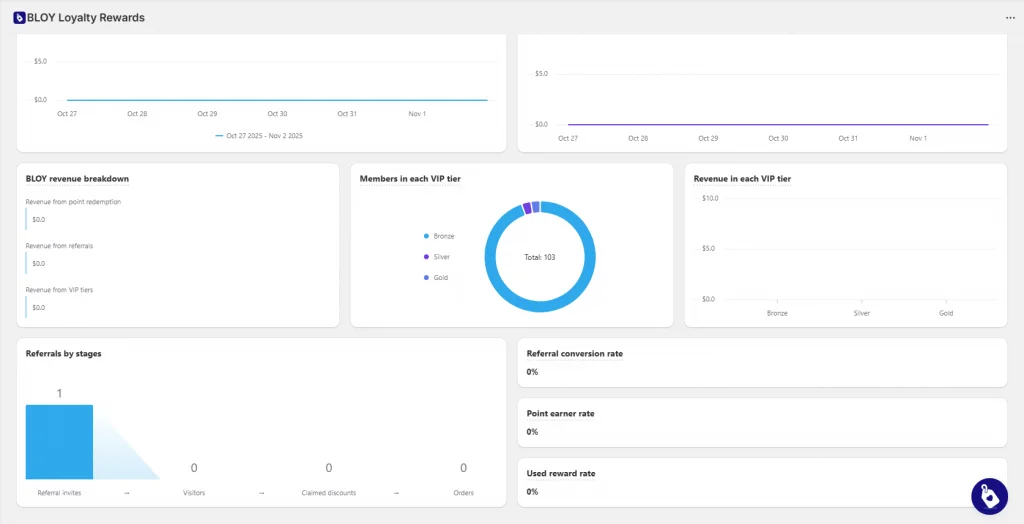
- Number of referrals: Total friends invited and successfully converted.
- Referral conversion rate: Percentage of referred friends who make a purchase.
- Average order value (AOV) of referred customers: Check if referred customers spend more or less than average.
- VIP tier progression: Track how referral activity contributes to tier upgrades.
By analyzing these metrics, you can identify high-performing advocates, underperforming channels, or rewards that need adjustment.
💡 Pro Tip: BLOY’s referral feature can be fully integrated with points and VIP tiers, so every referral not only drives acquisition but also rewards ongoing engagement. This makes your referral program a powerful complement to your existing loyalty strategy.
7. Common Pitfalls to Avoid in Referral Programs
Even well-designed referral programs can fail if common mistakes aren’t addressed. Here’s a detailed look at pitfalls and how to avoid them:
1. Complex Sharing Process
- Pitfall: Too many steps to send referrals discourage participation.
- Solution: Simplify sharing with one-click links, shareable codes, and social integrations. Ensure users can participate with minimal friction.
2. Weak Incentives
- Pitfall: Rewards that are too small or irrelevant fail to motivate action.
- Solution: Offer valuable points, discounts, or VIP perks. Consider combining transactional rewards (e.g., free product or discount) with experiential rewards (e.g., early access, VIP status).
3. Poor Communication
- Pitfall: Customers don’t know how close they are to earning rewards.
- Solution: Show progress clearly in referral dashboards, emails, or on the account page. Include reminders like “Invite 2 more friends to reach Gold VIP tier!”
4. No Integration with VIP or Tier Programs
- Pitfall: Referral activity exists in isolation, missing the opportunity to boost long-term engagement.
- Solution: Link referrals to VIP tiers so advocates earn status as well as points. This creates a sense of progression and encourages repeat participation.
5. Ignoring Analytics
- Pitfall: Without tracking, you won’t know which channels, rewards, or messaging are most effective.
- Solution: Monitor referral conversions, AOV of referred customers, reward redemption, and overall impact on retention. Adjust incentives and messaging based on data.
By avoiding these pitfalls, Shopify stores can launch referral programs that not only drive new customer acquisition but also enhance engagement, build loyalty, and maximize lifetime value.
8. Conclusion
Referral loyalty programs turn your customers into active brand ambassadors, driving new customer acquisition, repeat purchases, and long-term engagement. By offering meaningful rewards, automating tracking with BLOY, and linking referrals to VIP perks, Shopify stores can cultivate a loyal community while growing sales organically.
✨ Ready to boost referrals and loyalty? Try BLOY for free today and start rewarding your top advocates!
