7 Types Of Shopify Loyalty Programs And How To Pick The Right One
Acquiring a new customer can cost up to 7x more than retaining one, yet many Shopify stores still treat loyalty programs as an afterthought. The result? Loyalty initiatives that exist on paper but fail to drive real repeat sales or meaningful engagement. In this guide, we’ll break down 7 proven types of Shopify loyalty programs, showing how each works, which stores they’re best suited for, and how you can combine them strategically to boost customer retention, repeat purchases, and overall revenue.
1. What Makes a Great Shopify Loyalty Program
Before diving into the 7 types of shopify loyalty programs, it’s important to set the right framework. Not all programs are created equal, a successful loyalty program depends on three core elements:
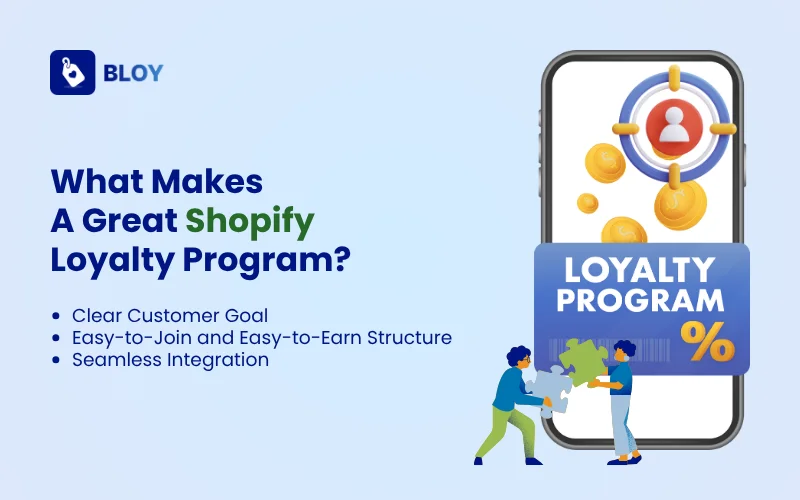
1.1. Clear Customer Goal
Every loyalty program should start with a specific behavior you want to reward.
- Are you encouraging repeat purchases?
- Do you want customers to refer friends?
- Or maybe you want them to engage on social media?
Defining this goal upfront ensures that your program drives real business results, not just vanity metrics.
1.2. Easy-to-Join and Easy-to-Earn Structure
Complex or confusing programs discourage participation. Keep it simple:
Signing up should be quick and frictionless
Customers are more likely to join if the process is simple. Ideally, they are auto-enrolled when they log in or checkout. If registration is required, use a one-click sign-up or minimal fields. The goal is to remove any barriers so joining feels effortless.
Earning rewards should be transparent and straightforward
Customers need to understand exactly how to earn points or perks. Show the rewards clearly at multiple touchpoints — product pages, cart popups, or checkout. Avoid hidden rules or complex calculations. Transparency makes the program trustworthy and motivating.
Customers should know exactly what action earns them points or perks
Every action that earns a reward should be obvious and predictable. For example, “Buy $50 and earn 50 points” or “Share on Instagram and get 10 points.” When customers can anticipate the reward, they are more likely to take the desired actions consistently.
1.3. Seamless Integration
Your loyalty program shouldn’t exist in isolation. It should integrate smoothly with:
- Shopify checkout and product catalog
- Email marketing tools for automated campaigns
- Social media platforms if you want to reward engagement
Seamless integration makes your program more scalable and manageable, while giving a smooth experience for your customers.
💡Pro Tip: Platforms like BLOY make it easy to mix and match these elements without any coding. So you can launch a fully functional loyalty program in minutes.
2. 7 Types of Shopify Loyalty Programs
Not all loyalty programs are created equal. Read on to understand the 7 main types and pick the one that fits your store’s growth stage.
2.1. Points-based Loyalty Program
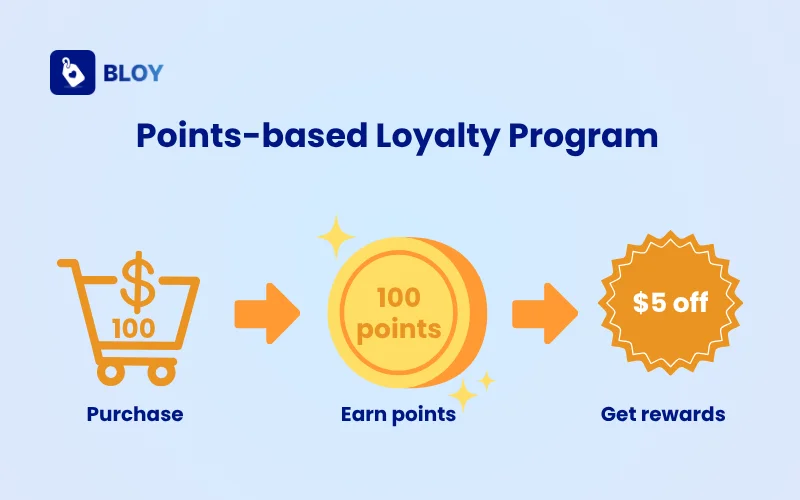
Points-based programs are the classic way to reward customers for repeat purchases. Each dollar spent earns points that can be redeemed for discounts or free products. For example, a protein shop might give 1 point per $1 spent. If a customer buys a $10 protein shake, they earn 10 points. Once they reach 100 points, they can redeem $5 off their next order. This tangible reward keeps customers motivated to return and buy more.
This system works best for new or mid-size stores that want a simple, easy-to-understand way to encourage repeat purchases. It’s scalable as the business grows, and points or rewards can be adjusted over time. To increase impact, points programs often pair well with referral incentives, just like Mila & Co does with BLOY, rewarding both repeat buyers and new customer sign-ups.
2.2. Tiered Loyalty Program
Tiered programs create a sense of progress and exclusivity. Customers move through levels such as Silver, Gold, and Platinum based on spending or engagement. Higher tiers unlock better rewards, like bigger discounts, free gifts, or early access to new products. For example, a fitness brand might offer Silver members a 5% discount, Gold 10%, and Platinum 15% plus early access to new protein flavors.
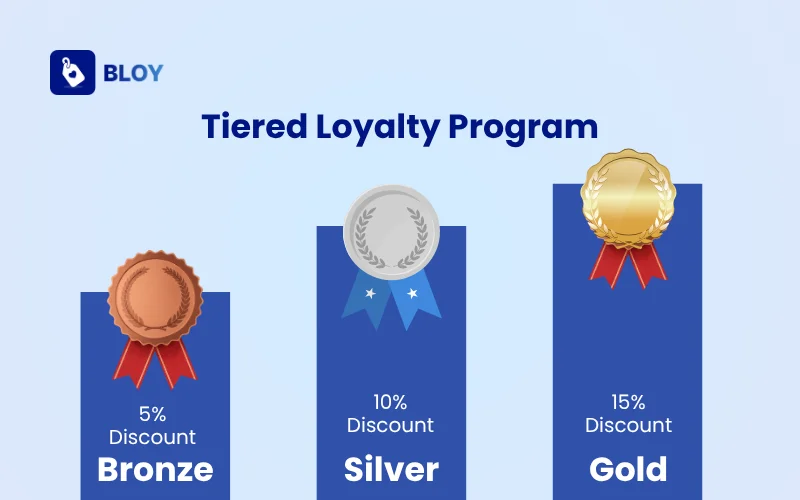
This approach suits established brands with a loyal customer base who value recognition and status. It encourages higher spending and long-term engagement, but clear communication is essential so customers understand how to advance and what benefits each level brings. Supra Protein uses tiered perks with BLOY to keep its fitness-focused audience engaged and spending consistently over time.
2.3. Referral Loyalty Program
Referral programs turn happy customers into brand advocates. When a customer refers a friend, both parties receive rewards. For instance, a skincare brand could offer $10 credit to the referrer and $5 off for the friend. This method leverages trust and word-of-mouth, helping brands grow organically without high advertising costs.
2.4. Subscription-based Loyalty Program
Subscription programs reward ongoing loyalty by offering recurring perks or exclusive benefits. A coffee or protein brand might provide a monthly box with bonus products, members-only discounts, or early access to new flavors. Customers sign up for convenience and a consistent reward, deepening their connection to the brand.
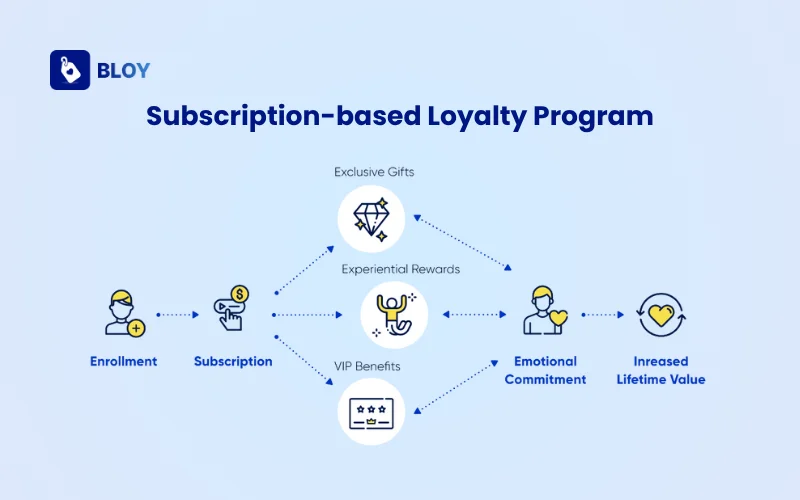
This type is ideal for DTC or consumable products where predictable revenue is valuable. The main challenge is communicating clear value, so customers feel the subscription is worth it. Combining subscription perks with points or tiered rewards can create a hybrid loyalty system, encouraging both regular purchases and long-term subscriptions.
2.5. Gamified Loyalty Program
Gamification makes loyalty fun and interactive. Customers earn rewards or badges for completing challenges or milestones. For example, a yoga accessory store could offer a “Spend $50 this month → earn a badge” or “Complete three purchases → unlock a surprise gift.” This approach adds excitement and keeps customers coming back. Unlike tiered programs, which reward customers based on cumulative spending or level progression, gamified programs focus on completing specific actions or challenges, creating a more playful and engaging experience.
Gamified programs are best for lifestyle brands with active communities, such as fitness, gaming, or hobby-related products. While engaging, they are more complex to design and less common on Shopify. BLOY hasn’t implemented gamification yet, but many merchants see it as a next step to boost retention and community interaction.
2.6. Event-based Loyalty Program
Event-based programs reward customers for special occasions, like birthdays, anniversaries, or seasonal promotions. A jewelry store, for example, could give a 10% discount on a customer’s birthday or a gift during holiday campaigns. These rewards feel personal and emotionally meaningful.
This type suits brands aiming to build emotional connections and make customers feel valued. It’s simple to automate, but requires accurate data collection to ensure rewards are delivered at the right time. Event-based programs are particularly effective for strengthening long-term customer relationships.
2.7. Social Media Engagement Loyalty Program
Social engagement programs reward customers for interacting with the brand online. Actions like posting a photo, tagging a product, sharing content, or leaving reviews can earn points or perks. For example, a beauty brand might offer 10 points for sharing an Instagram photo with a purchased product.
This strategy works well for brands growing on platforms like Instagram, TikTok, or Facebook, where social proof and visibility matter. Integrating social activity tracking is important to ensure fairness and accuracy. Combining social rewards with points or purchase-based perks can create a seamless loyalty experience that encourages participation both online and offline.
3. Which types of Shopify Loyalty Program Is Right for You?
| Loyalty Type | When to Use (Store Stage / Context) | Main Goal | Best Combined With | Notes |
|---|---|---|---|---|
| Points-based | Early to mid-stage stores looking to build repeat purchase habits | Boost repeat purchases quickly; simple and scalable | Referral, Tiered | Basic foundation for loyalty programs. Once you have enough data, add Tier or Referral to expand engagement. |
| Tiered | Established brands with a clear base of loyal customers | Retain VIPs and increase average spend | Points, Subscription | Works well for brands that want to create a sense of exclusivity and progression (Silver, Gold, Platinum…). |
| Referral | Brands with satisfied customers ready to bring in new buyers | Acquire new customers at low cost through word-of-mouth | Points-based | Highly effective when products are shareable (beauty, lifestyle, gifts…). |
| Subscription-based | Products with recurring consumption (protein, coffee, skincare, etc.) | Ensure predictable revenue and reduce churn | Tiered, Points | Helps maintain steady income, perfect for DTC brands. |
| Gamified | Brands looking to boost engagement and community interaction (fitness, hobbies, gaming) | Make loyalty fun and encourage repeated actions | Event-based, Points | Unlike Tiered programs, rewards are based on actions or challenges, not just spending levels. |
| Event-based | Brands aiming to build emotional connection and maintain contact on special occasions | Create emotional bonds and brand recall | Points, Gamified | Easy to implement, works well for birthdays, holidays, anniversaries. |
| Social Media Engagement | Brands growing an online community (Instagram, TikTok, etc.) | Increase brand visibility and social proof | Points, Referral | Encourages organic sharing via user-generated content, reviews, and tags. |
💡 Quick Takeaways:
- Just starting out? → Use Points + Referral to encourage repeat purchases and expand your customer base.
- Have loyal customers? → Add Tiered to boost retention and increase spending.
- Selling consumable products? → Subscription + Points ensures steady, predictable revenue.
- Want to build community or engagement? → Gamified or Social Media Engagement programs work best.
- Looking to create emotional connections on special occasions? → Event-based programs make your brand feel more personal.
4. Conclusion
The right loyalty program depends on your store’s maturity and the behavior of your customers. Early-stage stores may start with a simple Points + Referral system, while more established brands can layer Tiered, Subscription, or Gamified programs to increase engagement, retention, and revenue. Remember to start simple and let your program evolve with your customers. Test different approaches, track the results, and adjust as your audience grows.
Ready to get started? BLOY helps Shopify merchants mix and match loyalty types in one flexible system, letting you launch your first (or next) loyalty program in just minutes. Book a demo today to see it in action!
